🚚 Free Worldwide Shipping on All Orders!Shop Now

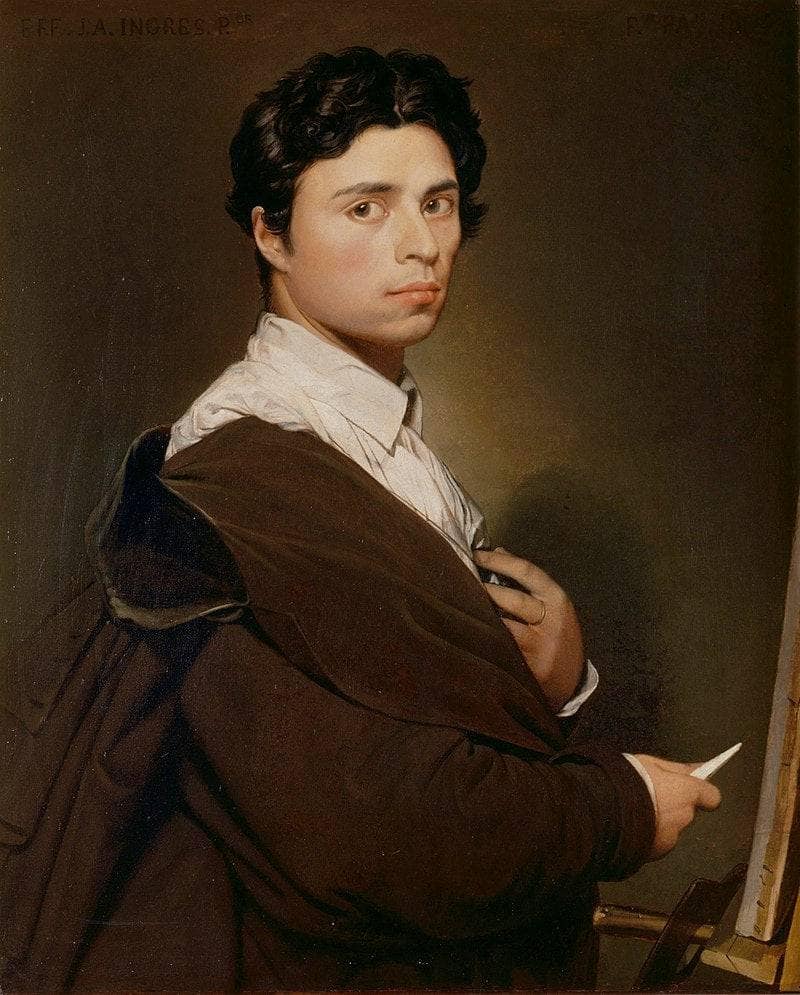
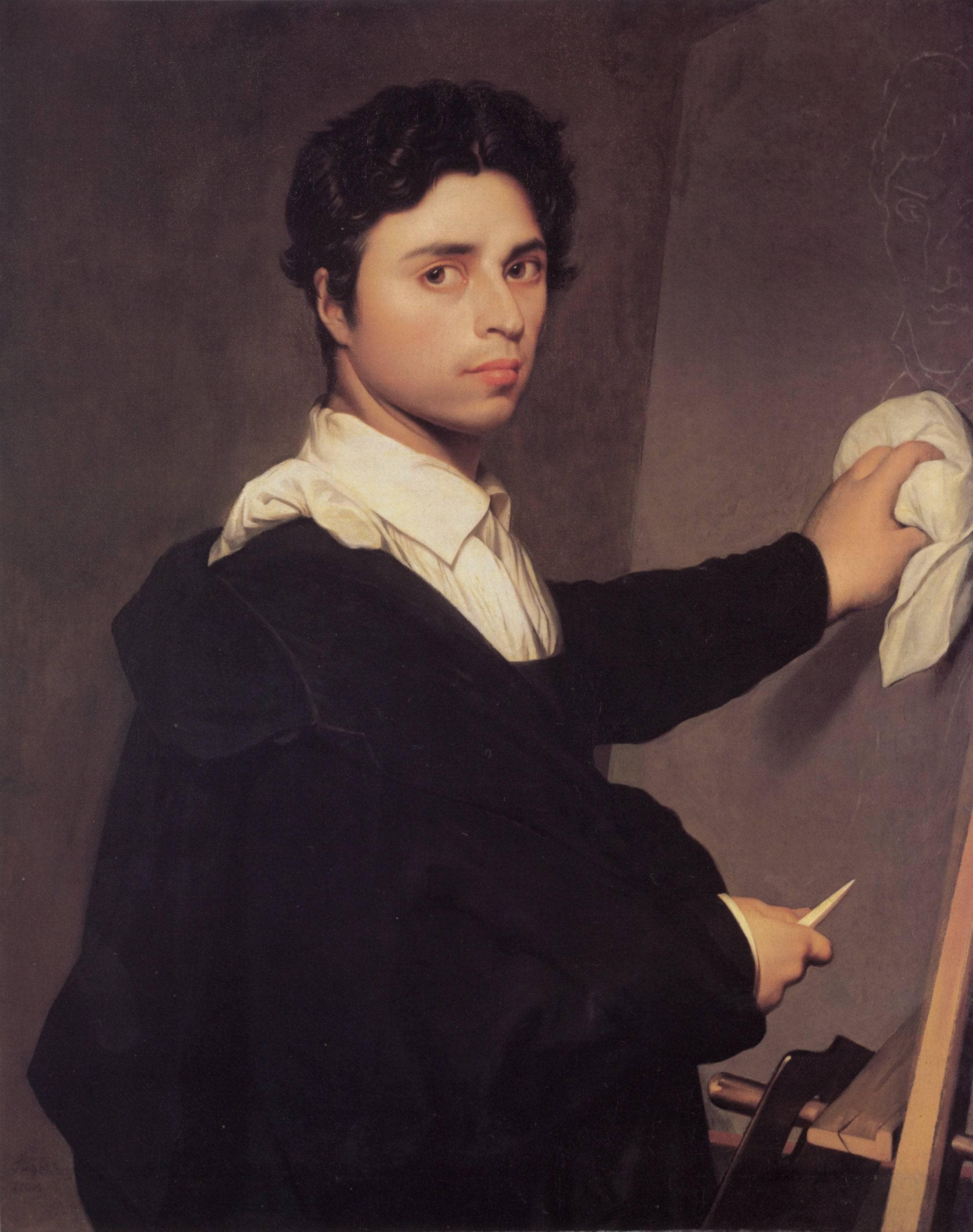
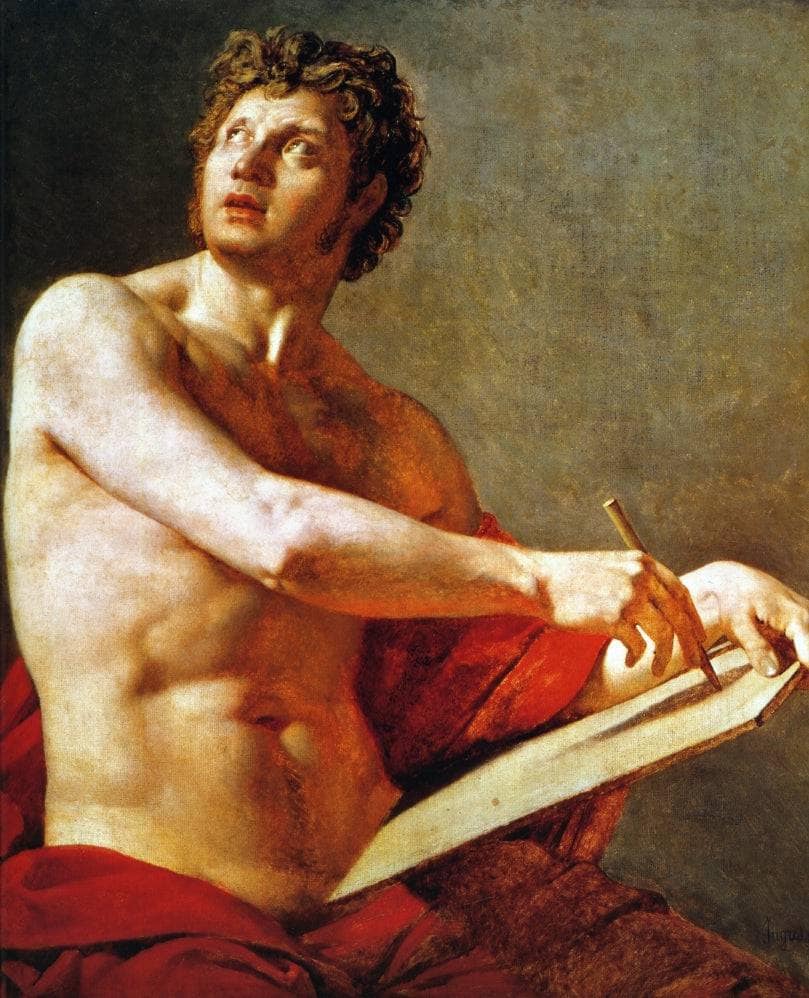
Self-Portrait at the Age of 24
Exploring the Artistic Brilliance of Self-Portrait at the Age of 24 by Jean Auguste Dominique Ingres
Introduction to Ingres: A Master of Neoclassicism
The Life and Times of Jean Auguste Dominique Ingres
Jean Auguste Dominique Ingres, born in 1780 in Montauban, France, was a pivotal figure in the Neoclassical movement. He trained under the renowned Jacques-Louis David, absorbing the principles of clarity and order. Ingres' career spanned over six decades, during which he became known for his meticulous attention to detail and his ability to convey emotion through form. His works often reflect his deep appreciation for classical antiquity and the human figure.Neoclassicism: The Artistic Movement that Shaped Ingres
Neoclassicism emerged in the late 18th century as a reaction against the excesses of the Baroque and Rococo styles. It emphasized harmony, proportion, and a return to classical ideals. Ingres embraced these principles, creating works that combined technical precision with emotional depth. His self-portrait at the age of 24 exemplifies these characteristics, showcasing his youthful ambition and artistic vision.Self-Portrait at the Age of 24: A Window into Ingres' Soul
Capturing Youth: The Significance of Age in Ingres' Self-Portrait
In this self-portrait, painted in 1804, Ingres captures the essence of youth and the fervor of a budding artist. At just 24, he presents himself with confidence, reflecting the aspirations of a young man on the brink of artistic greatness. The choice to depict himself at this age highlights the importance of self-exploration and identity in his work.Artistic Techniques: Brushwork and Color Palette in Ingres' Work
Ingres employed a refined brushwork technique that emphasizes smoothness and clarity. His color palette in this self-portrait features rich, warm tones that enhance the lifelike quality of his skin and clothing. The subtle gradations of color create a sense of depth, drawing viewers into the intimate world of the artist.Symbolism and Themes in Self-Portrait at the Age of 24
Identity and Self-Representation: What the Portrait Reveals
This self-portrait serves as a powerful statement of identity. Ingres presents himself not just as an artist but as a thinker and a creator. The careful arrangement of his attire and the direct gaze invite viewers to consider the complexities of self-representation in art.Emotional Depth: The Expression of Confidence and Ambition
The expression on Ingres' face conveys a blend of confidence and ambition. His slight smile suggests a readiness to embrace the challenges of the art world. This emotional depth resonates with anyone who has pursued their dreams, making the portrait relatable across generations.Analyzing the Composition: Elements that Define Ingres' Style
Proportions and Perspective: The Mathematical Precision of Ingres
Ingres was known for his precise proportions and mastery of perspective. In this self-portrait, he employs a balanced composition that draws the eye to his face. The careful alignment of features reflects his dedication to classical ideals, showcasing his skill in creating harmonious forms.Use of Light and Shadow: Creating Depth and Dimension
Light and shadow play a crucial role in this artwork. Ingres uses chiaroscuro to create a three-dimensional effect, enhancing the realism of his features. The interplay of light highlights his facial structure, adding to the overall depth of the painting.The Cultural Impact of Self-Portrait at the Age of 24
Influence on Future Generations of Artists
Ingres' self-portrait has inspired countless artists, particularly those in the Neoclassical and Romantic movements. His ability to blend technical skill with emotional expression set a standard for future generations. Artists like Edgar Degas and Henri Matisse drew inspiration from Ingres' innovative approach to form and color.Reception and Critique: How the Art World Viewed Ingres' Work
Upon its unveiling, Ingres' self-portrait received mixed reviews. Some critics praised its technical brilliance, while others questioned its emotional depth. Over time, however, it has been recognized as a significant work that encapsulates the spirit of early 19th-century art.Comparative Analysis: Ingres vs. Contemporaries
Contrasting Styles: Ingres and His Neoclassical Peers
While Ingres adhered to Neoclassical principles, his style diverged from that of his contemporaries. Unlike Jacques-Louis David, who often focused on historical themes, Ingres emphasized personal identity and introspection. This distinction set him apart in the art world.Romanticism vs. Neoclassicism: The Artistic Dialogue
The tension between Romanticism and Neoclassicism shaped the artistic landscape of the time. Ingres' work often bridged these two movements, incorporating emotional elements while maintaining classical form. This dialogue enriched his self-portrait, making it a compelling study of artistic evolution.Visiting the Original: Where to Experience Ingres' Masterpiece
Key Museums and Exhibitions Featuring Self-Portrait at the Age of 24
Art enthusiasts can view Ingres' self-portrait at the Musée de l'Ordre de la Libération in Paris. This museum houses a collection of his works, allowing visitors to appreciate the nuances of his style in person. Special exhibitions often feature Ingres, providing deeper insights into his artistic journey.Virtual Tours: Exploring Ingres' Work from Home
For those unable to visit in person, many museums offer virtual tours that include Ingres' self-portrait. These online experiences allow art lovers to explore the details of his work from the comfort of their homes, making art accessible to a wider audience.FAQs about Self-Portrait at the Age of 24
What inspired Ingres to create his self-portrait at such a young age?
Ingres was motivated by a desire to establish his identity as an artist. He sought to capture the essence of his youth and ambition, making a statement about his artistic journey.How does Ingres' self-portrait reflect his artistic philosophy?
The self-portrait embodies Ingres' belief in the importance of technical skill and emotional expression. It showcases his commitment to Neoclassical ideals while also revealing his personal aspirations.What techniques did Ingres use to achieve realism in his self-portrait?
Ingres utilized precise brushwork, a harmonious color palette, and careful attention to light and shadow. These techniques combined to create a lifelike representation of himself.What is the historical context of Self-Portrait at the Age of 24?
Painted in 1804, this self-portrait emerged during a time of significant artistic change in France. The Neoclassical movement was gaining momentum, and Ingres was at the forefront, blending classical influences with personal expression.How has the perception of Ingres' self-portrait changed over time?
Initially met with mixed reviews, Ingres' self-portrait has since gained recognition as a masterpiece. Its emotional depth and technical brilliance have solidified its place in art history.FAQs about Painting Reproductions
What should I consider when purchasing a reproduction of Ingres' self-portrait?
When buying a reproduction, consider the quality of materials, the accuracy of colors, and the level of detail. A high-quality painting reproduction will capture the essence of Ingres' original work far better than a simple print.How can I ensure the quality of a reproduction of Self-Portrait at the Age of 24?
Look for reproductions created by skilled artists who specialize in oil painting techniques. Ensure that the reproduction uses high-quality canvas and paints to reflect the vibrancy and depth of Ingres' original masterpiece.Select Size
From $89.98
Original: $299.95
-70%Self-Portrait at the Age of 24—
$299.95
$89.98Product Information
Product Information
Shipping & Returns
Shipping & Returns