🚚 Free Worldwide Shipping on All Orders!Shop Now


Caroline Murat, Queen of Naples
Discovering the Elegance of Caroline Murat, Queen of Naples
Historical Context of Caroline Murat
The Life of Caroline Murat: A Royal Journey
Caroline Murat, born in 1782, was a prominent figure in the Napoleonic dynasty. As the sister of Napoleon Bonaparte's wife, she became Queen of Naples in 1808. Her life was marked by luxury, political intrigue, and cultural influence. Caroline was not just a royal; she was a patron of the arts, supporting artists and musicians during her reign. Her marriage to Joachim Murat, a Marshal of France, further solidified her status in European aristocracy.Caroline Murat's Influence in 19th Century France
Caroline played a crucial role in shaping the cultural landscape of 19th century France. She hosted salons that brought together intellectuals, artists, and political figures. Her influence extended beyond Naples, impacting fashion, art, and society. Caroline's commitment to the arts helped foster a vibrant cultural scene, making her a key player in the evolution of Neoclassicism.Connections to the Napoleonic Era and Its Impact on Art
The Napoleonic era was a time of great change and upheaval in Europe. This period saw a blend of classical ideals with modern themes in art. Ingres, the artist behind the portrait of Caroline Murat, was deeply influenced by the political and social dynamics of his time. His work reflects the grandeur and ambition of the Napoleonic regime, capturing the essence of its royal figures.Jean Auguste Dominique Ingres: Master of Neoclassicism
Ingres' Artistic Philosophy and Techniques
Jean Auguste Dominique Ingres was a leading figure in the Neoclassical movement. He believed in the importance of drawing and line, often prioritizing these elements over color. Ingres aimed to achieve a sense of ideal beauty through precise forms and meticulous detail. His philosophy emphasized the harmony of classical ideals with contemporary subjects, making his work timeless.Signature Styles: The Use of Line and Form in Ingres' Work
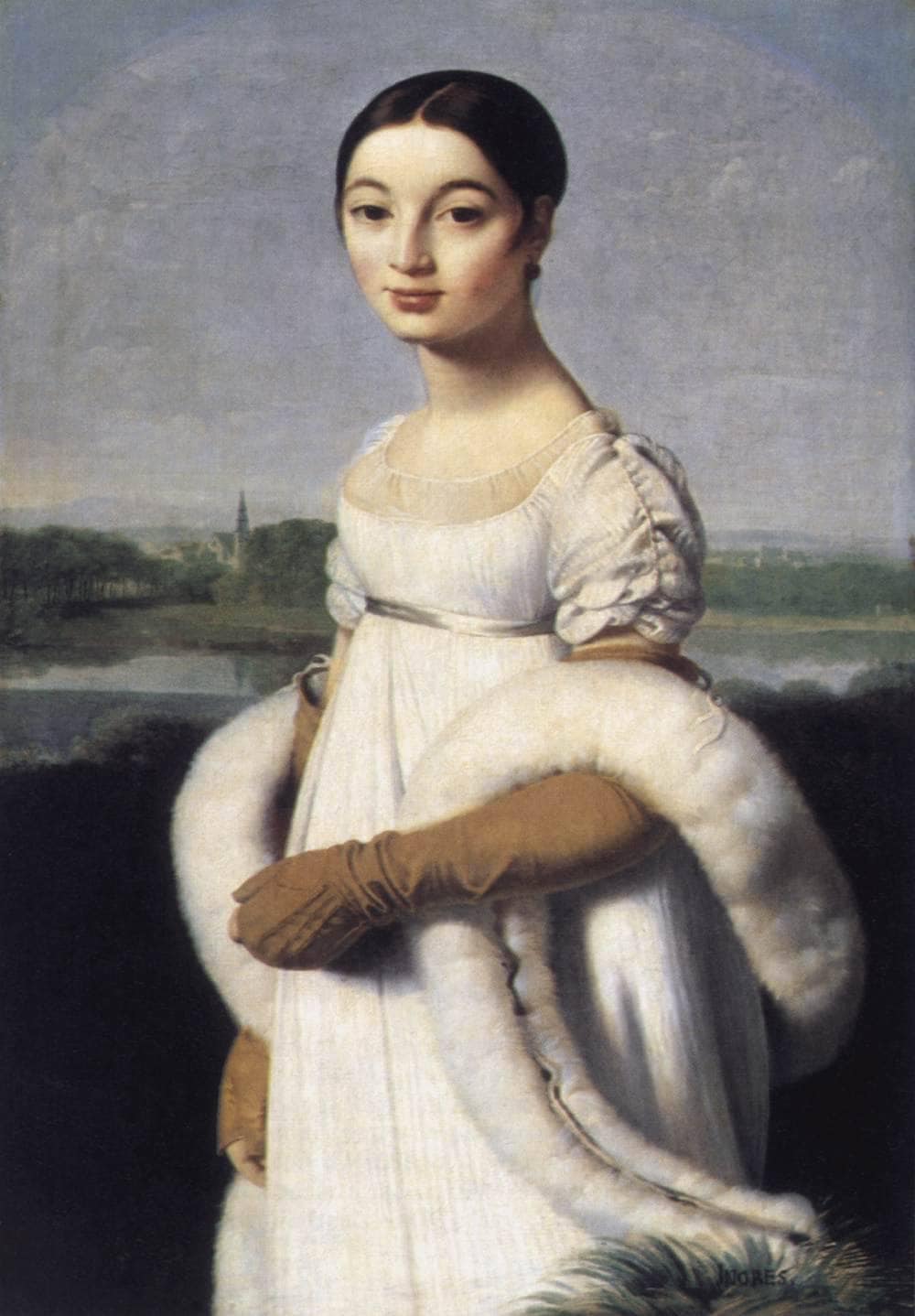
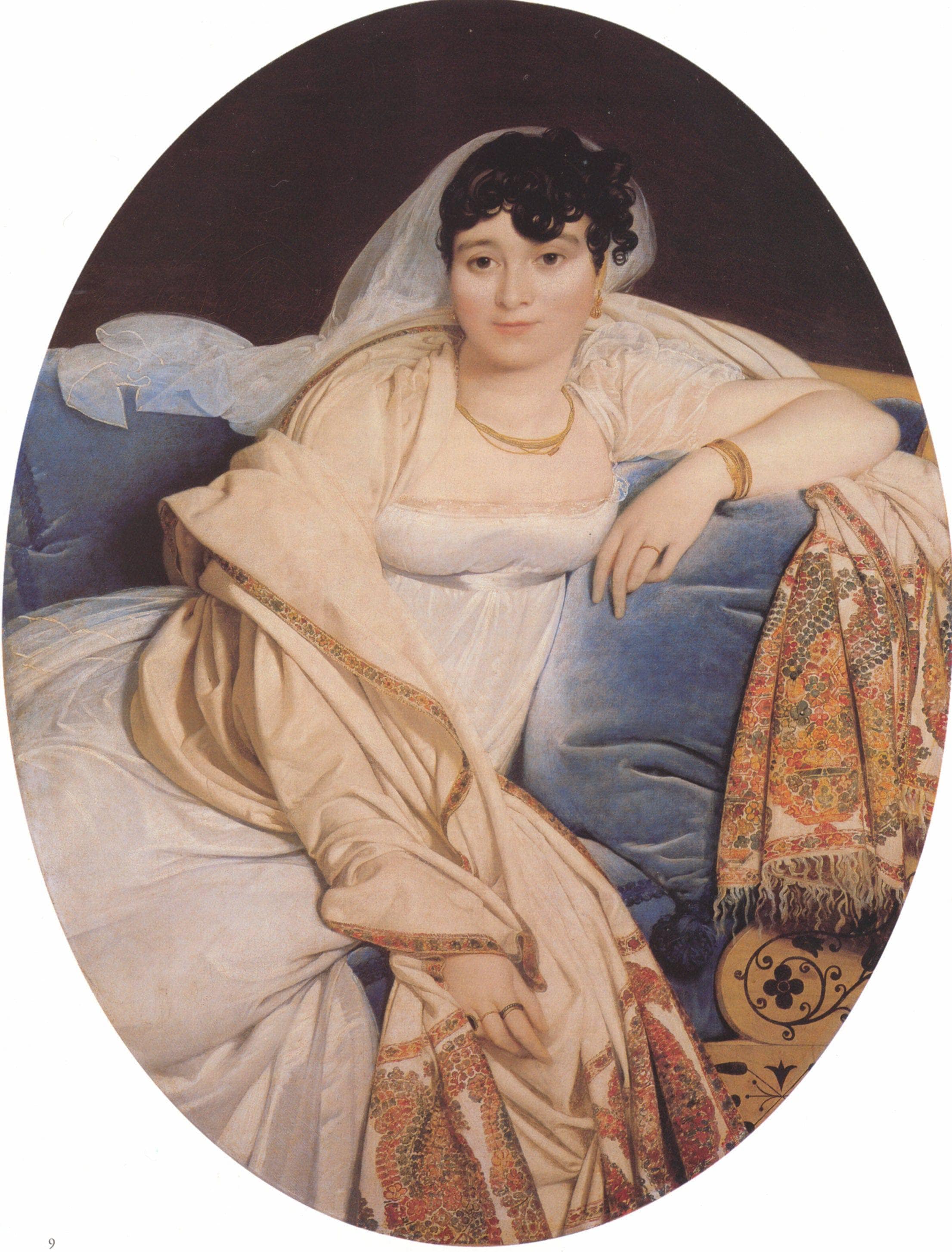
Ingres is renowned for his masterful use of line. His portraits often feature elongated forms and graceful curves, creating a sense of elegance. In "Caroline Murat, Queen of Naples," the flowing lines of her gown and the delicate contours of her face exemplify his signature style. This attention to detail enhances the viewer's appreciation of the subject's beauty and poise.Comparative Analysis: Ingres and His Contemporaries
While Ingres was contemporaneous with artists like EugÉne Delacroix, his approach to art was distinct. Delacroix favored vibrant colors and dynamic compositions, while Ingres focused on clarity and precision. This contrast highlights Ingres' unique position in the art world, where he bridged the gap between Neoclassicism and Romanticism.Artistic Elements of Caroline Murat, Queen of Naples
Color Palette: The Symbolism Behind Ingres' Choices
Ingres employed a rich color palette in "Caroline Murat, Queen of Naples." The deep blues and luxurious golds symbolize royalty and power. The colors evoke a sense of grandeur, reflecting Caroline's status as queen. Each hue is carefully chosen to enhance the overall composition and convey the subject's nobility.Composition and Perspective: A Study of Balance and Harmony
The composition of the painting is meticulously balanced. Caroline is positioned centrally, drawing the viewer's eye. Ingres uses perspective to create depth, making the background recede gently. This technique adds to the painting's harmony, allowing the viewer to focus on the queen's regal presence.Textural Details: The Intricacies of Fabric and Skin
Ingres' attention to texture is evident in the portrayal of Caroline's gown and skin. The delicate fabric appears soft and flowing, while her skin is rendered with a smooth, luminous quality. This contrast highlights the luxuriousness of her attire and the beauty of her complexion, showcasing Ingres' technical skill.The Portrait's Iconography: What It Reveals About Caroline Murat
Symbolic Elements: Jewelry, Attire, and Their Meanings
The jewelry and attire in the portrait carry significant meaning. Caroline wears a stunning tiara and ornate necklace, symbols of her royal status. Her gown, adorned with intricate details, reflects the fashion of the early 19th century. These elements not only enhance her beauty but also signify her power and influence.Facial Expression and Posture: Insights into Her Character
Caroline's facial expression is serene yet confident. Her posture exudes grace, suggesting a strong and composed character. Ingres captures her essence, allowing viewers to glimpse the personality of a woman who navigated the complexities of royal life with poise.Historical Significance of the Setting and Background
The background of the painting is equally important. It features classical architectural elements, reinforcing the connection to Neoclassicism. This setting not only enhances the portrait's grandeur but also situates Caroline within a historical context, linking her to the ideals of beauty and power celebrated in her time.Reception and Legacy of Caroline Murat, Queen of Naples
Initial Reception: Critiques and Praise from Art Critics
Upon its unveiling, "Caroline Murat, Queen of Naples" received mixed reviews. Some critics praised Ingres for his technical prowess and the painting's elegance. Others felt it lacked emotional depth. Over time, however, the portrait has come to be celebrated as a masterpiece of Neoclassicism.Influence on Future Portraiture and Royal Depictions
Ingres' portrayal of Caroline set a standard for royal portraiture. His emphasis on elegance and idealized beauty influenced future artists. The techniques he employed became a reference point for depicting nobility, shaping how royal figures were represented in art for generations.Current Status: The Painting in Modern Art Collections
Today, the original painting resides in the Musée des Beaux-Arts in Marseille, France. It remains a significant work in the study of Neoclassicism and continues to attract art enthusiasts. The portrait's legacy endures, inspiring admiration and scholarly interest.Exploring the Reproduction of Caroline Murat, Queen of Naples
Understanding the Art of Reproducing Masterpieces
Reproducing masterpieces like "Caroline Murat, Queen of Naples" requires skill and attention to detail. Art reproductions capture the essence of the original while making it accessible to a wider audience. Skilled artisans use techniques that honor the original work, ensuring that the reproduction reflects its beauty and significance.Why Choose a Reproduction of Ingres' Work?
Choosing a reproduction of Ingres' work offers several advantages. Unlike prints, which can lack depth and texture, high-quality reproductions provide a tactile experience. They allow art lovers to enjoy the intricate details and vibrant colors that make Ingres' paintings so captivating.How Reproductions Preserve Artistic Heritage
Art reproductions play a vital role in preserving artistic heritage. They allow people to experience iconic works without the need for travel. By bringing masterpieces into homes, reproductions foster appreciation for art and culture, ensuring that the legacy of artists like Ingres continues to thrive.FAQs About Caroline Murat, Queen of Naples
Common Questions About the Painting
Who was Caroline Murat and why is she significant?
Caroline Murat was the Queen of Naples and a key figure in the Napoleonic dynasty. Her influence on art and culture during the 19th century makes her a significant historical figure.What artistic techniques did Ingres use in this portrait?
Ingres used precise line work, a rich color palette, and a focus on texture to create a sense of elegance and beauty in the portrait.What does the painting reveal about the fashion of the time?
The painting showcases early 19th-century fashion, highlighting luxurious fabrics and intricate jewelry that symbolize royal status.How did the Napoleonic era influence Ingres' work?
The Napoleonic era inspired Ingres to blend classical ideals with contemporary subjects, reflecting the grandeur and ambition of the time in his art.Where can I view the original painting today?
The original painting is housed in the Musée des Beaux-Arts in Marseille, France, where it continues to be admired by visitors.Questions About the Painting Reproduction
What should I consider when purchasing a reproduction?
When purchasing a reproduction, consider the quality of materials, the skill of the artist, and how closely it resembles the original work.How can a reproduction enhance my home decor?
A reproduction can serve as a stunning focal point in your home, adding elegance and sophistication to your decor while showcasing your appreciation for art.Select Size
From $89.98
Original: $299.95
-70%Caroline Murat, Queen of Naples—
$299.95
$89.98Product Information
Product Information
Shipping & Returns
Shipping & Returns