🚚 Free Worldwide Shipping on All Orders!Shop Now

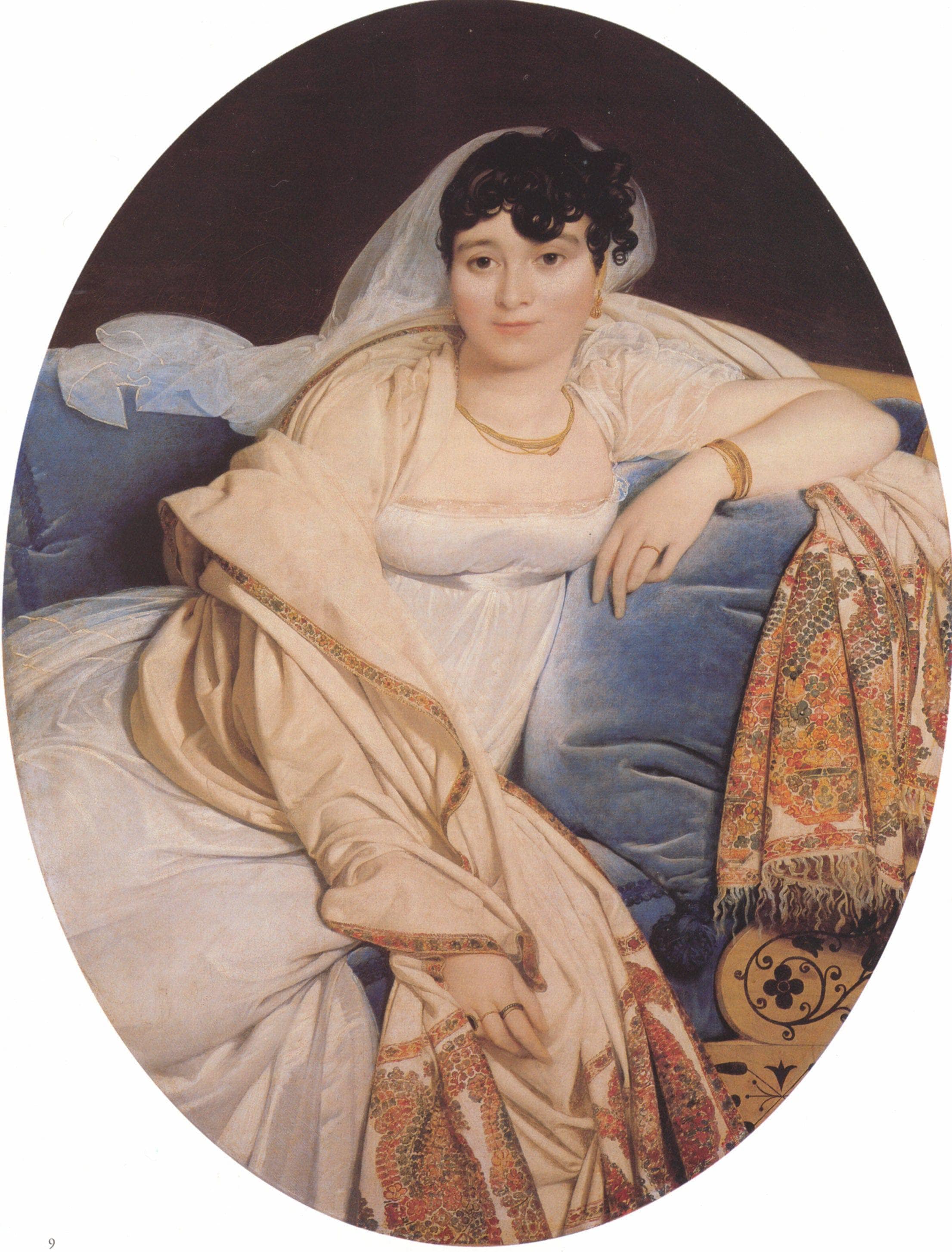
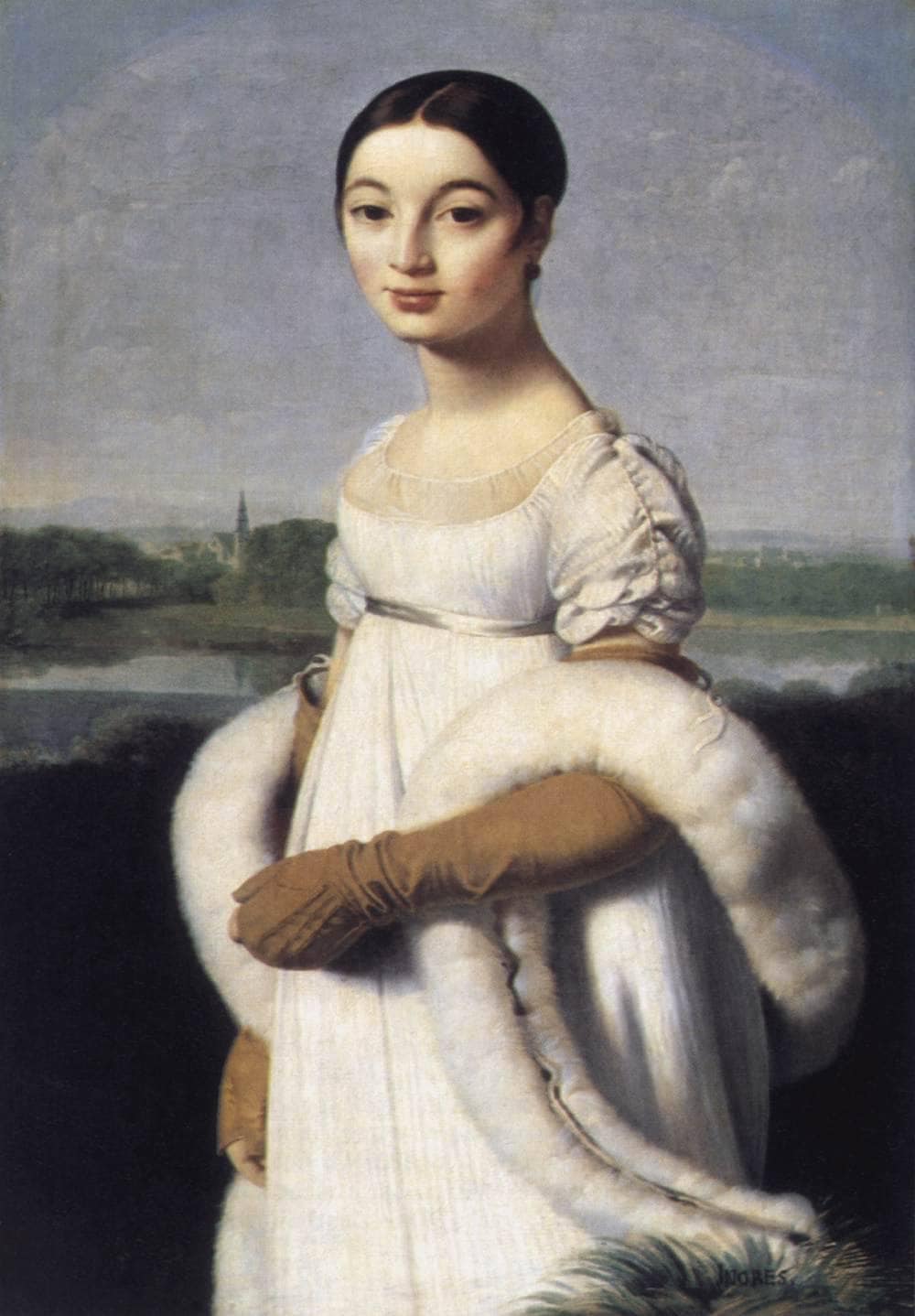
Portrait of Marie-Françoise Rivière
Exploring the Artistic Mastery of Jean Auguste Dominique Ingres
Biography of Jean Auguste Dominique Ingres: A Pioneer of Neoclassicism
Early Life and Influences on Ingres' Artistic Journey
Jean Auguste Dominique Ingres was born on August 29, 1780, in Montauban, France. He grew up in a family that valued the arts, with his father being a painter. Ingres moved to Paris at a young age to study at the prestigious École des Beaux-Arts. His early exposure to classical art and the works of masters like Raphael and Titian greatly influenced his artistic vision. Ingres became known for his dedication to the Neoclassical style, which emphasized clarity, order, and harmony.Key Artistic Techniques and Styles Employed by Ingres
Ingres was renowned for his meticulous attention to detail and his unique approach to portraiture. He often used a smooth, polished finish that highlighted the textures of skin and fabric. His signature technique involved layering thin glazes of oil paint to create depth and luminosity. Ingres also favored elongated forms and graceful lines, which became hallmarks of his style. His ability to capture the essence of his subjects set him apart from his contemporaries.Portrait of Marie-Françoise Rivière: A Deep Dive into the Painting
Historical Context: The Era of Romanticism and Neoclassicism
The Portrait of Marie-Françoise Rivière was painted in 1850, during a time when France was experiencing significant social and political changes. The Romantic movement was gaining momentum, emphasizing emotion and individualism. Ingres, however, remained committed to Neoclassicism, blending these two styles in his work. This portrait reflects the tension between tradition and modernity in 19th-century France.Significance of Portraiture in 19th Century France
Portraiture held a vital role in 19th-century France, serving as a means for individuals to assert their identity and social status. Ingres' portraits, including that of Marie-Françoise Rivière, captured not just the likeness of the subject but also their character and social standing. This painting exemplifies the importance of portraiture in documenting the lives of notable figures during this transformative period.Influence of Social and Political Climate on Ingres' Work
The political climate of the time, marked by the rise of the bourgeoisie and the decline of aristocratic power, influenced Ingres' choice of subjects. He often portrayed women of high society, reflecting their roles and aspirations in a changing world. The Portrait of Marie-Françoise Rivière embodies this shift, showcasing a woman who represents both elegance and the emerging modern identity.Visual Analysis: Composition and Color Palette of the Portrait
Ingres' composition in the Portrait of Marie-Françoise Rivière is striking. The subject is positioned centrally, drawing the viewer's eye immediately. The use of a rich, muted color palette enhances the painting's elegance. Ingres employed deep blues and warm earth tones, creating a harmonious balance that highlights the subject's features.Understanding the Use of Light and Shadow in Ingres' Technique
Light and shadow play a crucial role in this portrait. Ingres skillfully uses chiaroscuro to create depth and dimension. The soft illumination on Marie-Françoise's face contrasts with the darker background, emphasizing her serene expression. This technique adds a three-dimensional quality to the painting, making it feel alive.Symbolism and Meaning Behind Color Choices in the Portrait
The colors Ingres chose are not merely aesthetic; they carry symbolic weight. The deep blue of Marie-Françoise's dress suggests nobility and tranquility, while the warm tones of her skin convey warmth and approachability. This thoughtful use of color enhances the viewer's understanding of her character and social position.Marie-Françoise Rivière: The Subject of Ingres' Masterpiece
Life and Legacy of Marie-Françoise Rivière: A Woman of Her Time
Marie-Françoise Rivière was a prominent figure in Parisian society. Born into a well-to-do family, she was known for her intelligence and charm. Her legacy extends beyond this portrait; she became a muse for Ingres and other artists of her time. Her life reflects the evolving role of women in 19th-century France, balancing tradition with emerging modern ideals.Relationship Between Ingres and Rivière: Artistic Collaboration
The relationship between Ingres and Marie-Françoise Rivière was one of mutual respect and admiration. Ingres found inspiration in her poise and character, which is evident in the portrait. Their collaboration resulted in a work that not only captures her likeness but also conveys her spirit. This connection adds depth to the painting, making it a significant piece in Ingres' oeuvre.Artistic Techniques: Ingres' Signature Style in Portraiture
Brushwork and Texture: The Craftsmanship Behind the Canvas
Ingres' brushwork in the Portrait of Marie-Françoise Rivière is both precise and fluid. He employed fine, delicate strokes to render the intricate details of her dress and hair. This attention to texture creates a lifelike quality that draws viewers in. The craftsmanship behind this painting showcases Ingres' dedication to his art and his ability to elevate portraiture to new heights.Comparative Analysis: Ingres vs. Other Portrait Artists of the Era
When compared to other portrait artists of his time, Ingres stands out for his unique approach. While many artists focused on capturing emotion, Ingres prioritized clarity and form. His portraits often feature a serene quality, contrasting with the more dramatic styles of Romantic painters. This distinction solidifies Ingres' place as a master of Neoclassical portraiture.The Cultural Impact of Portrait of Marie-Françoise Rivière
Reception and Critique: How the Painting Was Viewed in Its Time
Upon its completion, the Portrait of Marie-Françoise Rivière received acclaim for its technical brilliance and emotional depth. Critics praised Ingres for his ability to capture the essence of his subject. The painting became a significant work in his career, showcasing his mastery of portraiture and solidifying his reputation as a leading artist of the era.Influence on Future Generations of Artists and Portraiture
Ingres' work, particularly the Portrait of Marie-Françoise Rivière, has influenced countless artists in the realm of portraiture. His techniques and emphasis on form and detail set a standard for future generations. Many modern portrait artists draw inspiration from Ingres' ability to blend realism with idealism, making his work timeless.FAQs About Portrait of Marie-Françoise Rivière
What is the significance of the Portrait of Marie-Françoise Rivière?
The portrait is significant as it captures the essence of a woman in 19th-century France, reflecting societal changes and Ingres' mastery of Neoclassical portraiture.How does Ingres' style differ from other artists of his time?
Ingres' style is characterized by clarity, precision, and a focus on form, contrasting with the emotional intensity found in Romantic art.What techniques did Ingres use to create depth in this portrait?
Ingres used chiaroscuro to create depth, employing light and shadow to enhance the three-dimensional quality of the portrait.What was the relationship between Ingres and Marie-Françoise Rivière?
Their relationship was one of artistic collaboration, with Ingres finding inspiration in Rivière's character and poise, which he beautifully captured in the portrait.How has the painting influenced modern portrait artists?
The painting has influenced modern artists by setting a standard for technical skill and the balance of realism and idealism in portraiture.What are the common themes found in Ingres' portraits?
Common themes in Ingres' portraits include elegance, social status, and the exploration of identity, often portrayed through meticulous detail and composition.Are there reproductions available for the Portrait of Marie-Françoise Rivière?
Yes, high-quality painting reproductions of the Portrait of Marie-Françoise Rivière are available, offering a superior alternative to prints, capturing the intricate details and colors of the original artwork.How can I appreciate the details in Ingres' painting style?
To appreciate Ingres' style, focus on the textures, the use of light and shadow, and the graceful lines that define his subjects. Observing these elements will enhance your understanding of his artistic mastery.Select Size
From $89.98
Original: $299.95
-70%Portrait of Marie-Françoise Rivière—
$299.95
$89.98Product Information
Product Information
Shipping & Returns
Shipping & Returns