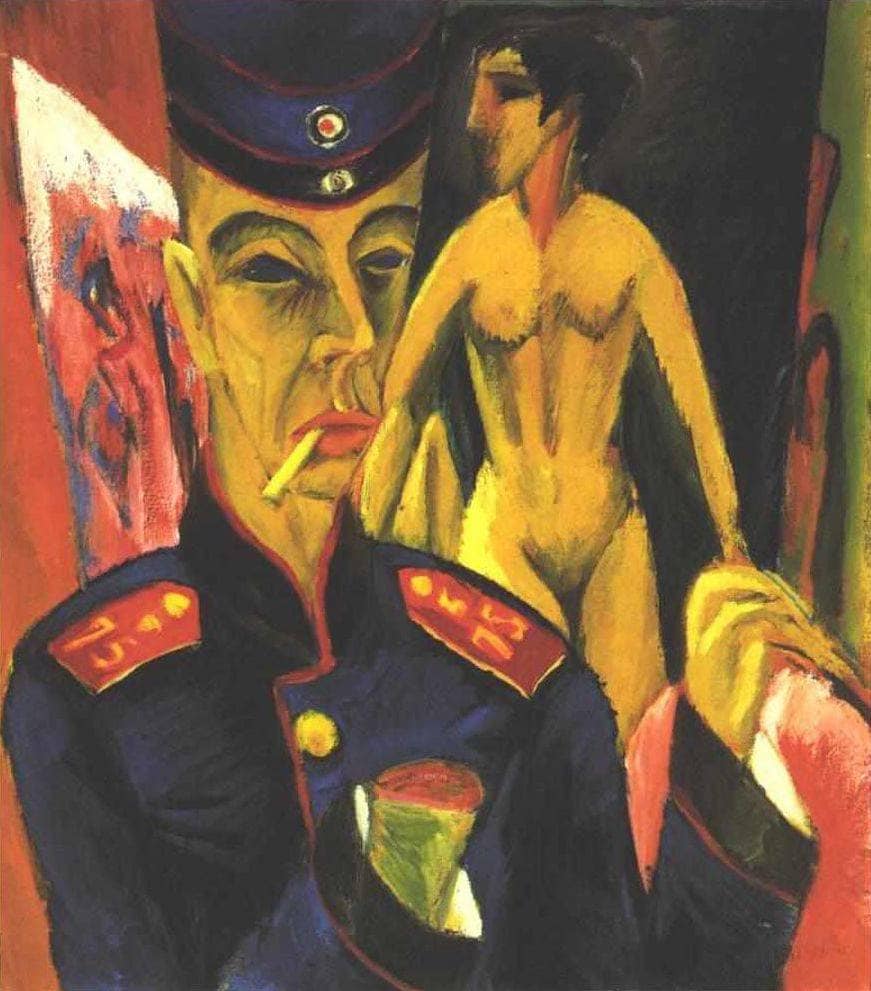
Self-Portrait as a Soldier
Exploring the Emotional Depth of Self-Portrait as a Soldier by Ernst Ludwig Kirchner
Understanding Kirchner's Artistic Journey: The Context of Expressionism
The Birth of Expressionism: A Movement Defined
Expressionism emerged in the early 20th century as a powerful art movement. It sought to convey emotional experiences rather than physical reality. Artists used vivid colors and exaggerated forms to express feelings of anxiety, alienation, and turmoil.
Ernst Ludwig Kirchner: A Pioneer of Modern Art
Ernst Ludwig Kirchner was a leading figure in the Expressionist movement. He co-founded the influential group Die Brücke in 1905, which aimed to revolutionize art. Kirchner's innovative approach combined traditional techniques with modern themes, making him a trailblazer in the world of modern art.
Personal Struggles: The Impact of War on Kirchner's Work
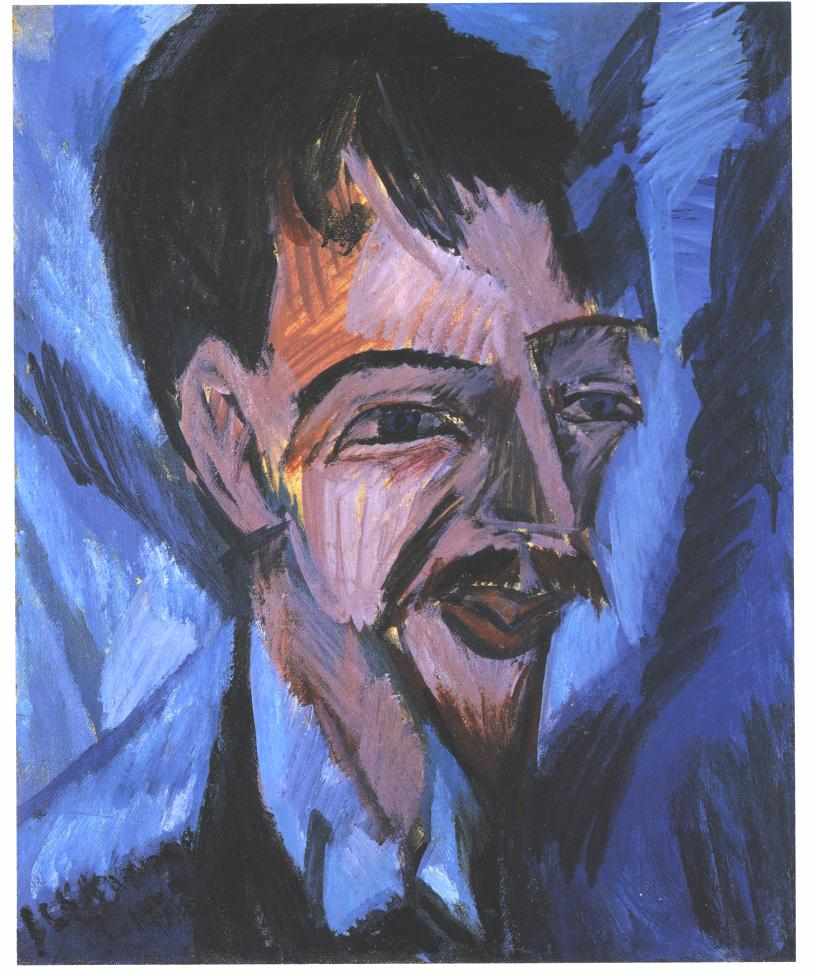
The horrors of World War I deeply affected Kirchner. He faced personal battles with mental health, which influenced his art. His experiences as a soldier and the trauma of war are vividly reflected in 'Self-Portrait as a Soldier,' showcasing his inner conflict and emotional distress.
Visual Analysis: The Symbolism in Self-Portrait as a Soldier
Color Palette: The Use of Bold Colors to Convey Emotion
Kirchner's choice of bold, clashing colors in this painting creates a sense of unease. The striking reds and greens evoke feelings of anxiety and chaos. This vibrant palette serves as a visual representation of the artist's turbulent emotions during wartime.
Brushwork Techniques: Impulsive Strokes and Their Significance
The impulsive brushwork in 'Self-Portrait as a Soldier' adds to the painting's emotional intensity. Kirchner's energetic strokes convey a sense of urgency and turmoil. This technique reflects his psychological state, emphasizing the chaos of his thoughts and experiences.
Facial Expression: A Reflection of Inner Turmoil
The soldier's face in the painting reveals deep inner turmoil. Kirchner's intense gaze and furrowed brow express feelings of despair and confusion. This powerful portrayal invites viewers to connect with the artist's emotional struggle, making it a poignant self-reflection.
Thematic Elements: War, Identity, and Isolation
War as a Catalyst: How Conflict Shapes Identity
In 'Self-Portrait as a Soldier,' war acts as a catalyst for identity transformation. Kirchner explores how conflict alters one's sense of self. The painting captures the profound impact of war on personal identity, highlighting the struggle between the soldier's duty and his inner self.
Isolation in Urban Life: Kirchner's Commentary on Society
Kirchner often depicted urban life as isolating and alienating. In this painting, the soldier's isolation reflects the broader societal disconnection experienced during and after the war. Kirchner critiques modern society's inability to connect on a deeper emotional level.
The Soldier's Gaze: A Window into the Artist's Psyche
The soldier's gaze in the painting serves as a window into Kirchner's psyche. It reveals vulnerability and a longing for understanding. This gaze invites viewers to empathize with the artist's struggles, creating a powerful emotional connection.
Artistic Techniques: Kirchner's Unique Style in Self-Portrait as a Soldier
Oil Painting Techniques: Layering and Texture
Kirchner employed innovative oil painting techniques to create depth and texture. His use of layering adds richness to the colors and enhances the emotional impact. This technique allows viewers to appreciate the complexity of his artistic expression.
Composition: The Arrangement of Elements in the Frame
The composition of 'Self-Portrait as a Soldier' is striking and deliberate. Kirchner's arrangement of elements draws the viewer's eye to the soldier's face, emphasizing his emotional state. The dynamic layout enhances the painting's overall impact and meaning.
Influence of Primitivism: A Look at Kirchner's Inspirations
Kirchner was influenced by Primitivism, which emphasized raw, emotional expression. This influence is evident in his bold forms and colors. By incorporating these elements, Kirchner created a unique style that resonated with the themes of Expressionism.
Historical Significance: The Role of Self-Portrait as a Soldier in Art History
Impact on Future Generations: Kirchner's Legacy in Modern Art
'Self-Portrait as a Soldier' has left a lasting impact on modern art. Kirchner's exploration of psychological themes paved the way for future artists. His work continues to inspire contemporary discussions about identity, trauma, and the human experience.
Exhibitions and Reception: How the Painting Was Initially Received
Upon its debut, 'Self-Portrait as a Soldier' received mixed reviews. Some praised its emotional depth, while others criticized its unconventional style. Over time, however, it has come to be recognized as a significant work in the Expressionist canon.
Comparative Analysis: Kirchner's Work vs. Other Expressionist Artists
When compared to other Expressionist artists, Kirchner's work stands out for its raw emotional power. While artists like Edvard Munch explored similar themes, Kirchner's unique style and personal experiences offer a distinct perspective on the human condition.
Personal Reflections: The Viewer's Experience with Self-Portrait as a Soldier
Emotional Resonance: What the Painting Evokes in Viewers
Viewers often feel a strong emotional resonance when encountering 'Self-Portrait as a Soldier.' The painting evokes feelings of empathy and reflection. It prompts viewers to consider their own experiences with conflict and identity.
Connecting with the Artist: Understanding Kirchner's Perspective
Understanding Kirchner's perspective enhances the viewer's experience. By delving into his personal struggles, viewers can connect more deeply with the painting. This connection fosters a greater appreciation for the emotional weight of his work.
Art as Therapy: The Healing Power of Kirchner's Work
Kirchner's art serves as a form of therapy, both for the artist and the viewer. His exploration of trauma and emotional pain resonates with many. Engaging with 'Self-Portrait as a Soldier' can provide a sense of healing and understanding for those grappling with similar issues.
FAQs about Self-Portrait as a Soldier by Ernst Ludwig Kirchner
What inspired Ernst Ludwig Kirchner to create Self-Portrait as a Soldier?
Kirchner was inspired by his experiences as a soldier during World War I. The trauma and emotional turmoil he faced influenced the creation of this powerful self-portrait.
How does Self-Portrait as a Soldier reflect the themes of Expressionism?
This painting embodies Expressionism through its bold colors, emotional intensity, and exploration of psychological themes. Kirchner's work captures the essence of human experience in a time of crisis.
What are the key elements of the painting's composition?
The composition features a striking arrangement that emphasizes the soldier's face. The use of color and brushwork enhances the emotional impact, drawing viewers into the artist's inner world.
In what ways does the painting depict the psychological effects of war?
'Self-Portrait as a Soldier' vividly illustrates the psychological scars of war. Kirchner's expression and the chaotic background reflect the trauma and confusion experienced by soldiers.
How has Self-Portrait as a Soldier influenced contemporary artists?
This painting has influenced many contemporary artists by highlighting the importance of emotional expression. Kirchner's exploration of identity and trauma continues to resonate in modern art.
What should I know about the reproduction of Self-Portrait as a Soldier?
Art reproductions of 'Self-Portrait as a Soldier' offer a superior alternative to prints. They capture the texture and depth of the original oil painting, allowing viewers to appreciate Kirchner's techniques more fully.
How can I appreciate the nuances of Kirchner's painting in a reproduction?
To appreciate the nuances in a reproduction, focus on the color variations and brushwork. Observing these details can enhance your understanding of Kirchner's emotional expression and artistic intent.
Original: $249.95
-70%$249.95
$74.98Product Information
Product Information
Shipping & Returns
Shipping & Returns
Description
Exploring the Emotional Depth of Self-Portrait as a Soldier by Ernst Ludwig Kirchner
Understanding Kirchner's Artistic Journey: The Context of Expressionism
The Birth of Expressionism: A Movement Defined
Expressionism emerged in the early 20th century as a powerful art movement. It sought to convey emotional experiences rather than physical reality. Artists used vivid colors and exaggerated forms to express feelings of anxiety, alienation, and turmoil.
Ernst Ludwig Kirchner: A Pioneer of Modern Art
Ernst Ludwig Kirchner was a leading figure in the Expressionist movement. He co-founded the influential group Die Brücke in 1905, which aimed to revolutionize art. Kirchner's innovative approach combined traditional techniques with modern themes, making him a trailblazer in the world of modern art.
Personal Struggles: The Impact of War on Kirchner's Work
The horrors of World War I deeply affected Kirchner. He faced personal battles with mental health, which influenced his art. His experiences as a soldier and the trauma of war are vividly reflected in 'Self-Portrait as a Soldier,' showcasing his inner conflict and emotional distress.
Visual Analysis: The Symbolism in Self-Portrait as a Soldier
Color Palette: The Use of Bold Colors to Convey Emotion
Kirchner's choice of bold, clashing colors in this painting creates a sense of unease. The striking reds and greens evoke feelings of anxiety and chaos. This vibrant palette serves as a visual representation of the artist's turbulent emotions during wartime.
Brushwork Techniques: Impulsive Strokes and Their Significance
The impulsive brushwork in 'Self-Portrait as a Soldier' adds to the painting's emotional intensity. Kirchner's energetic strokes convey a sense of urgency and turmoil. This technique reflects his psychological state, emphasizing the chaos of his thoughts and experiences.
Facial Expression: A Reflection of Inner Turmoil
The soldier's face in the painting reveals deep inner turmoil. Kirchner's intense gaze and furrowed brow express feelings of despair and confusion. This powerful portrayal invites viewers to connect with the artist's emotional struggle, making it a poignant self-reflection.
Thematic Elements: War, Identity, and Isolation
War as a Catalyst: How Conflict Shapes Identity
In 'Self-Portrait as a Soldier,' war acts as a catalyst for identity transformation. Kirchner explores how conflict alters one's sense of self. The painting captures the profound impact of war on personal identity, highlighting the struggle between the soldier's duty and his inner self.
Isolation in Urban Life: Kirchner's Commentary on Society
Kirchner often depicted urban life as isolating and alienating. In this painting, the soldier's isolation reflects the broader societal disconnection experienced during and after the war. Kirchner critiques modern society's inability to connect on a deeper emotional level.
The Soldier's Gaze: A Window into the Artist's Psyche
The soldier's gaze in the painting serves as a window into Kirchner's psyche. It reveals vulnerability and a longing for understanding. This gaze invites viewers to empathize with the artist's struggles, creating a powerful emotional connection.
Artistic Techniques: Kirchner's Unique Style in Self-Portrait as a Soldier
Oil Painting Techniques: Layering and Texture
Kirchner employed innovative oil painting techniques to create depth and texture. His use of layering adds richness to the colors and enhances the emotional impact. This technique allows viewers to appreciate the complexity of his artistic expression.
Composition: The Arrangement of Elements in the Frame
The composition of 'Self-Portrait as a Soldier' is striking and deliberate. Kirchner's arrangement of elements draws the viewer's eye to the soldier's face, emphasizing his emotional state. The dynamic layout enhances the painting's overall impact and meaning.
Influence of Primitivism: A Look at Kirchner's Inspirations
Kirchner was influenced by Primitivism, which emphasized raw, emotional expression. This influence is evident in his bold forms and colors. By incorporating these elements, Kirchner created a unique style that resonated with the themes of Expressionism.
Historical Significance: The Role of Self-Portrait as a Soldier in Art History
Impact on Future Generations: Kirchner's Legacy in Modern Art
'Self-Portrait as a Soldier' has left a lasting impact on modern art. Kirchner's exploration of psychological themes paved the way for future artists. His work continues to inspire contemporary discussions about identity, trauma, and the human experience.
Exhibitions and Reception: How the Painting Was Initially Received
Upon its debut, 'Self-Portrait as a Soldier' received mixed reviews. Some praised its emotional depth, while others criticized its unconventional style. Over time, however, it has come to be recognized as a significant work in the Expressionist canon.
Comparative Analysis: Kirchner's Work vs. Other Expressionist Artists
When compared to other Expressionist artists, Kirchner's work stands out for its raw emotional power. While artists like Edvard Munch explored similar themes, Kirchner's unique style and personal experiences offer a distinct perspective on the human condition.
Personal Reflections: The Viewer's Experience with Self-Portrait as a Soldier
Emotional Resonance: What the Painting Evokes in Viewers
Viewers often feel a strong emotional resonance when encountering 'Self-Portrait as a Soldier.' The painting evokes feelings of empathy and reflection. It prompts viewers to consider their own experiences with conflict and identity.
Connecting with the Artist: Understanding Kirchner's Perspective
Understanding Kirchner's perspective enhances the viewer's experience. By delving into his personal struggles, viewers can connect more deeply with the painting. This connection fosters a greater appreciation for the emotional weight of his work.
Art as Therapy: The Healing Power of Kirchner's Work
Kirchner's art serves as a form of therapy, both for the artist and the viewer. His exploration of trauma and emotional pain resonates with many. Engaging with 'Self-Portrait as a Soldier' can provide a sense of healing and understanding for those grappling with similar issues.
FAQs about Self-Portrait as a Soldier by Ernst Ludwig Kirchner
What inspired Ernst Ludwig Kirchner to create Self-Portrait as a Soldier?
Kirchner was inspired by his experiences as a soldier during World War I. The trauma and emotional turmoil he faced influenced the creation of this powerful self-portrait.
How does Self-Portrait as a Soldier reflect the themes of Expressionism?
This painting embodies Expressionism through its bold colors, emotional intensity, and exploration of psychological themes. Kirchner's work captures the essence of human experience in a time of crisis.
What are the key elements of the painting's composition?
The composition features a striking arrangement that emphasizes the soldier's face. The use of color and brushwork enhances the emotional impact, drawing viewers into the artist's inner world.
In what ways does the painting depict the psychological effects of war?
'Self-Portrait as a Soldier' vividly illustrates the psychological scars of war. Kirchner's expression and the chaotic background reflect the trauma and confusion experienced by soldiers.
How has Self-Portrait as a Soldier influenced contemporary artists?
This painting has influenced many contemporary artists by highlighting the importance of emotional expression. Kirchner's exploration of identity and trauma continues to resonate in modern art.
What should I know about the reproduction of Self-Portrait as a Soldier?
Art reproductions of 'Self-Portrait as a Soldier' offer a superior alternative to prints. They capture the texture and depth of the original oil painting, allowing viewers to appreciate Kirchner's techniques more fully.
How can I appreciate the nuances of Kirchner's painting in a reproduction?
To appreciate the nuances in a reproduction, focus on the color variations and brushwork. Observing these details can enhance your understanding of Kirchner's emotional expression and artistic intent.