Villa in Dresden
Discovering Villa in Dresden: A Masterpiece by Ernst Ludwig Kirchner
Artistic Context: Expressionism and Kirchner's Vision
The Role of Expressionism in Early 20th Century Art
Expressionism emerged in the early 1900s as a powerful movement that sought to convey emotional experiences rather than physical reality. Artists used bold colors, distorted forms, and exaggerated lines to express feelings of anxiety, joy, and despair. This movement was a reaction against the constraints of realism and traditional artistic norms, allowing artists to explore deeper psychological themes.
Ernst Ludwig Kirchner: A Pioneer of the German Expressionist Movement
Ernst Ludwig Kirchner was a founding member of Die Brücke, a group that played a crucial role in the development of German Expressionism. His work often reflected his tumultuous life and the societal changes of his time. Kirchner's innovative approach combined elements of modernity with a fascination for primitive art, making him a key figure in the Expressionist movement.
Influences on Kirchner's Work: From Fauvism to Primitivism
Kirchner drew inspiration from various art movements, including Fauvism, which emphasized vibrant colors and emotional depth. He also looked to Primitivism, which celebrated the raw and unrefined aspects of art. This blend of influences helped shape his unique style, characterized by bold brushwork and a vivid color palette that captured the essence of his subjects.
Villa in Dresden: An In-Depth Analysis of the Painting
Visual Elements: Color Palette and Composition
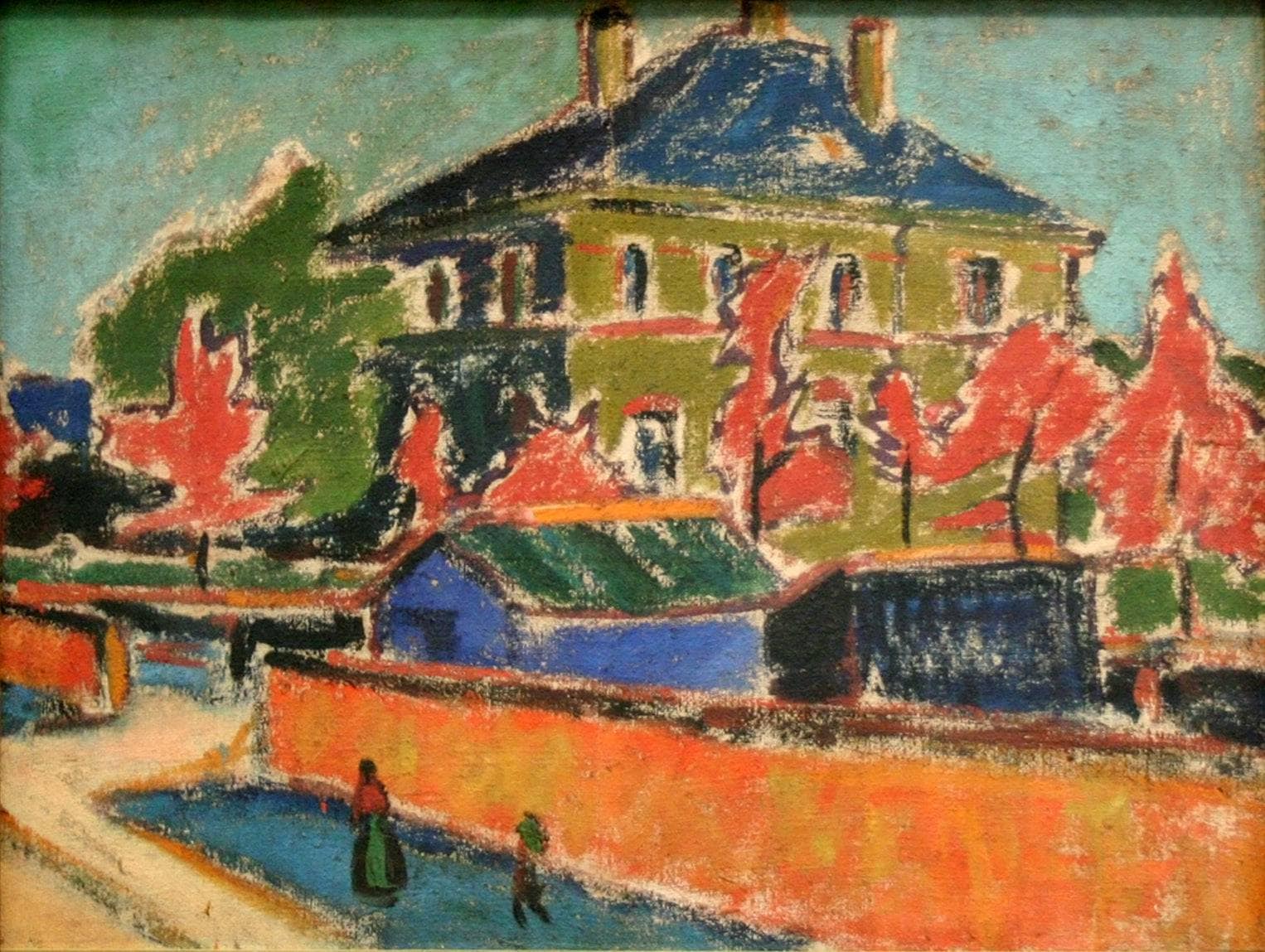
In "Villa in Dresden," Kirchner employs a striking color palette dominated by greens, blues, and earthy tones. The composition features a harmonious balance between the villa and its lush surroundings, creating a sense of unity. The use of light and shadow adds depth, inviting viewers to explore the intricate details of the scene.
Symbolism and Themes: Nature, Architecture, and Human Emotion
The villa symbolizes a retreat into nature, reflecting a desire for peace amidst the chaos of urban life. Kirchner intertwines themes of architecture and nature, suggesting a dialogue between human creation and the natural world. The painting evokes feelings of tranquility, yet hints at underlying tensions, capturing the complexity of human emotion.
Brushwork and Technique: Kirchner's Unique Style
Kirchner's brushwork in "Villa in Dresden" is both expressive and deliberate. He uses thick, visible strokes that convey movement and energy. This technique enhances the emotional impact of the painting, allowing viewers to feel the artist's connection to the landscape. His distinctive style sets him apart from his contemporaries, making this work a true representation of his artistic vision.
The Setting: Exploring Dresden's Cultural Landscape
Dresden: A City of Art and History in the Early 1900s
Dresden, known for its rich cultural heritage, was a hub for artists and intellectuals in the early 20th century. The city boasted stunning architecture, including the iconic Frauenkirche and the Zwinger Palace. This vibrant environment influenced Kirchner's work, providing a backdrop for his exploration of modern life and artistic expression.
Architectural Influences: The Villa and Its Surroundings
The villa depicted in the painting reflects the architectural styles of the time, blending traditional elements with modern design. Surrounded by lush gardens, it serves as a sanctuary for contemplation and creativity. Kirchner's choice to focus on this villa highlights the importance of domestic spaces in his exploration of human experience.
Nature's Role: The Integration of Landscape in Kirchner's Work
Nature plays a vital role in Kirchner's art, often serving as a source of inspiration and solace. In "Villa in Dresden," the integration of the landscape enhances the emotional depth of the painting. The vibrant greenery and serene atmosphere invite viewers to connect with the natural world, reflecting Kirchner's belief in the healing power of nature.
Emotional Resonance: The Viewer's Experience
Interpreting the Mood: Tranquility vs. Turmoil
The mood of "Villa in Dresden" oscillates between tranquility and underlying turmoil. While the serene setting suggests peace, the bold colors and dynamic brushwork hint at emotional complexity. This duality invites viewers to reflect on their own feelings and experiences, creating a personal connection to the artwork.
Personal Reflections: What Villa in Dresden Evokes
For many, "Villa in Dresden" evokes a sense of nostalgia and longing for simpler times. The painting's lush greenery and tranquil villa transport viewers to a peaceful retreat, encouraging introspection. Kirchner's ability to capture such emotions makes this piece resonate deeply with those who encounter it.
Connecting with Kirchner: The Artist's Emotional Journey
Kirchner's emotional journey is palpable in "Villa in Dresden." His struggles with mental health and societal pressures are reflected in the painting's vibrant yet tumultuous energy. This connection allows viewers to empathize with the artist, understanding the personal significance behind his work.
Legacy and Impact: Villa in Dresden in Art History
Critical Reception: How the Painting Was Initially Viewed
Upon its release, "Villa in Dresden" received mixed reviews. Some critics praised Kirchner's innovative style, while others struggled to understand his emotional approach. Over time, however, the painting has gained recognition as a significant work within the Expressionist movement, showcasing Kirchner's unique vision.
Influence on Future Artists: Kirchner's Lasting Legacy
Kirchner's influence extends beyond his lifetime, inspiring countless artists in various genres. His bold use of color and emotional depth paved the way for future movements, including Abstract Expressionism. Artists continue to draw from his techniques, ensuring that his legacy endures in contemporary art.
Villa in Dresden in Modern Art Discourse
Today, "Villa in Dresden" is celebrated in modern art discourse as a pivotal work that encapsulates the spirit of Expressionism. It serves as a reference point for discussions about emotional expression in art and the relationship between nature and architecture. Kirchner's ability to convey complex emotions through his work remains relevant and influential.
FAQs About Villa in Dresden by Ernst Ludwig Kirchner
What is the significance of Villa in Dresden in Kirchner's body of work?
"Villa in Dresden" is significant as it showcases Kirchner's exploration of emotional depth and his connection to nature. It represents a turning point in his artistic journey, reflecting his personal struggles and artistic evolution.
How does Villa in Dresden reflect the themes of Expressionism?
The painting embodies Expressionism through its bold colors, dynamic brushwork, and emotional complexity. Kirchner captures the essence of human experience, inviting viewers to engage with their own feelings.
What emotions does Kirchner aim to convey through this painting?
Kirchner aims to convey a mix of tranquility and turmoil, reflecting the duality of human emotion. The serene setting contrasts with the vibrant colors, creating a rich emotional landscape.
What are the notable techniques used in Villa in Dresden?
Notable techniques include thick brushwork, a vivid color palette, and a unique composition that balances architecture and nature. Kirchner's expressive style enhances the emotional impact of the painting.
How has Villa in Dresden influenced contemporary artists?
Contemporary artists draw inspiration from Kirchner's emotional depth and innovative techniques. His work encourages exploration of personal experiences and emotional expression in modern art.
What should I know about the reproduction of Villa in Dresden?
Reproductions of "Villa in Dresden" offer a superior alternative to prints, capturing the texture and vibrancy of the original painting. These high-quality reproductions allow art lovers to appreciate Kirchner's work in their own spaces.
Are there different styles of reproductions available for this painting?
Yes, various styles of reproductions are available, including canvas and framed options. Each reproduction aims to reflect the original's beauty and emotional resonance, making it a perfect addition to any art collection.
Original: $299.95
-70%$299.95
$89.98Product Information
Product Information
Shipping & Returns
Shipping & Returns
Description
Discovering Villa in Dresden: A Masterpiece by Ernst Ludwig Kirchner
Artistic Context: Expressionism and Kirchner's Vision
The Role of Expressionism in Early 20th Century Art
Expressionism emerged in the early 1900s as a powerful movement that sought to convey emotional experiences rather than physical reality. Artists used bold colors, distorted forms, and exaggerated lines to express feelings of anxiety, joy, and despair. This movement was a reaction against the constraints of realism and traditional artistic norms, allowing artists to explore deeper psychological themes.
Ernst Ludwig Kirchner: A Pioneer of the German Expressionist Movement
Ernst Ludwig Kirchner was a founding member of Die Brücke, a group that played a crucial role in the development of German Expressionism. His work often reflected his tumultuous life and the societal changes of his time. Kirchner's innovative approach combined elements of modernity with a fascination for primitive art, making him a key figure in the Expressionist movement.
Influences on Kirchner's Work: From Fauvism to Primitivism
Kirchner drew inspiration from various art movements, including Fauvism, which emphasized vibrant colors and emotional depth. He also looked to Primitivism, which celebrated the raw and unrefined aspects of art. This blend of influences helped shape his unique style, characterized by bold brushwork and a vivid color palette that captured the essence of his subjects.
Villa in Dresden: An In-Depth Analysis of the Painting
Visual Elements: Color Palette and Composition
In "Villa in Dresden," Kirchner employs a striking color palette dominated by greens, blues, and earthy tones. The composition features a harmonious balance between the villa and its lush surroundings, creating a sense of unity. The use of light and shadow adds depth, inviting viewers to explore the intricate details of the scene.
Symbolism and Themes: Nature, Architecture, and Human Emotion
The villa symbolizes a retreat into nature, reflecting a desire for peace amidst the chaos of urban life. Kirchner intertwines themes of architecture and nature, suggesting a dialogue between human creation and the natural world. The painting evokes feelings of tranquility, yet hints at underlying tensions, capturing the complexity of human emotion.
Brushwork and Technique: Kirchner's Unique Style
Kirchner's brushwork in "Villa in Dresden" is both expressive and deliberate. He uses thick, visible strokes that convey movement and energy. This technique enhances the emotional impact of the painting, allowing viewers to feel the artist's connection to the landscape. His distinctive style sets him apart from his contemporaries, making this work a true representation of his artistic vision.
The Setting: Exploring Dresden's Cultural Landscape
Dresden: A City of Art and History in the Early 1900s
Dresden, known for its rich cultural heritage, was a hub for artists and intellectuals in the early 20th century. The city boasted stunning architecture, including the iconic Frauenkirche and the Zwinger Palace. This vibrant environment influenced Kirchner's work, providing a backdrop for his exploration of modern life and artistic expression.
Architectural Influences: The Villa and Its Surroundings
The villa depicted in the painting reflects the architectural styles of the time, blending traditional elements with modern design. Surrounded by lush gardens, it serves as a sanctuary for contemplation and creativity. Kirchner's choice to focus on this villa highlights the importance of domestic spaces in his exploration of human experience.
Nature's Role: The Integration of Landscape in Kirchner's Work
Nature plays a vital role in Kirchner's art, often serving as a source of inspiration and solace. In "Villa in Dresden," the integration of the landscape enhances the emotional depth of the painting. The vibrant greenery and serene atmosphere invite viewers to connect with the natural world, reflecting Kirchner's belief in the healing power of nature.
Emotional Resonance: The Viewer's Experience
Interpreting the Mood: Tranquility vs. Turmoil
The mood of "Villa in Dresden" oscillates between tranquility and underlying turmoil. While the serene setting suggests peace, the bold colors and dynamic brushwork hint at emotional complexity. This duality invites viewers to reflect on their own feelings and experiences, creating a personal connection to the artwork.
Personal Reflections: What Villa in Dresden Evokes
For many, "Villa in Dresden" evokes a sense of nostalgia and longing for simpler times. The painting's lush greenery and tranquil villa transport viewers to a peaceful retreat, encouraging introspection. Kirchner's ability to capture such emotions makes this piece resonate deeply with those who encounter it.
Connecting with Kirchner: The Artist's Emotional Journey
Kirchner's emotional journey is palpable in "Villa in Dresden." His struggles with mental health and societal pressures are reflected in the painting's vibrant yet tumultuous energy. This connection allows viewers to empathize with the artist, understanding the personal significance behind his work.
Legacy and Impact: Villa in Dresden in Art History
Critical Reception: How the Painting Was Initially Viewed
Upon its release, "Villa in Dresden" received mixed reviews. Some critics praised Kirchner's innovative style, while others struggled to understand his emotional approach. Over time, however, the painting has gained recognition as a significant work within the Expressionist movement, showcasing Kirchner's unique vision.
Influence on Future Artists: Kirchner's Lasting Legacy
Kirchner's influence extends beyond his lifetime, inspiring countless artists in various genres. His bold use of color and emotional depth paved the way for future movements, including Abstract Expressionism. Artists continue to draw from his techniques, ensuring that his legacy endures in contemporary art.
Villa in Dresden in Modern Art Discourse
Today, "Villa in Dresden" is celebrated in modern art discourse as a pivotal work that encapsulates the spirit of Expressionism. It serves as a reference point for discussions about emotional expression in art and the relationship between nature and architecture. Kirchner's ability to convey complex emotions through his work remains relevant and influential.
FAQs About Villa in Dresden by Ernst Ludwig Kirchner
What is the significance of Villa in Dresden in Kirchner's body of work?
"Villa in Dresden" is significant as it showcases Kirchner's exploration of emotional depth and his connection to nature. It represents a turning point in his artistic journey, reflecting his personal struggles and artistic evolution.
How does Villa in Dresden reflect the themes of Expressionism?
The painting embodies Expressionism through its bold colors, dynamic brushwork, and emotional complexity. Kirchner captures the essence of human experience, inviting viewers to engage with their own feelings.
What emotions does Kirchner aim to convey through this painting?
Kirchner aims to convey a mix of tranquility and turmoil, reflecting the duality of human emotion. The serene setting contrasts with the vibrant colors, creating a rich emotional landscape.
What are the notable techniques used in Villa in Dresden?
Notable techniques include thick brushwork, a vivid color palette, and a unique composition that balances architecture and nature. Kirchner's expressive style enhances the emotional impact of the painting.
How has Villa in Dresden influenced contemporary artists?
Contemporary artists draw inspiration from Kirchner's emotional depth and innovative techniques. His work encourages exploration of personal experiences and emotional expression in modern art.
What should I know about the reproduction of Villa in Dresden?
Reproductions of "Villa in Dresden" offer a superior alternative to prints, capturing the texture and vibrancy of the original painting. These high-quality reproductions allow art lovers to appreciate Kirchner's work in their own spaces.
Are there different styles of reproductions available for this painting?
Yes, various styles of reproductions are available, including canvas and framed options. Each reproduction aims to reflect the original's beauty and emotional resonance, making it a perfect addition to any art collection.