🚚 Free Worldwide Shipping on All Orders!Shop Now

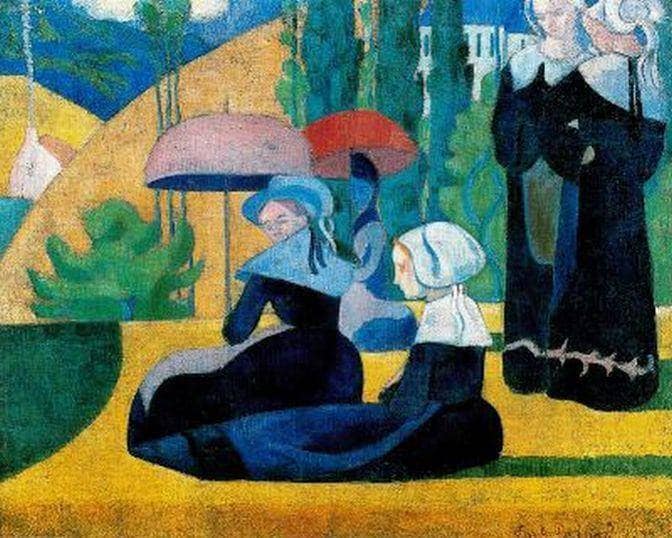
Breton Women with Parasols
Exploring the Artistic Essence of Breton Women with Parasols
Emile Bernard: A Pioneer of Post-Impressionism
Life and Influences of Emile Bernard
Emile Bernard, born in 1868 in the vibrant city of Lille, France, emerged as a significant figure in the Post-Impressionist movement. His artistic journey was shaped by the rich cultural tapestry of France, particularly the picturesque landscapes of Brittany. Bernard was influenced by renowned artists like Paul Gauguin and Vincent van Gogh, who encouraged him to explore bold colors and innovative forms. His travels through Brittany introduced him to the unique customs and traditions of the region, which deeply inspired his work.Bernard's Unique Style and Techniques
Bernard's style is characterized by a blend of vivid colors and expressive brushwork. He often employed a technique called "divisionism," where he applied pure colors side by side to create a luminous effect. This method allowed him to capture the essence of light and atmosphere in his paintings. His ability to convey emotion through color and form set him apart from his contemporaries, making his works, including "Breton Women with Parasols," truly captivating.Breton Women with Parasols: A Visual Narrative
Composition and Color Palette: A Study in Harmony
In "Breton Women with Parasols," Bernard masterfully composes the scene with a harmonious balance of figures and nature. The painting features women dressed in traditional Breton attire, their vibrant dresses contrasting beautifully with the soft greens and blues of the landscape. The use of light creates a sense of movement, as the parasols sway gently in the breeze, adding a dynamic quality to the artwork.Symbolism of the Parasols: Protection and Femininity
The parasols in this painting symbolize both protection and femininity. They shield the women from the sun, representing the nurturing aspect of womanhood. Additionally, the parasols serve as a metaphor for the social roles women played in late 19th-century Brittany, where they balanced tradition and modernity. This duality adds depth to the visual narrative, inviting viewers to reflect on the lives of these women.Capturing the Essence of Breton Culture
Bernard's portrayal of Breton women encapsulates the spirit of the region. The traditional costumes, adorned with intricate lace and vibrant colors, reflect the rich cultural heritage of Brittany. The painting not only showcases the beauty of the landscape but also highlights the importance of community and tradition in Breton society. Through his art, Bernard preserves the essence of a time and place that is both unique and significant.The Historical Context of Breton Women with Parasols
Late 19th Century France: A Time of Change
The late 19th century was a period of transformation in France, marked by industrialization and social change. As cities grew, many artists, including Bernard, sought inspiration in rural areas like Brittany. This shift led to a renewed interest in traditional lifestyles and the natural world, which is vividly captured in "Breton Women with Parasols."The Role of Women in Breton Society
Women in Breton society played crucial roles, often managing households and participating in local traditions. Their attire, depicted in Bernard's painting, reflects their identity and cultural significance. The painting serves as a tribute to their strength and resilience, showcasing their contributions to both family and community life.Artistic Movements Influencing Bernard's Work
Bernard was influenced by various artistic movements, including Impressionism and Symbolism. These movements emphasized the importance of personal expression and emotional depth in art. Bernard's work embodies these principles, as he sought to convey the beauty of everyday life through his unique lens.Artistic Techniques and Materials Used in the Painting
Oil Painting Techniques: Brushwork and Texture
In "Breton Women with Parasols," Bernard utilized oil paints to achieve rich textures and vibrant colors. His brushwork varies from delicate strokes to bold, sweeping motions, creating a sense of depth and movement. This technique enhances the overall visual impact, drawing viewers into the scene.Color Theory: The Impact of Light and Shadow
Bernard's understanding of color theory is evident in this painting. He skillfully uses light and shadow to create a three-dimensional effect, making the figures appear lifelike. The interplay of colors not only captures the essence of the moment but also evokes emotions, inviting viewers to connect with the scene on a deeper level.Comparative Analysis: Breton Women with Parasols and Other Works
Contrasting with Contemporary Artists
When compared to the works of his contemporaries, Bernard's "Breton Women with Parasols" stands out for its unique blend of realism and abstraction. While many artists focused on urban themes, Bernard's dedication to rural life and traditional culture offers a refreshing perspective. His ability to capture the subtleties of human emotion and connection sets his work apart.Similar Themes in Bernard's Other Paintings
Themes of femininity, nature, and cultural identity recur throughout Bernard's oeuvre. In other works, he often explores the lives of women in rural settings, emphasizing their strength and resilience. This consistent focus on the female experience enriches his artistic narrative and provides a deeper understanding of his subjects.Understanding the Impact of Breton Women with Parasols
Reception and Critique: How the Painting Was Viewed
Upon its release, "Breton Women with Parasols" received mixed reviews. Some critics praised Bernard's innovative approach to color and composition, while others found it too unconventional. Over time, however, the painting has gained recognition for its emotional depth and cultural significance, solidifying Bernard's place in art history.Legacy of the Painting in Modern Art
Today, "Breton Women with Parasols" is celebrated as a significant work in the Post-Impressionist canon. Its influence can be seen in contemporary art, where themes of identity and cultural heritage continue to resonate. The painting serves as a reminder of the enduring power of art to capture the human experience.FAQs about Breton Women with Parasols
What is the significance of the parasols in the painting?
The parasols symbolize protection and femininity, representing the nurturing roles of women in Breton society.How does Emile Bernard's style differ from other Post-Impressionists?
Bernard's style combines vivid colors and expressive brushwork, focusing on rural life and cultural identity, setting him apart from his contemporaries.What themes are prevalent in Breton Women with Parasols?
Themes of femininity, tradition, and the beauty of rural life are central to the painting, reflecting the essence of Breton culture.Where can I see the original Breton Women with Parasols?
The original painting is housed in a prominent museum, showcasing Bernard's work alongside other masterpieces of the era.What inspired Emile Bernard to create this painting?
Bernard was inspired by the beauty of Brittany and the strength of its women, capturing their essence through vibrant colors and dynamic compositions.How does this painting reflect the culture of Brittany?
The painting highlights traditional Breton attire and customs, celebrating the region's rich cultural heritage and the role of women in society.What should I know about reproducing this artwork?
When reproducing "Breton Women with Parasols," consider high-quality oil painting reproductions, which offer superior detail and texture compared to standard prints, ensuring the artwork's vibrancy and emotional depth are preserved.Select Size
From $89.98
Original: $299.95
-70%Breton Women with Parasols—
$299.95
$89.98Product Information
Product Information
Shipping & Returns
Shipping & Returns