Red Tree on the Beach
Exploring the Vibrant World of Red Tree on the Beach by Ernst Ludwig Kirchner
Introduction to Kirchner's Expressionist Masterpiece
The Significance of Expressionism in Kirchner's Work
Ernst Ludwig Kirchner stands as a pivotal figure in the Expressionist movement, known for his bold colors and emotional depth. His painting, Red Tree on the Beach, exemplifies the core principles of Expressionism, where personal feelings and perceptions take center stage. Kirchner's work often reflects a deep connection to nature, infused with vibrant energy and raw emotion.
Understanding the Context of Early 20th Century Art
The early 20th century was a time of great change in the art world. Movements like Fauvism and German Expressionism emerged, challenging traditional artistic norms. Kirchner, as a member of the Die Brücke group, sought to break free from conventional representation, embracing a more subjective and emotional approach to art.
Visual Elements of Red Tree on the Beach
Color Palette: The Bold Use of Red and Blue Tones
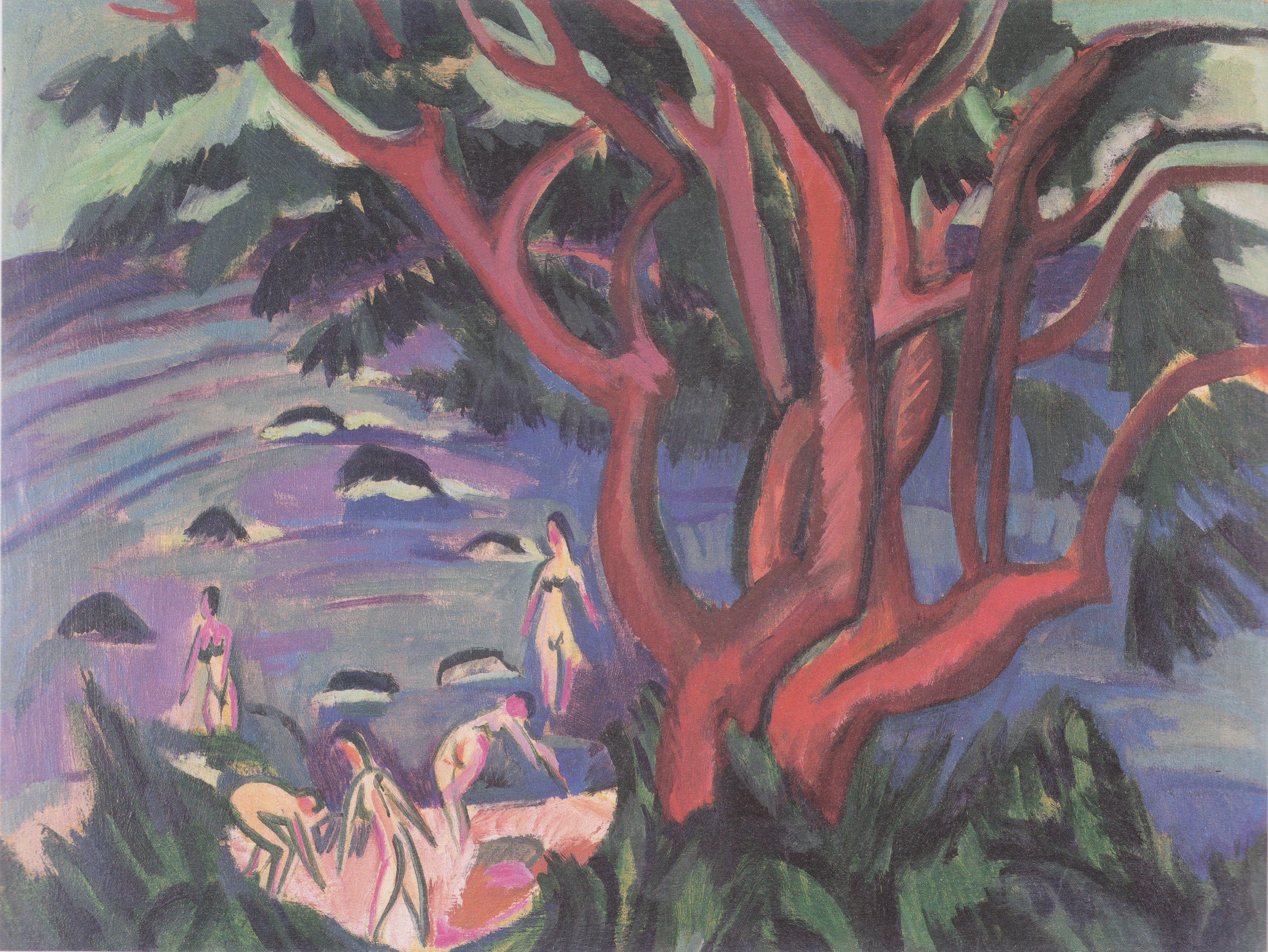
In Red Tree on the Beach, Kirchner employs a striking color palette dominated by vivid reds and deep blues. The red tree stands out against the serene beach backdrop, symbolizing passion and vitality. This bold use of color not only captures the viewer's attention but also evokes strong emotional responses.
Composition: The Dynamic Arrangement of Figures and Nature
The composition of this painting is dynamic and engaging. Kirchner skillfully arranges figures amidst the natural landscape, creating a sense of movement and interaction. The placement of the red tree draws the eye, while the surrounding elements enhance the overall harmony of the scene.
Brushwork Techniques: Capturing Emotion Through Texture
Kirchner's brushwork in Red Tree on the Beach is expressive and textured. He uses thick, bold strokes to convey emotion and energy. This technique adds depth to the painting, allowing viewers to feel the intensity of the moment captured on canvas.
Thematic Exploration: Nature and Human Connection
Symbolism of the Red Tree: A Beacon of Passion and Life
The red tree in this artwork serves as a powerful symbol of life and passion. It stands tall and vibrant, representing the strength of nature and the human spirit. This symbolism invites viewers to reflect on their own connections to the natural world.
Beach Scene: A Reflection of Freedom and Escape
The beach setting in Red Tree on the Beach evokes feelings of freedom and escape. The open space and gentle waves suggest a retreat from the chaos of urban life. Kirchner captures this sense of liberation, inviting viewers to immerse themselves in the tranquility of the scene.
Figures in the Landscape: Interplay Between Humanity and Nature
The figures depicted in the painting interact harmoniously with the landscape. They embody a sense of joy and connection to their surroundings. This interplay highlights the relationship between humanity and nature, a recurring theme in Kirchner's work.
Historical Context: Kirchner's Life and Influences
Ernst Ludwig Kirchner: A Pioneer of the Die Brücke Movement
Kirchner co-founded the Die Brücke movement in 1905, which aimed to create a new form of art that expressed modern life. His innovative approach and commitment to emotional authenticity set him apart from his contemporaries. Red Tree on the Beach reflects his dedication to this artistic vision.
The Impact of World War I on Kirchner's Artistic Vision
The trauma of World War I profoundly affected Kirchner's work. The chaos and destruction he witnessed influenced his artistic style, leading to more intense colors and distorted forms. This painting, created during this tumultuous period, captures the emotional turmoil of the time.
Influences from German Romanticism and Fauvism
Kirchner drew inspiration from German Romanticism, which emphasized emotion and individual experience. Additionally, the Fauvist movement's bold colors and expressive brushwork left a lasting impact on his style. These influences are evident in the vibrant hues and emotional depth of Red Tree on the Beach.
Artistic Techniques: Kirchner's Unique Style
Oil Painting Techniques: Layering and Color Mixing
Kirchner's oil painting techniques involve layering and color mixing to achieve depth and vibrancy. He skillfully blends colors to create a sense of movement and life within the painting. This technique enhances the emotional impact of Red Tree on the Beach.
Emotional Expression Through Distorted Forms
In this artwork, Kirchner often distorts forms to convey emotion. This approach allows him to express feelings that go beyond mere representation. The figures and landscape in Red Tree on the Beach reflect a heightened emotional state, inviting viewers to connect with the artist's inner world.
Innovative Use of Perspective in Landscape Painting
Kirchner's innovative perspective in landscape painting sets him apart from his peers. He often employs unusual angles and viewpoints, creating a sense of depth and movement. This technique is evident in Red Tree on the Beach, where the viewer feels immersed in the scene.
Legacy of Red Tree on the Beach
Influence on Modern Art and Contemporary Artists
Red Tree on the Beach has left a lasting legacy in the art world. Its bold colors and emotional depth continue to inspire modern artists. Kirchner's unique style paved the way for future generations to explore the emotional aspects of art.
Red Tree on the Beach in Art History: A Lasting Impression
This painting holds a significant place in art history. It represents a turning point in the Expressionist movement, showcasing Kirchner's innovative techniques and emotional depth. Art historians often cite it as a key work that exemplifies the spirit of early 20th-century art.
Current Exhibitions and Collections Featuring Kirchner's Work
Today, Red Tree on the Beach is featured in prestigious collections and exhibitions worldwide. Art lovers can find it in major museums, where it continues to captivate audiences with its vibrant colors and emotional resonance. Kirchner's work remains a vital part of the art conversation.
FAQs About Red Tree on the Beach
What inspired Ernst Ludwig Kirchner to paint Red Tree on the Beach?
Kirchner was inspired by his love for nature and the emotional experiences he encountered during his life. The vibrant colors and dynamic forms reflect his desire to express the beauty and intensity of the world around him.
What are the main themes depicted in Red Tree on the Beach?
The main themes include the connection between humanity and nature, freedom, and emotional expression. The red tree symbolizes passion, while the beach scene represents escape and tranquility.
How does Kirchner's style differ from other Expressionist artists?
Kirchner's style is characterized by bold colors, dynamic compositions, and emotional depth. While other Expressionists focused on abstraction, Kirchner maintained a strong connection to the natural world, blending realism with emotional expression.
Where can I see the original Red Tree on the Beach painting?
The original painting is housed in a prominent museum collection. Art enthusiasts can visit institutions that feature Kirchner's work to experience the painting in person.
What is the significance of the colors used in this painting?
The colors in Red Tree on the Beach are significant as they convey emotion and energy. The vibrant red symbolizes passion, while the blues evoke calmness, creating a dynamic interplay that enhances the overall impact of the artwork.
How does Red Tree on the Beach reflect Kirchner's personal experiences?
This painting reflects Kirchner's personal experiences with nature and his emotional struggles. The vibrant colors and dynamic forms capture his desire for freedom and connection to the world around him.
FAQs About Painting Reproductions
What should I consider when purchasing a reproduction of Red Tree on the Beach?
When purchasing a reproduction, consider the quality of materials, the artist's technique, and the level of detail. Look for reproductions that capture the vibrant colors and textures of the original painting.
How can I ensure the quality of a painting reproduction?
To ensure quality, choose reputable sellers who specialize in art reproductions. Look for reproductions that use high-quality canvas and paints to replicate the original's vibrancy and detail.
Original: $299.95
-70%$299.95
$89.98Product Information
Product Information
Shipping & Returns
Shipping & Returns
Description
Exploring the Vibrant World of Red Tree on the Beach by Ernst Ludwig Kirchner
Introduction to Kirchner's Expressionist Masterpiece
The Significance of Expressionism in Kirchner's Work
Ernst Ludwig Kirchner stands as a pivotal figure in the Expressionist movement, known for his bold colors and emotional depth. His painting, Red Tree on the Beach, exemplifies the core principles of Expressionism, where personal feelings and perceptions take center stage. Kirchner's work often reflects a deep connection to nature, infused with vibrant energy and raw emotion.
Understanding the Context of Early 20th Century Art
The early 20th century was a time of great change in the art world. Movements like Fauvism and German Expressionism emerged, challenging traditional artistic norms. Kirchner, as a member of the Die Brücke group, sought to break free from conventional representation, embracing a more subjective and emotional approach to art.
Visual Elements of Red Tree on the Beach
Color Palette: The Bold Use of Red and Blue Tones
In Red Tree on the Beach, Kirchner employs a striking color palette dominated by vivid reds and deep blues. The red tree stands out against the serene beach backdrop, symbolizing passion and vitality. This bold use of color not only captures the viewer's attention but also evokes strong emotional responses.
Composition: The Dynamic Arrangement of Figures and Nature
The composition of this painting is dynamic and engaging. Kirchner skillfully arranges figures amidst the natural landscape, creating a sense of movement and interaction. The placement of the red tree draws the eye, while the surrounding elements enhance the overall harmony of the scene.
Brushwork Techniques: Capturing Emotion Through Texture
Kirchner's brushwork in Red Tree on the Beach is expressive and textured. He uses thick, bold strokes to convey emotion and energy. This technique adds depth to the painting, allowing viewers to feel the intensity of the moment captured on canvas.
Thematic Exploration: Nature and Human Connection
Symbolism of the Red Tree: A Beacon of Passion and Life
The red tree in this artwork serves as a powerful symbol of life and passion. It stands tall and vibrant, representing the strength of nature and the human spirit. This symbolism invites viewers to reflect on their own connections to the natural world.
Beach Scene: A Reflection of Freedom and Escape
The beach setting in Red Tree on the Beach evokes feelings of freedom and escape. The open space and gentle waves suggest a retreat from the chaos of urban life. Kirchner captures this sense of liberation, inviting viewers to immerse themselves in the tranquility of the scene.
Figures in the Landscape: Interplay Between Humanity and Nature
The figures depicted in the painting interact harmoniously with the landscape. They embody a sense of joy and connection to their surroundings. This interplay highlights the relationship between humanity and nature, a recurring theme in Kirchner's work.
Historical Context: Kirchner's Life and Influences
Ernst Ludwig Kirchner: A Pioneer of the Die Brücke Movement
Kirchner co-founded the Die Brücke movement in 1905, which aimed to create a new form of art that expressed modern life. His innovative approach and commitment to emotional authenticity set him apart from his contemporaries. Red Tree on the Beach reflects his dedication to this artistic vision.
The Impact of World War I on Kirchner's Artistic Vision
The trauma of World War I profoundly affected Kirchner's work. The chaos and destruction he witnessed influenced his artistic style, leading to more intense colors and distorted forms. This painting, created during this tumultuous period, captures the emotional turmoil of the time.
Influences from German Romanticism and Fauvism
Kirchner drew inspiration from German Romanticism, which emphasized emotion and individual experience. Additionally, the Fauvist movement's bold colors and expressive brushwork left a lasting impact on his style. These influences are evident in the vibrant hues and emotional depth of Red Tree on the Beach.
Artistic Techniques: Kirchner's Unique Style
Oil Painting Techniques: Layering and Color Mixing
Kirchner's oil painting techniques involve layering and color mixing to achieve depth and vibrancy. He skillfully blends colors to create a sense of movement and life within the painting. This technique enhances the emotional impact of Red Tree on the Beach.
Emotional Expression Through Distorted Forms
In this artwork, Kirchner often distorts forms to convey emotion. This approach allows him to express feelings that go beyond mere representation. The figures and landscape in Red Tree on the Beach reflect a heightened emotional state, inviting viewers to connect with the artist's inner world.
Innovative Use of Perspective in Landscape Painting
Kirchner's innovative perspective in landscape painting sets him apart from his peers. He often employs unusual angles and viewpoints, creating a sense of depth and movement. This technique is evident in Red Tree on the Beach, where the viewer feels immersed in the scene.
Legacy of Red Tree on the Beach
Influence on Modern Art and Contemporary Artists
Red Tree on the Beach has left a lasting legacy in the art world. Its bold colors and emotional depth continue to inspire modern artists. Kirchner's unique style paved the way for future generations to explore the emotional aspects of art.
Red Tree on the Beach in Art History: A Lasting Impression
This painting holds a significant place in art history. It represents a turning point in the Expressionist movement, showcasing Kirchner's innovative techniques and emotional depth. Art historians often cite it as a key work that exemplifies the spirit of early 20th-century art.
Current Exhibitions and Collections Featuring Kirchner's Work
Today, Red Tree on the Beach is featured in prestigious collections and exhibitions worldwide. Art lovers can find it in major museums, where it continues to captivate audiences with its vibrant colors and emotional resonance. Kirchner's work remains a vital part of the art conversation.
FAQs About Red Tree on the Beach
What inspired Ernst Ludwig Kirchner to paint Red Tree on the Beach?
Kirchner was inspired by his love for nature and the emotional experiences he encountered during his life. The vibrant colors and dynamic forms reflect his desire to express the beauty and intensity of the world around him.
What are the main themes depicted in Red Tree on the Beach?
The main themes include the connection between humanity and nature, freedom, and emotional expression. The red tree symbolizes passion, while the beach scene represents escape and tranquility.
How does Kirchner's style differ from other Expressionist artists?
Kirchner's style is characterized by bold colors, dynamic compositions, and emotional depth. While other Expressionists focused on abstraction, Kirchner maintained a strong connection to the natural world, blending realism with emotional expression.
Where can I see the original Red Tree on the Beach painting?
The original painting is housed in a prominent museum collection. Art enthusiasts can visit institutions that feature Kirchner's work to experience the painting in person.
What is the significance of the colors used in this painting?
The colors in Red Tree on the Beach are significant as they convey emotion and energy. The vibrant red symbolizes passion, while the blues evoke calmness, creating a dynamic interplay that enhances the overall impact of the artwork.
How does Red Tree on the Beach reflect Kirchner's personal experiences?
This painting reflects Kirchner's personal experiences with nature and his emotional struggles. The vibrant colors and dynamic forms capture his desire for freedom and connection to the world around him.
FAQs About Painting Reproductions
What should I consider when purchasing a reproduction of Red Tree on the Beach?
When purchasing a reproduction, consider the quality of materials, the artist's technique, and the level of detail. Look for reproductions that capture the vibrant colors and textures of the original painting.
How can I ensure the quality of a painting reproduction?
To ensure quality, choose reputable sellers who specialize in art reproductions. Look for reproductions that use high-quality canvas and paints to replicate the original's vibrancy and detail.