The Tent
Exploring the Vibrant World of Ernst Ludwig Kirchner's "The Tent"
Artistic Context: The Expressionist Movement and Kirchner's Role
Understanding Expressionism: A Break from Tradition
Expressionism emerged in the early 20th century as a revolutionary art movement. It sought to convey emotional experiences rather than physical reality. Artists like Kirchner used bold colors and distorted forms to express feelings of anxiety, alienation, and passion. This movement marked a significant departure from traditional artistic norms, emphasizing subjective experience over objective representation.
Ernst Ludwig Kirchner: Life and Influences
Ernst Ludwig Kirchner was born in 1880 in Aschaffenburg, Germany. His early exposure to the beauty of nature and the vibrant culture of urban life greatly influenced his artistic vision. Kirchner's experiences as a soldier in World War I deeply affected his mental health and artistic output. His struggles with anxiety and depression often found expression in his art, making his work resonate with themes of turmoil and introspection.
The Role of the Die Brücke Group in Kirchner's Art
Kirchner co-founded the Die Brücke (The Bridge) group in 1905, which aimed to create a new artistic language. This collective of artists sought to bridge the gap between traditional art and modern expression. They embraced bold colors, dynamic forms, and a raw emotionality that defined their work. Kirchner's leadership within this group helped shape the direction of Expressionism, making him a pivotal figure in the movement.
Visual Analysis: The Composition and Color Palette of "The Tent"
Dynamic Composition: Figures and Forms in Motion
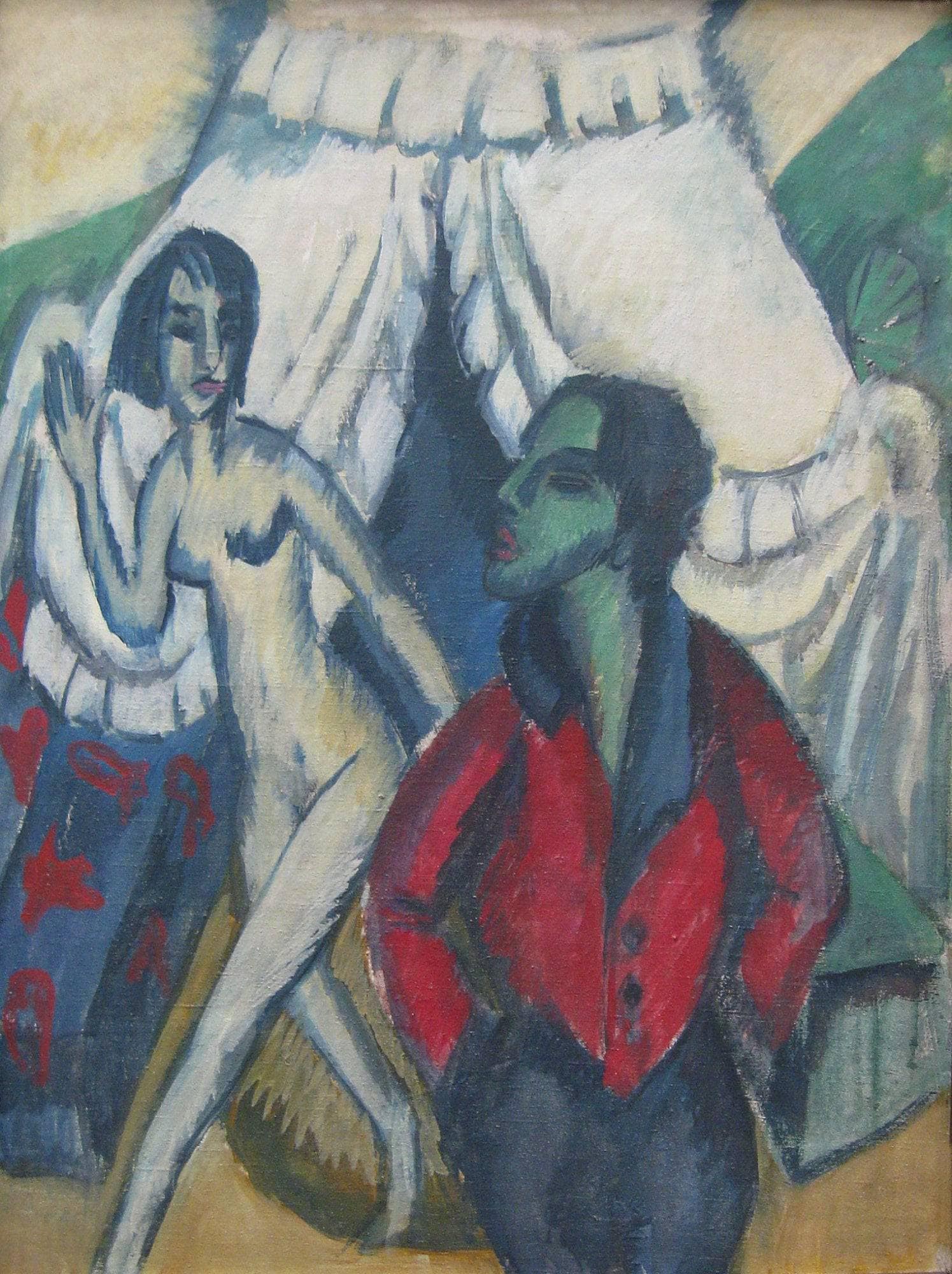
"The Tent" features a lively composition filled with figures engaged in various activities. The arrangement of the figures creates a sense of movement and energy. Kirchner's use of overlapping forms draws the viewer's eye across the canvas, inviting them to explore the scene. This dynamic quality reflects the vibrancy of life and the complexity of human interactions.
Color Symbolism: The Emotional Impact of Kirchner's Palette
Kirchner's color palette in "The Tent" is striking and emotive. He employs vivid reds, greens, and blues to evoke feelings of joy, tension, and unease. The colors not only enhance the visual appeal but also serve as a means of communication. Each hue carries emotional weight, allowing viewers to connect with the underlying themes of the painting.
Brushwork Techniques: Capturing Movement and Emotion
Kirchner's brushwork in "The Tent" is expressive and energetic. He uses bold, sweeping strokes to convey movement and emotion. This technique creates a sense of immediacy, as if the figures might leap off the canvas. The texture of the paint adds depth, inviting viewers to engage with the artwork on a tactile level.
Thematic Exploration: Nature, Humanity, and Isolation in "The Tent"
Nature as a Backdrop: The Relationship Between Figures and Landscape
In "The Tent," nature plays a crucial role in shaping the narrative. The lush landscape serves as a backdrop for the human figures, highlighting their connection to the environment. Kirchner's portrayal of nature reflects both beauty and chaos, mirroring the complexities of human emotions. This relationship emphasizes the interplay between humanity and the natural world.
Human Connection: The Interplay of Solitude and Togetherness
The figures in "The Tent" embody a complex mix of solitude and togetherness. While they are gathered in a communal space, their expressions and postures suggest a deeper sense of isolation. Kirchner captures the paradox of modern life, where individuals can feel alone even in a crowd. This theme resonates with contemporary audiences, reflecting ongoing struggles with connection in a fast-paced world.
Isolation in Modernity: Kirchner's Reflection on Society
Kirchner's work often reflects the isolation experienced in modern society. "The Tent" serves as a commentary on the disconnection felt by individuals amidst societal changes. The painting invites viewers to contemplate their own experiences of loneliness and the search for belonging. Kirchner's exploration of these themes remains relevant today, as many grapple with similar feelings in an increasingly digital world.
Historical Significance: "The Tent" in the Context of Early 20th Century Art
Impact on Modern Art: Kirchner's Legacy and Influence
"The Tent" is a significant work that showcases Kirchner's innovative approach to art. His bold use of color and form influenced countless artists in the years that followed. Kirchner's legacy is evident in the works of later Expressionists and even contemporary artists who draw inspiration from his emotional depth and stylistic choices.
Reception of "The Tent": Critical Responses Over Time
Upon its release, "The Tent" received mixed reviews. Some critics praised its emotional intensity and vibrant colors, while others dismissed it as chaotic. Over time, however, the painting has gained recognition as a masterpiece of Expressionism. Today, it is celebrated for its raw energy and profound exploration of human experience.
Connection to Other Works: Comparing "The Tent" with Kirchner's Oeuvre
"The Tent" shares thematic and stylistic elements with other works by Kirchner. His exploration of human emotion, nature, and modernity is a consistent thread throughout his oeuvre. Comparing "The Tent" with pieces like "Street, Berlin" reveals Kirchner's evolving perspective on society and the individual. Each work contributes to a deeper understanding of his artistic journey.
Personal Reflection: Experiencing "The Tent" in a Contemporary Setting
Emotional Resonance: What "The Tent" Evokes in Viewers Today
Today, "The Tent" continues to evoke strong emotions in viewers. Its vibrant colors and dynamic composition invite personal interpretation. Many find themselves reflecting on their own experiences of connection and isolation. The painting's emotional resonance makes it a powerful piece that speaks to the human condition.
Art in Everyday Life: Integrating Kirchner's Work into Modern Spaces
Integrating a reproduction of "The Tent" into modern spaces can enhance any environment. Unlike prints, high-quality oil painting reproductions capture the texture and depth of the original artwork. These reproductions bring the vibrancy of Kirchner's work into homes and offices, allowing individuals to experience the emotional impact of art daily. They serve as conversation starters and sources of inspiration.
FAQs About "The Tent" by Ernst Ludwig Kirchner
What is the story behind the creation of "The Tent"?
"The Tent" was created during a time of personal turmoil for Kirchner. It reflects his experiences in nature and the complexities of human relationships. The painting captures a moment of communal gathering, infused with Kirchner's emotional struggles.
How does "The Tent" reflect Kirchner's personal experiences?
The themes of isolation and connection in "The Tent" mirror Kirchner's own feelings of anxiety and alienation. His life experiences, including his time in war and his struggles with mental health, deeply influenced the emotional depth of this work.
What are the main themes depicted in "The Tent"?
The main themes in "The Tent" include the relationship between humanity and nature, the interplay of solitude and togetherness, and the isolation felt in modern society. These themes resonate with viewers, making the painting timeless.
How has "The Tent" influenced other artists?
"The Tent" has inspired many artists within the Expressionist movement and beyond. Kirchner's bold use of color and emotional expression paved the way for future generations to explore similar themes in their work.
What techniques did Kirchner use in "The Tent"?
Kirchner employed dynamic brushwork, vibrant color palettes, and expressive forms in "The Tent." His techniques capture movement and emotion, creating a sense of immediacy that draws viewers into the scene.
How can I appreciate "The Tent" in a modern context?
To appreciate "The Tent" today, consider its emotional themes and the context of modern life. Reflect on your own experiences of connection and isolation. Viewing a high-quality reproduction can also enhance your appreciation, allowing you to engage with the artwork's texture and depth.
FAQs About the Reproduction of "The Tent"
What should I consider when purchasing a reproduction of "The Tent"?
When purchasing a reproduction of "The Tent," consider the quality of the materials used. Look for oil painting reproductions that capture the texture and vibrancy of the original work. Ensure the reproduction is made by skilled artists who understand Kirchner's techniques.
How can I ensure the quality of a reproduction of Kirchner's work?
To ensure quality, research reputable art reproduction companies. Look for reviews and examples of their work. A high-quality reproduction should reflect the colors, brushwork, and emotional depth of Kirchner's original painting.
Original: $299.95
-70%$299.95
$89.98Product Information
Product Information
Shipping & Returns
Shipping & Returns
Description
Exploring the Vibrant World of Ernst Ludwig Kirchner's "The Tent"
Artistic Context: The Expressionist Movement and Kirchner's Role
Understanding Expressionism: A Break from Tradition
Expressionism emerged in the early 20th century as a revolutionary art movement. It sought to convey emotional experiences rather than physical reality. Artists like Kirchner used bold colors and distorted forms to express feelings of anxiety, alienation, and passion. This movement marked a significant departure from traditional artistic norms, emphasizing subjective experience over objective representation.
Ernst Ludwig Kirchner: Life and Influences
Ernst Ludwig Kirchner was born in 1880 in Aschaffenburg, Germany. His early exposure to the beauty of nature and the vibrant culture of urban life greatly influenced his artistic vision. Kirchner's experiences as a soldier in World War I deeply affected his mental health and artistic output. His struggles with anxiety and depression often found expression in his art, making his work resonate with themes of turmoil and introspection.
The Role of the Die Brücke Group in Kirchner's Art
Kirchner co-founded the Die Brücke (The Bridge) group in 1905, which aimed to create a new artistic language. This collective of artists sought to bridge the gap between traditional art and modern expression. They embraced bold colors, dynamic forms, and a raw emotionality that defined their work. Kirchner's leadership within this group helped shape the direction of Expressionism, making him a pivotal figure in the movement.
Visual Analysis: The Composition and Color Palette of "The Tent"
Dynamic Composition: Figures and Forms in Motion
"The Tent" features a lively composition filled with figures engaged in various activities. The arrangement of the figures creates a sense of movement and energy. Kirchner's use of overlapping forms draws the viewer's eye across the canvas, inviting them to explore the scene. This dynamic quality reflects the vibrancy of life and the complexity of human interactions.
Color Symbolism: The Emotional Impact of Kirchner's Palette
Kirchner's color palette in "The Tent" is striking and emotive. He employs vivid reds, greens, and blues to evoke feelings of joy, tension, and unease. The colors not only enhance the visual appeal but also serve as a means of communication. Each hue carries emotional weight, allowing viewers to connect with the underlying themes of the painting.
Brushwork Techniques: Capturing Movement and Emotion
Kirchner's brushwork in "The Tent" is expressive and energetic. He uses bold, sweeping strokes to convey movement and emotion. This technique creates a sense of immediacy, as if the figures might leap off the canvas. The texture of the paint adds depth, inviting viewers to engage with the artwork on a tactile level.
Thematic Exploration: Nature, Humanity, and Isolation in "The Tent"
Nature as a Backdrop: The Relationship Between Figures and Landscape
In "The Tent," nature plays a crucial role in shaping the narrative. The lush landscape serves as a backdrop for the human figures, highlighting their connection to the environment. Kirchner's portrayal of nature reflects both beauty and chaos, mirroring the complexities of human emotions. This relationship emphasizes the interplay between humanity and the natural world.
Human Connection: The Interplay of Solitude and Togetherness
The figures in "The Tent" embody a complex mix of solitude and togetherness. While they are gathered in a communal space, their expressions and postures suggest a deeper sense of isolation. Kirchner captures the paradox of modern life, where individuals can feel alone even in a crowd. This theme resonates with contemporary audiences, reflecting ongoing struggles with connection in a fast-paced world.
Isolation in Modernity: Kirchner's Reflection on Society
Kirchner's work often reflects the isolation experienced in modern society. "The Tent" serves as a commentary on the disconnection felt by individuals amidst societal changes. The painting invites viewers to contemplate their own experiences of loneliness and the search for belonging. Kirchner's exploration of these themes remains relevant today, as many grapple with similar feelings in an increasingly digital world.
Historical Significance: "The Tent" in the Context of Early 20th Century Art
Impact on Modern Art: Kirchner's Legacy and Influence
"The Tent" is a significant work that showcases Kirchner's innovative approach to art. His bold use of color and form influenced countless artists in the years that followed. Kirchner's legacy is evident in the works of later Expressionists and even contemporary artists who draw inspiration from his emotional depth and stylistic choices.
Reception of "The Tent": Critical Responses Over Time
Upon its release, "The Tent" received mixed reviews. Some critics praised its emotional intensity and vibrant colors, while others dismissed it as chaotic. Over time, however, the painting has gained recognition as a masterpiece of Expressionism. Today, it is celebrated for its raw energy and profound exploration of human experience.
Connection to Other Works: Comparing "The Tent" with Kirchner's Oeuvre
"The Tent" shares thematic and stylistic elements with other works by Kirchner. His exploration of human emotion, nature, and modernity is a consistent thread throughout his oeuvre. Comparing "The Tent" with pieces like "Street, Berlin" reveals Kirchner's evolving perspective on society and the individual. Each work contributes to a deeper understanding of his artistic journey.
Personal Reflection: Experiencing "The Tent" in a Contemporary Setting
Emotional Resonance: What "The Tent" Evokes in Viewers Today
Today, "The Tent" continues to evoke strong emotions in viewers. Its vibrant colors and dynamic composition invite personal interpretation. Many find themselves reflecting on their own experiences of connection and isolation. The painting's emotional resonance makes it a powerful piece that speaks to the human condition.
Art in Everyday Life: Integrating Kirchner's Work into Modern Spaces
Integrating a reproduction of "The Tent" into modern spaces can enhance any environment. Unlike prints, high-quality oil painting reproductions capture the texture and depth of the original artwork. These reproductions bring the vibrancy of Kirchner's work into homes and offices, allowing individuals to experience the emotional impact of art daily. They serve as conversation starters and sources of inspiration.
FAQs About "The Tent" by Ernst Ludwig Kirchner
What is the story behind the creation of "The Tent"?
"The Tent" was created during a time of personal turmoil for Kirchner. It reflects his experiences in nature and the complexities of human relationships. The painting captures a moment of communal gathering, infused with Kirchner's emotional struggles.
How does "The Tent" reflect Kirchner's personal experiences?
The themes of isolation and connection in "The Tent" mirror Kirchner's own feelings of anxiety and alienation. His life experiences, including his time in war and his struggles with mental health, deeply influenced the emotional depth of this work.
What are the main themes depicted in "The Tent"?
The main themes in "The Tent" include the relationship between humanity and nature, the interplay of solitude and togetherness, and the isolation felt in modern society. These themes resonate with viewers, making the painting timeless.
How has "The Tent" influenced other artists?
"The Tent" has inspired many artists within the Expressionist movement and beyond. Kirchner's bold use of color and emotional expression paved the way for future generations to explore similar themes in their work.
What techniques did Kirchner use in "The Tent"?
Kirchner employed dynamic brushwork, vibrant color palettes, and expressive forms in "The Tent." His techniques capture movement and emotion, creating a sense of immediacy that draws viewers into the scene.
How can I appreciate "The Tent" in a modern context?
To appreciate "The Tent" today, consider its emotional themes and the context of modern life. Reflect on your own experiences of connection and isolation. Viewing a high-quality reproduction can also enhance your appreciation, allowing you to engage with the artwork's texture and depth.
FAQs About the Reproduction of "The Tent"
What should I consider when purchasing a reproduction of "The Tent"?
When purchasing a reproduction of "The Tent," consider the quality of the materials used. Look for oil painting reproductions that capture the texture and vibrancy of the original work. Ensure the reproduction is made by skilled artists who understand Kirchner's techniques.
How can I ensure the quality of a reproduction of Kirchner's work?
To ensure quality, research reputable art reproduction companies. Look for reviews and examples of their work. A high-quality reproduction should reflect the colors, brushwork, and emotional depth of Kirchner's original painting.