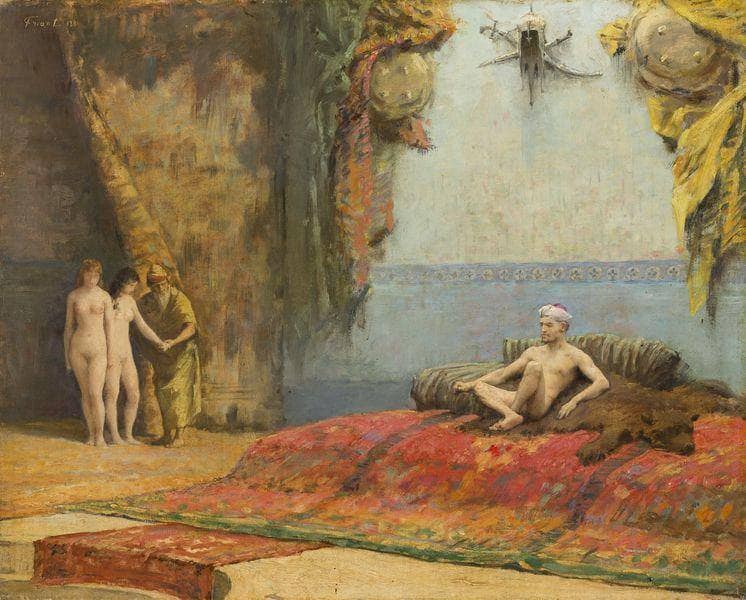
Presentation of the odalisques to the sultan
Exploring the Masterpiece: Presentation of the Odalisques to the Sultan by ‚àö√¢mile Friant
Historical Context of ‚àö√¢mile Friant's Artistic Journey
The Influence of 19th Century French Art Movements
In the 19th century, French art underwent significant transformations, influenced by movements such as Romanticism and Realism. Artists sought to capture emotion and reality, often exploring exotic themes. This period also saw the rise of Orientalism, where Western artists depicted Eastern subjects, often romanticizing and idealizing them. ‚àö√¢mile Friant, a prominent figure in this era, embraced these influences, creating works that reflect both the allure and complexity of Eastern culture.
‚àö√¢mile Friant: A Biographical Overview
Born in 1863 in Nancy, France, ‚àö√¢mile Friant became known for his captivating oil paintings. He studied at the École des Beaux-Arts and was influenced by the works of masters like Jean-Auguste-Dominique Ingres. Friant's career flourished as he exhibited at the Salon, gaining recognition for his unique style that blended realism with a touch of romanticism. His dedication to capturing the human form and emotion is evident in his masterpiece, Presentation of the Odalisques to the Sultan.
Artistic Techniques and Styles in Friant's Work
Friant's artistic style is characterized by meticulous attention to detail and a vibrant color palette. He often employed techniques such as chiaroscuro to create depth and drama in his paintings. His ability to convey texture, especially in fabrics and skin tones, sets his work apart. In Presentation of the Odalisques to the Sultan, these techniques come together to create a visually stunning narrative.
Unveiling the Scene: A Detailed Analysis of the Painting
Composition and Color Palette: A Visual Symphony
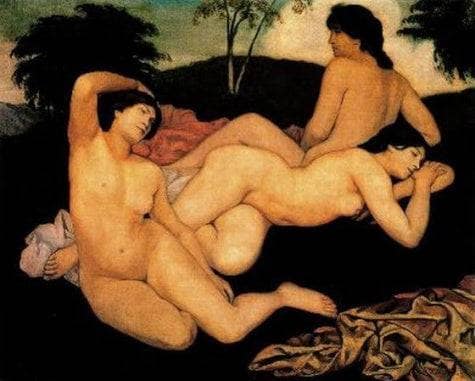
The composition of Presentation of the Odalisques to the Sultan is a harmonious blend of figures and rich backgrounds. Friant uses a warm color palette dominated by golds, reds, and deep blues, evoking a sense of luxury and opulence. The arrangement of the odalisques around the sultan creates a dynamic flow, drawing the viewer's eye across the canvas.
Symbolism in the Presentation of the Odalisques
This painting is rich in symbolism, representing the complex relationships within the Sultan's harem. The odalisques symbolize beauty, desire, and the exotic allure of the East. The sultan, depicted as a powerful figure, embodies authority and control. Together, they reflect the intricate dynamics of power and femininity in Ottoman society.
Character Study: The Sultan and His Odalisques
The characters in this painting are not just figures; they tell a story. The sultan, adorned in luxurious garments, exudes power and dominance. The odalisques, with their delicate features and intricate attire, represent both allure and vulnerability. Each figure is carefully crafted, showcasing Friant's skill in portraying human emotion and interaction.
Artistic Techniques: Brushwork and Texture in Friant's Oil Painting
Layering Techniques: Creating Depth and Dimension
Friant's use of layering techniques adds depth to Presentation of the Odalisques to the Sultan. He builds up layers of paint to create a rich texture that invites viewers to explore the details. This method enhances the three-dimensional quality of the figures and their surroundings, making the scene come alive.
Light and Shadow: The Play of Illumination in the Scene
The interplay of light and shadow in this painting is masterful. Friant skillfully uses light to highlight the opulence of the fabrics and the softness of the skin tones. Shadows add drama and depth, creating a sense of realism that draws the viewer into the intimate moment captured on canvas.
Cultural Significance: The Role of Odalisques in Ottoman Society
Understanding the Concept of Odalisques in Historical Context
Odalisques were more than just beautiful women in the Sultan's harem; they held significant cultural and social roles. Often educated and skilled in arts, they were symbols of status and luxury. Their portrayal in art reflects the fascination and complexity of Eastern culture during the 19th century, as Western artists sought to understand and depict this exotic world.
Gender Dynamics and Power Structures in the Sultan's Court
The dynamics within the Sultan's court were intricate. While the sultan held ultimate power, the odalisques wielded influence through their relationships. This duality is captured in Friant's painting, where the beauty of the odalisques contrasts with the authority of the sultan, highlighting the complexities of gender and power in Ottoman society.
Comparative Analysis: Friant's Work in Relation to His Contemporaries
Contrasting Themes with Other 19th Century Artists
Friant's Presentation of the Odalisques to the Sultan stands out among his contemporaries. While many artists focused on historical or mythological themes, Friant's work delves into the intimate and personal aspects of life in the Sultan's court. This focus on human emotion and interaction sets him apart in the realm of 19th-century art.
Influence of Orientalism in French Art: A Broader Perspective
Orientalism played a crucial role in shaping the artistic landscape of 19th-century France. Artists like EugÉne Delacroix and Jean-Léon Gér√¥me explored Eastern themes, often romanticizing the exotic. Friant's work, while influenced by this trend, offers a more nuanced portrayal of the odalisques, emphasizing their humanity and complexity rather than merely their beauty.
First-Hand Experience: Viewing the Painting in Person
Visiting Museums: Where to See the Original Work
To truly appreciate the grandeur of Presentation of the Odalisques to the Sultan, visiting the original painting is essential. It is housed in a prominent museum, where art lovers can experience its scale and detail up close. The vibrant colors and intricate brushwork are best appreciated in person, allowing viewers to connect with Friant's vision.
Emotional Impact: Personal Reflections on the Artwork
Viewing this painting evokes a range of emotions. The beauty of the odalisques and the commanding presence of the sultan create a captivating atmosphere. Many viewers find themselves drawn into the narrative, reflecting on themes of power, beauty, and the complexities of human relationships.
FAQs About the Painting and Its Reproduction
What is the story behind the Presentation of the Odalisques to the Sultan?
This painting captures a moment in the Sultan's court, showcasing the beauty and complexity of the odalisques. It reflects the cultural dynamics of the time, emphasizing themes of power and femininity.
What techniques did ‚àö√¢mile Friant use in this painting?
Friant employed layering techniques, chiaroscuro, and meticulous brushwork to create depth, texture, and realism in Presentation of the Odalisques to the Sultan.
How does this painting reflect the cultural attitudes of its time?
The painting reflects 19th-century fascination with the East, showcasing the romanticized view of the harem and the complex roles of women within it.
What are the key themes explored in the Presentation of the Odalisques?
Key themes include power dynamics, beauty, femininity, and the intricate relationships within the Sultan's court.
Where can I find more information about ‚àö√¢mile Friant's other works?
For more information, art enthusiasts can explore museum collections, art history books, and online databases dedicated to 19th-century French art.
What should I consider when purchasing a reproduction of this painting?
When purchasing a reproduction, consider the quality of the materials, the artist's technique, and the level of detail. Oil painting reproductions are superior to prints, offering a richer texture and depth that captures the essence of the original artwork.
How can I ensure the quality of an oil painting reproduction?
To ensure quality, look for reputable art reproduction companies that use high-quality canvases and oil paints. Check for reviews and examples of their work to guarantee a faithful representation of the original painting.
Original: $299.95
-70%$299.95
$89.98Product Information
Product Information
Shipping & Returns
Shipping & Returns
Description
Exploring the Masterpiece: Presentation of the Odalisques to the Sultan by ‚àö√¢mile Friant
Historical Context of ‚àö√¢mile Friant's Artistic Journey
The Influence of 19th Century French Art Movements
In the 19th century, French art underwent significant transformations, influenced by movements such as Romanticism and Realism. Artists sought to capture emotion and reality, often exploring exotic themes. This period also saw the rise of Orientalism, where Western artists depicted Eastern subjects, often romanticizing and idealizing them. ‚àö√¢mile Friant, a prominent figure in this era, embraced these influences, creating works that reflect both the allure and complexity of Eastern culture.
‚àö√¢mile Friant: A Biographical Overview
Born in 1863 in Nancy, France, ‚àö√¢mile Friant became known for his captivating oil paintings. He studied at the École des Beaux-Arts and was influenced by the works of masters like Jean-Auguste-Dominique Ingres. Friant's career flourished as he exhibited at the Salon, gaining recognition for his unique style that blended realism with a touch of romanticism. His dedication to capturing the human form and emotion is evident in his masterpiece, Presentation of the Odalisques to the Sultan.
Artistic Techniques and Styles in Friant's Work
Friant's artistic style is characterized by meticulous attention to detail and a vibrant color palette. He often employed techniques such as chiaroscuro to create depth and drama in his paintings. His ability to convey texture, especially in fabrics and skin tones, sets his work apart. In Presentation of the Odalisques to the Sultan, these techniques come together to create a visually stunning narrative.
Unveiling the Scene: A Detailed Analysis of the Painting
Composition and Color Palette: A Visual Symphony
The composition of Presentation of the Odalisques to the Sultan is a harmonious blend of figures and rich backgrounds. Friant uses a warm color palette dominated by golds, reds, and deep blues, evoking a sense of luxury and opulence. The arrangement of the odalisques around the sultan creates a dynamic flow, drawing the viewer's eye across the canvas.
Symbolism in the Presentation of the Odalisques
This painting is rich in symbolism, representing the complex relationships within the Sultan's harem. The odalisques symbolize beauty, desire, and the exotic allure of the East. The sultan, depicted as a powerful figure, embodies authority and control. Together, they reflect the intricate dynamics of power and femininity in Ottoman society.
Character Study: The Sultan and His Odalisques
The characters in this painting are not just figures; they tell a story. The sultan, adorned in luxurious garments, exudes power and dominance. The odalisques, with their delicate features and intricate attire, represent both allure and vulnerability. Each figure is carefully crafted, showcasing Friant's skill in portraying human emotion and interaction.
Artistic Techniques: Brushwork and Texture in Friant's Oil Painting
Layering Techniques: Creating Depth and Dimension
Friant's use of layering techniques adds depth to Presentation of the Odalisques to the Sultan. He builds up layers of paint to create a rich texture that invites viewers to explore the details. This method enhances the three-dimensional quality of the figures and their surroundings, making the scene come alive.
Light and Shadow: The Play of Illumination in the Scene
The interplay of light and shadow in this painting is masterful. Friant skillfully uses light to highlight the opulence of the fabrics and the softness of the skin tones. Shadows add drama and depth, creating a sense of realism that draws the viewer into the intimate moment captured on canvas.
Cultural Significance: The Role of Odalisques in Ottoman Society
Understanding the Concept of Odalisques in Historical Context
Odalisques were more than just beautiful women in the Sultan's harem; they held significant cultural and social roles. Often educated and skilled in arts, they were symbols of status and luxury. Their portrayal in art reflects the fascination and complexity of Eastern culture during the 19th century, as Western artists sought to understand and depict this exotic world.
Gender Dynamics and Power Structures in the Sultan's Court
The dynamics within the Sultan's court were intricate. While the sultan held ultimate power, the odalisques wielded influence through their relationships. This duality is captured in Friant's painting, where the beauty of the odalisques contrasts with the authority of the sultan, highlighting the complexities of gender and power in Ottoman society.
Comparative Analysis: Friant's Work in Relation to His Contemporaries
Contrasting Themes with Other 19th Century Artists
Friant's Presentation of the Odalisques to the Sultan stands out among his contemporaries. While many artists focused on historical or mythological themes, Friant's work delves into the intimate and personal aspects of life in the Sultan's court. This focus on human emotion and interaction sets him apart in the realm of 19th-century art.
Influence of Orientalism in French Art: A Broader Perspective
Orientalism played a crucial role in shaping the artistic landscape of 19th-century France. Artists like EugÉne Delacroix and Jean-Léon Gér√¥me explored Eastern themes, often romanticizing the exotic. Friant's work, while influenced by this trend, offers a more nuanced portrayal of the odalisques, emphasizing their humanity and complexity rather than merely their beauty.
First-Hand Experience: Viewing the Painting in Person
Visiting Museums: Where to See the Original Work
To truly appreciate the grandeur of Presentation of the Odalisques to the Sultan, visiting the original painting is essential. It is housed in a prominent museum, where art lovers can experience its scale and detail up close. The vibrant colors and intricate brushwork are best appreciated in person, allowing viewers to connect with Friant's vision.
Emotional Impact: Personal Reflections on the Artwork
Viewing this painting evokes a range of emotions. The beauty of the odalisques and the commanding presence of the sultan create a captivating atmosphere. Many viewers find themselves drawn into the narrative, reflecting on themes of power, beauty, and the complexities of human relationships.
FAQs About the Painting and Its Reproduction
What is the story behind the Presentation of the Odalisques to the Sultan?
This painting captures a moment in the Sultan's court, showcasing the beauty and complexity of the odalisques. It reflects the cultural dynamics of the time, emphasizing themes of power and femininity.
What techniques did ‚àö√¢mile Friant use in this painting?
Friant employed layering techniques, chiaroscuro, and meticulous brushwork to create depth, texture, and realism in Presentation of the Odalisques to the Sultan.
How does this painting reflect the cultural attitudes of its time?
The painting reflects 19th-century fascination with the East, showcasing the romanticized view of the harem and the complex roles of women within it.
What are the key themes explored in the Presentation of the Odalisques?
Key themes include power dynamics, beauty, femininity, and the intricate relationships within the Sultan's court.
Where can I find more information about ‚àö√¢mile Friant's other works?
For more information, art enthusiasts can explore museum collections, art history books, and online databases dedicated to 19th-century French art.
What should I consider when purchasing a reproduction of this painting?
When purchasing a reproduction, consider the quality of the materials, the artist's technique, and the level of detail. Oil painting reproductions are superior to prints, offering a richer texture and depth that captures the essence of the original artwork.
How can I ensure the quality of an oil painting reproduction?
To ensure quality, look for reputable art reproduction companies that use high-quality canvases and oil paints. Check for reviews and examples of their work to guarantee a faithful representation of the original painting.