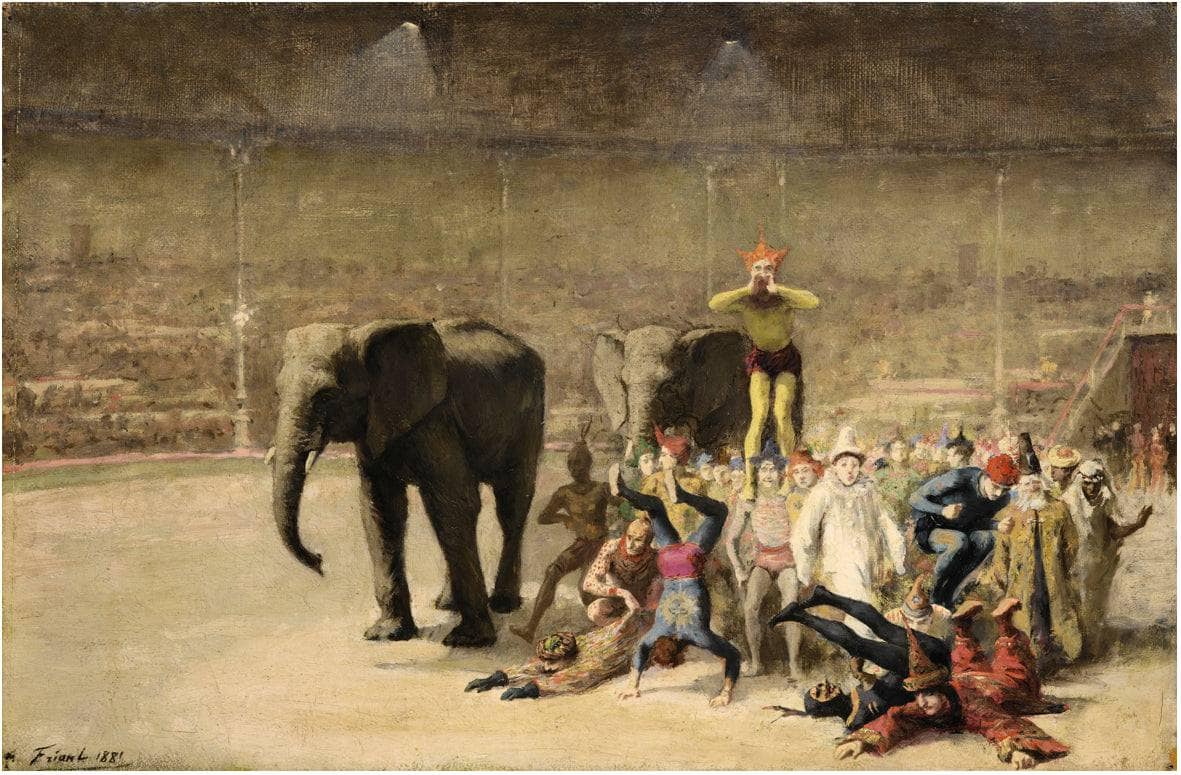
The entrance of the clowns
The Entrance of the Clowns: A Captivating Exploration of ‚àö√¢mile Friant's Masterpiece
Understanding the Historical Context of The Entrance of the Clowns
The Influence of 19th Century French Art on ‚àö√¢mile Friant
‚àö√¢mile Friant emerged during a vibrant period in 19th century French art, where movements like Realism and Impressionism flourished. Artists sought to capture everyday life and the human experience. Friant's work reflects this shift, showcasing the lively atmosphere of the circus, a popular subject that resonated with the public. His unique style combined meticulous detail with a sense of movement, making his paintings stand out in the art world.
How the Circus Became a Cultural Phenomenon in France
In the late 1800s, the circus captivated French society, becoming a symbol of entertainment and escapism. The rise of circus acts, featuring acrobats, clowns, and exotic animals, drew large crowds. This cultural phenomenon influenced many artists, including Friant, who portrayed the circus as a microcosm of society, filled with joy, laughter, and underlying sadness.
Visual Analysis of The Entrance of the Clowns
Color Palette: The Vibrant Hues that Bring the Scene to Life
Friant's use of a rich color palette in The Entrance of the Clowns is striking. He employs bold reds, deep blues, and bright yellows to evoke excitement and energy. These vibrant hues not only capture the viewer's attention but also reflect the lively atmosphere of the circus, inviting onlookers into a world of wonder.
Composition Techniques: Balancing Figures and Space
The composition of The Entrance of the Clowns is masterful. Friant skillfully balances the figures of the clowns with the surrounding space, creating a dynamic scene. The arrangement draws the viewer's eye across the canvas, allowing them to experience the movement and energy of the entrance as if they were part of the audience.
Lighting and Shadow: Creating Depth and Emotion
Friant expertly uses lighting and shadow to add depth to the painting. The interplay of light highlights the clowns' faces, showcasing their expressions of joy and mischief. Shadows create a sense of three-dimensionality, enhancing the emotional impact of the scene and inviting viewers to feel the excitement of the moment.
Thematic Elements in The Entrance of the Clowns
Joy and Melancholy: The Duality of Circus Life
The Entrance of the Clowns captures the duality of circus life, blending joy with an undercurrent of melancholy. While the clowns entertain with their antics, there is a hint of sadness in their expressions. This contrast invites viewers to reflect on the complexities of happiness and the hidden struggles behind the laughter.
Childhood Wonder: Capturing Innocence in a Chaotic World
Friant's painting evokes a sense of childhood wonder. The clowns, with their colorful costumes and playful demeanor, remind us of the innocence and joy of youth. In a chaotic world, this artwork serves as a reminder of the simple pleasures that can bring happiness to our lives.
Social Commentary: Reflections on Society Through Clown Imagery
Through the imagery of clowns, Friant offers a subtle social commentary. The clowns represent the marginalized figures in society, often overlooked yet essential to the fabric of community life. Their exaggerated expressions and antics reflect the human condition, prompting viewers to consider the roles we all play in society.
‚àö√¢mile Friant: The Artist Behind the Canvas
A Brief Biography: From Lorraine to Parisian Fame
‚àö√¢mile Friant was born in Lorraine, France, in 1863. He moved to Paris, where he gained recognition for his unique artistic vision. His ability to blend realism with impressionistic techniques earned him a place among the notable artists of his time. Friant's works often depict scenes of everyday life, infused with emotion and depth.
Artistic Style: The Blend of Realism and Impressionism
Friant's artistic style is a harmonious blend of realism and impressionism. He captures the essence of his subjects with precise detail while also conveying the fleeting moments of life. This duality allows his paintings to resonate with viewers on multiple levels, making them timeless pieces of art.
Notable Works: Other Masterpieces by ‚àö√¢mile Friant
In addition to The Entrance of the Clowns, Friant created several other masterpieces, including "The Dance of the Clowns" and "The Circus Parade." Each work showcases his talent for capturing the vibrancy of circus life and the emotional depth of his subjects, solidifying his legacy in the art world.
Symbolism and Iconography in The Entrance of the Clowns
The Role of Clowns: More Than Just Entertainment
In The Entrance of the Clowns, clowns symbolize more than mere entertainment. They embody the complexities of human emotion, serving as a mirror to society. Their exaggerated features and playful antics invite viewers to explore deeper themes of joy, sorrow, and the human experience.
Costumes and Props: What They Reveal About the Characters
The costumes and props in the painting are rich with symbolism. The vibrant colors and intricate designs of the clowns' outfits reveal their personalities and roles within the circus. Each detail tells a story, inviting viewers to delve into the characters' lives and the world they inhabit.
First-Hand Experience: Viewing The Entrance of the Clowns
What to Look For When Observing the Painting
When viewing The Entrance of the Clowns, pay attention to the expressions on the clowns' faces. Notice how Friant captures their emotions, from joy to mischief. Observe the dynamic composition and how the colors interact to create a lively atmosphere that draws you into the scene.
Emotional Reactions: How the Painting Resonates with Viewers
This painting evokes a range of emotional reactions. Viewers often feel a sense of nostalgia and joy, recalling their own experiences of the circus. The underlying melancholy can also resonate, prompting reflections on the complexities of life and the masks we wear.
Comparative Analysis: The Entrance of the Clowns and Other Circus Paintings
Contrasting Styles: Friant vs. Other Notable Circus Artists
When comparing The Entrance of the Clowns to works by other circus artists, such as Georges Seurat or Henri de Toulouse-Lautrec, Friant's style stands out. While Seurat focused on pointillism and Lautrec captured the nightlife of Paris, Friant's blend of realism and impressionism creates a unique narrative that immerses viewers in the circus experience.
Similar Themes: Exploring Joy and Sorrow in Circus Art
Many circus paintings explore themes of joy and sorrow, but Friant's work captures this duality with a distinct emotional depth. His portrayal of clowns reflects the complexity of human emotions, inviting viewers to engage with the artwork on a personal level.
FAQs About The Entrance of the Clowns
What inspired ‚àö√¢mile Friant to paint The Entrance of the Clowns?
Friant was inspired by the vibrant atmosphere of the circus and its ability to evoke a range of emotions. He sought to capture the essence of this cultural phenomenon and the stories behind the clowns.
What are the main themes depicted in The Entrance of the Clowns?
The main themes include the duality of joy and melancholy, childhood wonder, and social commentary on the roles of clowns in society.
How does The Entrance of the Clowns reflect the culture of its time?
This painting reflects the cultural fascination with the circus in 19th century France, highlighting the importance of entertainment and the complexities of human emotion during that era.
What techniques did ‚àö√¢mile Friant use to create depth in the painting?
Friant used techniques such as chiaroscuro to create depth, employing light and shadow to enhance the three-dimensionality of the figures and evoke emotional responses.
Where can I see The Entrance of the Clowns in person?
The Entrance of the Clowns is housed in a prominent museum, where art lovers can experience its beauty firsthand. Check local listings for exhibitions featuring Friant's work.
FAQs About Painting Reproductions
What should I consider when purchasing a reproduction of The Entrance of the Clowns?
When purchasing a reproduction, consider the quality of materials used, the level of detail, and whether it captures the essence of the original painting. Look for reputable sellers who specialize in art reproductions.
How can I ensure the quality of a reproduction of this painting?
To ensure quality, choose reproductions created using high-quality canvas and oil paints. Look for reproductions that are hand-painted rather than printed, as they offer a more authentic representation of the original artwork.
Original: $299.95
-70%$299.95
$89.98Product Information
Product Information
Shipping & Returns
Shipping & Returns
Description
The Entrance of the Clowns: A Captivating Exploration of ‚àö√¢mile Friant's Masterpiece
Understanding the Historical Context of The Entrance of the Clowns
The Influence of 19th Century French Art on ‚àö√¢mile Friant
‚àö√¢mile Friant emerged during a vibrant period in 19th century French art, where movements like Realism and Impressionism flourished. Artists sought to capture everyday life and the human experience. Friant's work reflects this shift, showcasing the lively atmosphere of the circus, a popular subject that resonated with the public. His unique style combined meticulous detail with a sense of movement, making his paintings stand out in the art world.
How the Circus Became a Cultural Phenomenon in France
In the late 1800s, the circus captivated French society, becoming a symbol of entertainment and escapism. The rise of circus acts, featuring acrobats, clowns, and exotic animals, drew large crowds. This cultural phenomenon influenced many artists, including Friant, who portrayed the circus as a microcosm of society, filled with joy, laughter, and underlying sadness.
Visual Analysis of The Entrance of the Clowns
Color Palette: The Vibrant Hues that Bring the Scene to Life
Friant's use of a rich color palette in The Entrance of the Clowns is striking. He employs bold reds, deep blues, and bright yellows to evoke excitement and energy. These vibrant hues not only capture the viewer's attention but also reflect the lively atmosphere of the circus, inviting onlookers into a world of wonder.
Composition Techniques: Balancing Figures and Space
The composition of The Entrance of the Clowns is masterful. Friant skillfully balances the figures of the clowns with the surrounding space, creating a dynamic scene. The arrangement draws the viewer's eye across the canvas, allowing them to experience the movement and energy of the entrance as if they were part of the audience.
Lighting and Shadow: Creating Depth and Emotion
Friant expertly uses lighting and shadow to add depth to the painting. The interplay of light highlights the clowns' faces, showcasing their expressions of joy and mischief. Shadows create a sense of three-dimensionality, enhancing the emotional impact of the scene and inviting viewers to feel the excitement of the moment.
Thematic Elements in The Entrance of the Clowns
Joy and Melancholy: The Duality of Circus Life
The Entrance of the Clowns captures the duality of circus life, blending joy with an undercurrent of melancholy. While the clowns entertain with their antics, there is a hint of sadness in their expressions. This contrast invites viewers to reflect on the complexities of happiness and the hidden struggles behind the laughter.
Childhood Wonder: Capturing Innocence in a Chaotic World
Friant's painting evokes a sense of childhood wonder. The clowns, with their colorful costumes and playful demeanor, remind us of the innocence and joy of youth. In a chaotic world, this artwork serves as a reminder of the simple pleasures that can bring happiness to our lives.
Social Commentary: Reflections on Society Through Clown Imagery
Through the imagery of clowns, Friant offers a subtle social commentary. The clowns represent the marginalized figures in society, often overlooked yet essential to the fabric of community life. Their exaggerated expressions and antics reflect the human condition, prompting viewers to consider the roles we all play in society.
‚àö√¢mile Friant: The Artist Behind the Canvas
A Brief Biography: From Lorraine to Parisian Fame
‚àö√¢mile Friant was born in Lorraine, France, in 1863. He moved to Paris, where he gained recognition for his unique artistic vision. His ability to blend realism with impressionistic techniques earned him a place among the notable artists of his time. Friant's works often depict scenes of everyday life, infused with emotion and depth.
Artistic Style: The Blend of Realism and Impressionism
Friant's artistic style is a harmonious blend of realism and impressionism. He captures the essence of his subjects with precise detail while also conveying the fleeting moments of life. This duality allows his paintings to resonate with viewers on multiple levels, making them timeless pieces of art.
Notable Works: Other Masterpieces by ‚àö√¢mile Friant
In addition to The Entrance of the Clowns, Friant created several other masterpieces, including "The Dance of the Clowns" and "The Circus Parade." Each work showcases his talent for capturing the vibrancy of circus life and the emotional depth of his subjects, solidifying his legacy in the art world.
Symbolism and Iconography in The Entrance of the Clowns
The Role of Clowns: More Than Just Entertainment
In The Entrance of the Clowns, clowns symbolize more than mere entertainment. They embody the complexities of human emotion, serving as a mirror to society. Their exaggerated features and playful antics invite viewers to explore deeper themes of joy, sorrow, and the human experience.
Costumes and Props: What They Reveal About the Characters
The costumes and props in the painting are rich with symbolism. The vibrant colors and intricate designs of the clowns' outfits reveal their personalities and roles within the circus. Each detail tells a story, inviting viewers to delve into the characters' lives and the world they inhabit.
First-Hand Experience: Viewing The Entrance of the Clowns
What to Look For When Observing the Painting
When viewing The Entrance of the Clowns, pay attention to the expressions on the clowns' faces. Notice how Friant captures their emotions, from joy to mischief. Observe the dynamic composition and how the colors interact to create a lively atmosphere that draws you into the scene.
Emotional Reactions: How the Painting Resonates with Viewers
This painting evokes a range of emotional reactions. Viewers often feel a sense of nostalgia and joy, recalling their own experiences of the circus. The underlying melancholy can also resonate, prompting reflections on the complexities of life and the masks we wear.
Comparative Analysis: The Entrance of the Clowns and Other Circus Paintings
Contrasting Styles: Friant vs. Other Notable Circus Artists
When comparing The Entrance of the Clowns to works by other circus artists, such as Georges Seurat or Henri de Toulouse-Lautrec, Friant's style stands out. While Seurat focused on pointillism and Lautrec captured the nightlife of Paris, Friant's blend of realism and impressionism creates a unique narrative that immerses viewers in the circus experience.
Similar Themes: Exploring Joy and Sorrow in Circus Art
Many circus paintings explore themes of joy and sorrow, but Friant's work captures this duality with a distinct emotional depth. His portrayal of clowns reflects the complexity of human emotions, inviting viewers to engage with the artwork on a personal level.
FAQs About The Entrance of the Clowns
What inspired ‚àö√¢mile Friant to paint The Entrance of the Clowns?
Friant was inspired by the vibrant atmosphere of the circus and its ability to evoke a range of emotions. He sought to capture the essence of this cultural phenomenon and the stories behind the clowns.
What are the main themes depicted in The Entrance of the Clowns?
The main themes include the duality of joy and melancholy, childhood wonder, and social commentary on the roles of clowns in society.
How does The Entrance of the Clowns reflect the culture of its time?
This painting reflects the cultural fascination with the circus in 19th century France, highlighting the importance of entertainment and the complexities of human emotion during that era.
What techniques did ‚àö√¢mile Friant use to create depth in the painting?
Friant used techniques such as chiaroscuro to create depth, employing light and shadow to enhance the three-dimensionality of the figures and evoke emotional responses.
Where can I see The Entrance of the Clowns in person?
The Entrance of the Clowns is housed in a prominent museum, where art lovers can experience its beauty firsthand. Check local listings for exhibitions featuring Friant's work.
FAQs About Painting Reproductions
What should I consider when purchasing a reproduction of The Entrance of the Clowns?
When purchasing a reproduction, consider the quality of materials used, the level of detail, and whether it captures the essence of the original painting. Look for reputable sellers who specialize in art reproductions.
How can I ensure the quality of a reproduction of this painting?
To ensure quality, choose reproductions created using high-quality canvas and oil paints. Look for reproductions that are hand-painted rather than printed, as they offer a more authentic representation of the original artwork.