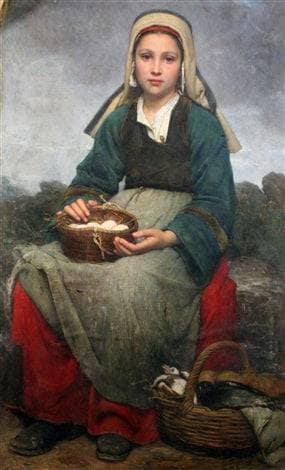
Portrait of a seated girl, holding a basket of eggs
Exploring the Artistic Essence of ‚àö√¢mile Auguste Hublin's Portrait of a Seated Girl
Historical Context of ‚àö√¢mile Auguste Hublin's Work
The Influence of 19th Century French Art
‚àö√¢mile Auguste Hublin emerged during a vibrant period in 19th century French art, characterized by a shift towards realism and emotional expression. This era saw artists like Gustave Courbet and Édouard Manet challenging traditional norms. Hublin's work reflects this transition, blending classical techniques with a fresh perspective on everyday subjects.
Hublin's Artistic Journey and Style Evolution
Hublin's artistic journey began in the early 1800s, where he honed his skills in various artistic styles. His evolution from academic training to embracing the Impressionist movement is evident in his later works. This transformation allowed him to capture the subtleties of light and emotion, making his portraits resonate with viewers.
In-Depth Analysis of the Portrait of a Seated Girl
Visual Composition: Color Palette and Brushwork Techniques
The Portrait of a Seated Girl showcases a harmonious color palette dominated by soft pastels and earthy tones. Hublin's brushwork is both delicate and expressive, employing techniques that create a sense of movement and life. The layering of colors adds depth, inviting viewers to explore the nuances of the girl's expression.
Symbolism of the Basket of Eggs: Meaning and Interpretation
The basket of eggs held by the girl symbolizes innocence, fertility, and the nurturing aspect of femininity. Eggs often represent new beginnings and potential, suggesting the girl's role in the cycle of life. This symbolism adds a layer of meaning, inviting viewers to reflect on the themes of growth and care.
Facial Expression and Body Language: Capturing Innocence
The girl's facial expression is a captivating blend of curiosity and serenity. Her wide eyes and gentle smile convey a sense of wonder, while her relaxed posture suggests comfort in her surroundings. Hublin masterfully captures the essence of childhood innocence, making the viewer feel a connection to her world.
Understanding the Subject: The Girl in the Portrait
Historical Significance of Young Female Subjects in Art
Young female subjects have long held a significant place in art history. They often symbolize purity and the ideal of femininity. Hublin's portrayal of the girl reflects societal views of the time, where innocence was celebrated and femininity was idealized.
Fashion and Attire: A Glimpse into 19th Century Clothing
The girl's attire offers a fascinating glimpse into 19th century fashion. Her simple yet elegant dress, adorned with delicate lace, reflects the modesty and grace of the era. This attention to detail not only enhances the painting's authenticity but also provides insight into the cultural norms of the time.
Artistic Techniques and Materials Used by Hublin
Oil Painting Techniques: Layering and Glazing Explained
Hublin employed traditional oil painting techniques, utilizing layering and glazing to achieve a luminous quality in his work. By applying thin layers of paint, he created depth and richness in color, allowing light to interact with the surface in captivating ways.
Brushwork Styles: Impasto vs. Smooth Finishes
In this portrait, Hublin skillfully balances impasto techniques with smooth finishes. The textured areas, particularly in the girl's hair and the basket, contrast beautifully with the soft, smooth skin tones. This dynamic brushwork adds visual interest and draws the viewer's eye across the canvas.
The Role of Light and Shadow in the Painting
Chiaroscuro: Creating Depth and Dimension
Hublin's use of chiaroscuro enhances the three-dimensionality of the portrait. The interplay of light and shadow creates a sense of depth, making the girl appear almost lifelike. This technique emphasizes her features and adds drama to the composition.
Natural Light: Enhancing the Subject's Features
The natural light in the painting highlights the girl's delicate features, illuminating her face and creating a soft glow. This careful manipulation of light not only enhances her beauty but also evokes a sense of warmth and intimacy in the viewer.
Comparative Analysis: Hublin's Work in Relation to His Contemporaries
Similarities with Other 19th Century Portrait Artists
Hublin's work shares similarities with contemporaries like Pierre-Auguste Renoir and Berthe Morisot, who also focused on capturing the essence of their subjects. Their shared emphasis on light, color, and emotion reflects the broader trends of the Impressionist movement.
Unique Elements that Set Hublin Apart
What sets Hublin apart is his ability to blend realism with a touch of romanticism. His portraits often convey a deeper emotional narrative, inviting viewers to engage with the subject on a personal level. This unique approach distinguishes his work in the crowded field of 19th century portraiture.
Legacy and Influence of ‚àö√¢mile Auguste Hublin
Impact on Future Generations of Artists
Hublin's influence extends beyond his lifetime, inspiring future generations of artists to explore the emotional depth of their subjects. His techniques and thematic choices continue to resonate, encouraging artists to capture the human experience in their work.
Current Relevance in Art Collections and Exhibitions
Today, Hublin's works, including the Portrait of a Seated Girl, are celebrated in art collections and exhibitions worldwide. His ability to convey emotion and beauty ensures that his art remains relevant and appreciated by contemporary audiences.
Frequently Asked Questions about the Portrait of a Seated Girl
What is the story behind the Portrait of a Seated Girl?
The Portrait of a Seated Girl captures a moment of innocence and tranquility, reflecting Hublin's fascination with childhood. The girl, with her basket of eggs, embodies the themes of nurturing and purity prevalent in 19th century art.
What techniques did ‚àö√¢mile Auguste Hublin use in this painting?
Hublin utilized traditional oil painting techniques, including layering and glazing, to create depth and luminosity. His brushwork varies from impasto to smooth finishes, enhancing the overall texture and visual appeal of the portrait.
How does this painting reflect the cultural context of its time?
This painting reflects the cultural context of 19th century France, where innocence and femininity were idealized. The girl's attire and the symbolism of the basket of eggs resonate with societal values of nurturing and purity.
What emotions does the girl in the portrait convey?
The girl conveys a sense of innocence and curiosity. Her gentle smile and wide eyes invite viewers to share in her wonder, creating an emotional connection that transcends time.
Are there any notable exhibitions featuring Hublin's work?
Hublin's work has been featured in various exhibitions, showcasing his contributions to 19th century art. Museums and galleries often highlight his portraits, celebrating their emotional depth and technical mastery.
FAQs about the Painting Reproduction
How can I ensure the quality of a reproduction of this painting?
To ensure quality, look for art reproduction companies that specialize in oil painting reproductions. They should use high-quality materials and techniques that replicate the original's texture and color depth.
What should I look for in a reputable art reproduction company?
Choose a company with a strong portfolio and positive customer reviews. They should offer detailed information about their reproduction process, including the types of materials used and the artists involved.
Can reproductions capture the details of the original painting?
Yes, high-quality reproductions can capture the intricate details of the original painting. Unlike prints, which may lack depth and texture, oil painting reproductions provide a more authentic representation of the artwork.
Original: $299.95
-70%$299.95
$89.98Product Information
Product Information
Shipping & Returns
Shipping & Returns
Description
Exploring the Artistic Essence of ‚àö√¢mile Auguste Hublin's Portrait of a Seated Girl
Historical Context of ‚àö√¢mile Auguste Hublin's Work
The Influence of 19th Century French Art
‚àö√¢mile Auguste Hublin emerged during a vibrant period in 19th century French art, characterized by a shift towards realism and emotional expression. This era saw artists like Gustave Courbet and Édouard Manet challenging traditional norms. Hublin's work reflects this transition, blending classical techniques with a fresh perspective on everyday subjects.
Hublin's Artistic Journey and Style Evolution
Hublin's artistic journey began in the early 1800s, where he honed his skills in various artistic styles. His evolution from academic training to embracing the Impressionist movement is evident in his later works. This transformation allowed him to capture the subtleties of light and emotion, making his portraits resonate with viewers.
In-Depth Analysis of the Portrait of a Seated Girl
Visual Composition: Color Palette and Brushwork Techniques
The Portrait of a Seated Girl showcases a harmonious color palette dominated by soft pastels and earthy tones. Hublin's brushwork is both delicate and expressive, employing techniques that create a sense of movement and life. The layering of colors adds depth, inviting viewers to explore the nuances of the girl's expression.
Symbolism of the Basket of Eggs: Meaning and Interpretation
The basket of eggs held by the girl symbolizes innocence, fertility, and the nurturing aspect of femininity. Eggs often represent new beginnings and potential, suggesting the girl's role in the cycle of life. This symbolism adds a layer of meaning, inviting viewers to reflect on the themes of growth and care.
Facial Expression and Body Language: Capturing Innocence
The girl's facial expression is a captivating blend of curiosity and serenity. Her wide eyes and gentle smile convey a sense of wonder, while her relaxed posture suggests comfort in her surroundings. Hublin masterfully captures the essence of childhood innocence, making the viewer feel a connection to her world.
Understanding the Subject: The Girl in the Portrait
Historical Significance of Young Female Subjects in Art
Young female subjects have long held a significant place in art history. They often symbolize purity and the ideal of femininity. Hublin's portrayal of the girl reflects societal views of the time, where innocence was celebrated and femininity was idealized.
Fashion and Attire: A Glimpse into 19th Century Clothing
The girl's attire offers a fascinating glimpse into 19th century fashion. Her simple yet elegant dress, adorned with delicate lace, reflects the modesty and grace of the era. This attention to detail not only enhances the painting's authenticity but also provides insight into the cultural norms of the time.
Artistic Techniques and Materials Used by Hublin
Oil Painting Techniques: Layering and Glazing Explained
Hublin employed traditional oil painting techniques, utilizing layering and glazing to achieve a luminous quality in his work. By applying thin layers of paint, he created depth and richness in color, allowing light to interact with the surface in captivating ways.
Brushwork Styles: Impasto vs. Smooth Finishes
In this portrait, Hublin skillfully balances impasto techniques with smooth finishes. The textured areas, particularly in the girl's hair and the basket, contrast beautifully with the soft, smooth skin tones. This dynamic brushwork adds visual interest and draws the viewer's eye across the canvas.
The Role of Light and Shadow in the Painting
Chiaroscuro: Creating Depth and Dimension
Hublin's use of chiaroscuro enhances the three-dimensionality of the portrait. The interplay of light and shadow creates a sense of depth, making the girl appear almost lifelike. This technique emphasizes her features and adds drama to the composition.
Natural Light: Enhancing the Subject's Features
The natural light in the painting highlights the girl's delicate features, illuminating her face and creating a soft glow. This careful manipulation of light not only enhances her beauty but also evokes a sense of warmth and intimacy in the viewer.
Comparative Analysis: Hublin's Work in Relation to His Contemporaries
Similarities with Other 19th Century Portrait Artists
Hublin's work shares similarities with contemporaries like Pierre-Auguste Renoir and Berthe Morisot, who also focused on capturing the essence of their subjects. Their shared emphasis on light, color, and emotion reflects the broader trends of the Impressionist movement.
Unique Elements that Set Hublin Apart
What sets Hublin apart is his ability to blend realism with a touch of romanticism. His portraits often convey a deeper emotional narrative, inviting viewers to engage with the subject on a personal level. This unique approach distinguishes his work in the crowded field of 19th century portraiture.
Legacy and Influence of ‚àö√¢mile Auguste Hublin
Impact on Future Generations of Artists
Hublin's influence extends beyond his lifetime, inspiring future generations of artists to explore the emotional depth of their subjects. His techniques and thematic choices continue to resonate, encouraging artists to capture the human experience in their work.
Current Relevance in Art Collections and Exhibitions
Today, Hublin's works, including the Portrait of a Seated Girl, are celebrated in art collections and exhibitions worldwide. His ability to convey emotion and beauty ensures that his art remains relevant and appreciated by contemporary audiences.
Frequently Asked Questions about the Portrait of a Seated Girl
What is the story behind the Portrait of a Seated Girl?
The Portrait of a Seated Girl captures a moment of innocence and tranquility, reflecting Hublin's fascination with childhood. The girl, with her basket of eggs, embodies the themes of nurturing and purity prevalent in 19th century art.
What techniques did ‚àö√¢mile Auguste Hublin use in this painting?
Hublin utilized traditional oil painting techniques, including layering and glazing, to create depth and luminosity. His brushwork varies from impasto to smooth finishes, enhancing the overall texture and visual appeal of the portrait.
How does this painting reflect the cultural context of its time?
This painting reflects the cultural context of 19th century France, where innocence and femininity were idealized. The girl's attire and the symbolism of the basket of eggs resonate with societal values of nurturing and purity.
What emotions does the girl in the portrait convey?
The girl conveys a sense of innocence and curiosity. Her gentle smile and wide eyes invite viewers to share in her wonder, creating an emotional connection that transcends time.
Are there any notable exhibitions featuring Hublin's work?
Hublin's work has been featured in various exhibitions, showcasing his contributions to 19th century art. Museums and galleries often highlight his portraits, celebrating their emotional depth and technical mastery.
FAQs about the Painting Reproduction
How can I ensure the quality of a reproduction of this painting?
To ensure quality, look for art reproduction companies that specialize in oil painting reproductions. They should use high-quality materials and techniques that replicate the original's texture and color depth.
What should I look for in a reputable art reproduction company?
Choose a company with a strong portfolio and positive customer reviews. They should offer detailed information about their reproduction process, including the types of materials used and the artists involved.
Can reproductions capture the details of the original painting?
Yes, high-quality reproductions can capture the intricate details of the original painting. Unlike prints, which may lack depth and texture, oil painting reproductions provide a more authentic representation of the artwork.