🚚 Free Worldwide Shipping on All Orders!Shop Now

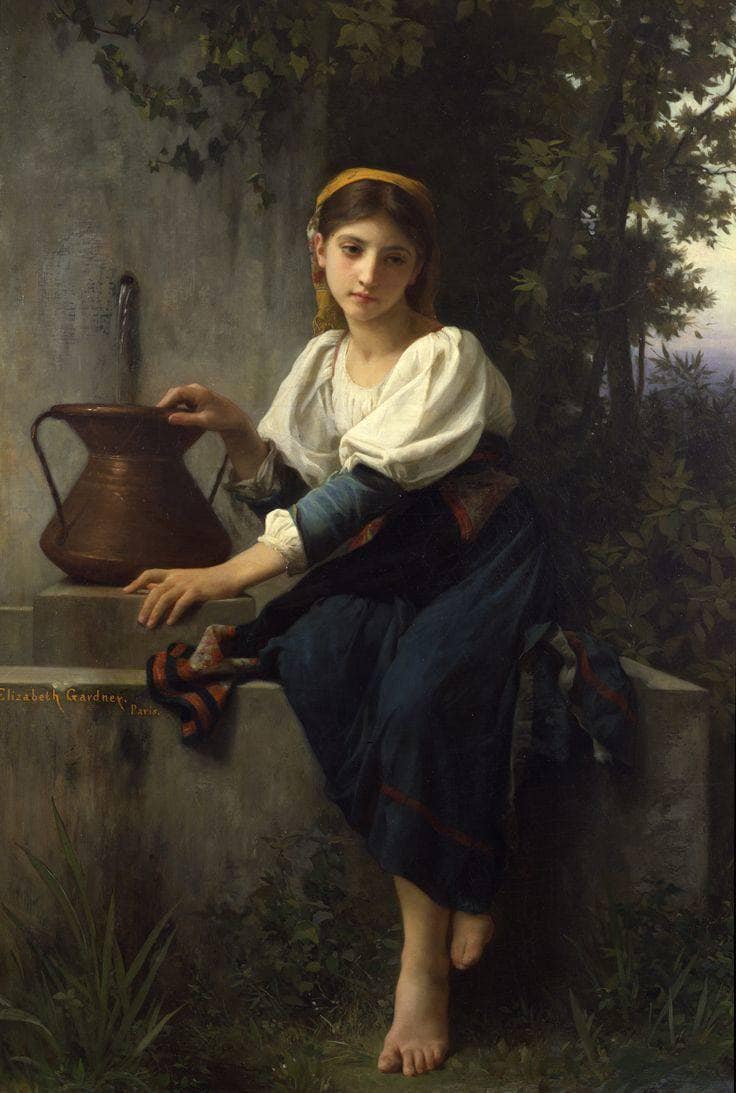
Young Girl at the Well
Discovering the Enchantment of Young Girl at the Well by Elizabeth Jane Gardner
Artistic Inspiration Behind Young Girl at the Well
Exploring Elizabeth Jane Gardner's Artistic Journey
Elizabeth Jane Gardner, a pioneering female artist of the late 19th century, created "Young Girl at the Well" during a time when women faced significant barriers in the art world. Born in 1837 in New Hampshire, Gardner studied in Paris, where she honed her skills and developed her unique style. Her journey reflects the struggles and triumphs of women artists, making her work resonate with themes of empowerment and creativity.Influences of 19th Century American Impressionism
Gardner's painting embodies the essence of American Impressionism, characterized by its focus on light, color, and everyday subjects. Influenced by artists like Claude Monet and Mary Cassatt, she captured fleeting moments of beauty. The soft brushstrokes and vibrant colors in "Young Girl at the Well" showcase her ability to blend realism with impressionistic techniques, creating a captivating scene that draws viewers in.Symbolism of Water in Gardner's Work
Water often symbolizes purity, life, and renewal in art. In "Young Girl at the Well," the well serves as a powerful symbol of childhood innocence and the transition from youth to adulthood. The girl's interaction with the well suggests a connection to nature and the importance of water in sustaining life. This theme resonates deeply, inviting viewers to reflect on their own experiences of growth and discovery.Visual Elements of Young Girl at the Well
Color Palette: A Study in Soft Hues and Natural Light
The color palette of "Young Girl at the Well" features soft pastels and earthy tones, creating a serene atmosphere. Gardner skillfully uses light to enhance the scene, illuminating the girl's face and the surrounding landscape. This interplay of light and shadow adds depth, making the painting feel alive and inviting.Composition: The Balance of Figures and Landscape
Gardner expertly balances the figure of the girl with the lush landscape. The composition draws the eye toward the well, emphasizing its significance. The placement of the girl in the foreground against the backdrop of trees and sky creates a harmonious relationship between humanity and nature, inviting viewers to explore the scene further.Textural Techniques: Brushwork and Layering in Oil Paint
Gardner's use of oil paint allows for rich textures and layers. Her brushwork varies from delicate strokes that define the girl's features to broader strokes that depict the foliage. This technique adds a tactile quality to the painting, making it feel dynamic and engaging. The layering of paint creates a sense of depth, enhancing the overall visual experience.Thematic Depth in Young Girl at the Well
Childhood Innocence and the Symbolism of the Well
The well in Gardner's painting symbolizes the innocence of childhood and the journey of self-discovery. The girl's contemplative expression suggests a moment of reflection, capturing the essence of youth. This theme resonates with many, evoking nostalgia and a sense of longing for simpler times.Gender Roles and Social Context in 19th Century America
In the context of 19th century America, Gardner's work challenges traditional gender roles. By portraying a young girl in a moment of solitude and contemplation, she highlights the inner lives of women. This subtle commentary on gender expectations adds depth to the painting, making it relevant to discussions about women's rights and representation in art.Nature as a Reflection of Inner Emotions
Gardner often used nature to reflect the emotions of her subjects. In "Young Girl at the Well," the surrounding landscape mirrors the girl's inner world. The tranquil setting evokes feelings of peace and introspection, inviting viewers to connect with their own emotions and experiences.Historical Context of Young Girl at the Well
Gardner's Role in the American Art Scene
Elizabeth Jane Gardner played a crucial role in the American art scene during her time. As one of the few female artists to gain recognition, she paved the way for future generations. Her participation in exhibitions and salons showcased her talent and challenged the male-dominated art world.Art Exhibitions and Reception of the Painting
"Young Girl at the Well" received acclaim during its exhibition, highlighting Gardner's skill and unique perspective. Critics praised her ability to capture emotion and light, solidifying her reputation as a significant artist of her time. The painting continues to be celebrated for its beauty and depth.Comparative Analysis with Contemporary Artists
When compared to her contemporaries, Gardner's work stands out for its emotional resonance and technical skill. While many artists focused on grand historical themes, Gardner's intimate portrayal of everyday life offers a refreshing perspective. Her ability to blend impressionistic techniques with personal narratives sets her apart in the art world.Understanding the Legacy of Young Girl at the Well
Impact on Future Generations of Female Artists
Gardner's legacy extends beyond her own work. She inspired future generations of female artists to pursue their passions and challenge societal norms. Her success serves as a reminder of the importance of representation and the power of art to convey personal and collective stories.Preservation and Restoration of Gardner's Works
Efforts to preserve and restore Gardner's works are vital for future appreciation. Museums and art institutions recognize the importance of her contributions to American art. Ongoing restoration projects ensure that "Young Girl at the Well" and other pieces remain accessible to the public.Young Girl at the Well in Modern Art Discourse
In contemporary art discussions, "Young Girl at the Well" is often referenced for its exploration of gender and identity. The painting invites viewers to consider the role of women in art and society. Its themes remain relevant, making it a significant work in modern art discourse.FAQs About Young Girl at the Well
What is the story behind Young Girl at the Well?
"Young Girl at the Well" captures a moment of childhood innocence and reflection. The painting tells a story of a young girl engaging with nature, symbolizing growth and self-discovery.How does Young Girl at the Well reflect Elizabeth Jane Gardner's style?
The painting showcases Gardner's impressionistic style, characterized by soft colors, light, and emotional depth. Her unique approach to composition and texture highlights her artistic vision.What techniques did Gardner use in this painting?
Gardner employed oil painting techniques, utilizing layering and varied brushwork to create texture and depth. Her skillful use of light enhances the overall atmosphere of the piece.What themes are explored in Young Girl at the Well?
The painting explores themes of childhood innocence, gender roles, and the connection between nature and emotions. These themes invite viewers to reflect on their own experiences and societal norms.Where can I see the original Young Girl at the Well painting?
The original "Young Girl at the Well" is housed in a prominent art museum, where it is part of the permanent collection. Visitors can experience the painting's beauty and significance firsthand.FAQs About Painting Reproductions
What should I consider when purchasing a reproduction of Young Girl at the Well?
When purchasing a reproduction, consider the quality of materials, the artist's technique, and the level of detail. A high-quality painting reproduction will capture the essence of Gardner's original work.How can I ensure the quality of a painting reproduction?
To ensure quality, look for reproductions created by skilled artists using premium materials. Unlike prints, painting reproductions offer a richer texture and a more authentic representation of the original artwork.Select Size
From $89.98
Original: $299.95
-70%Young Girl at the Well—
$299.95
$89.98Product Information
Product Information
Shipping & Returns
Shipping & Returns