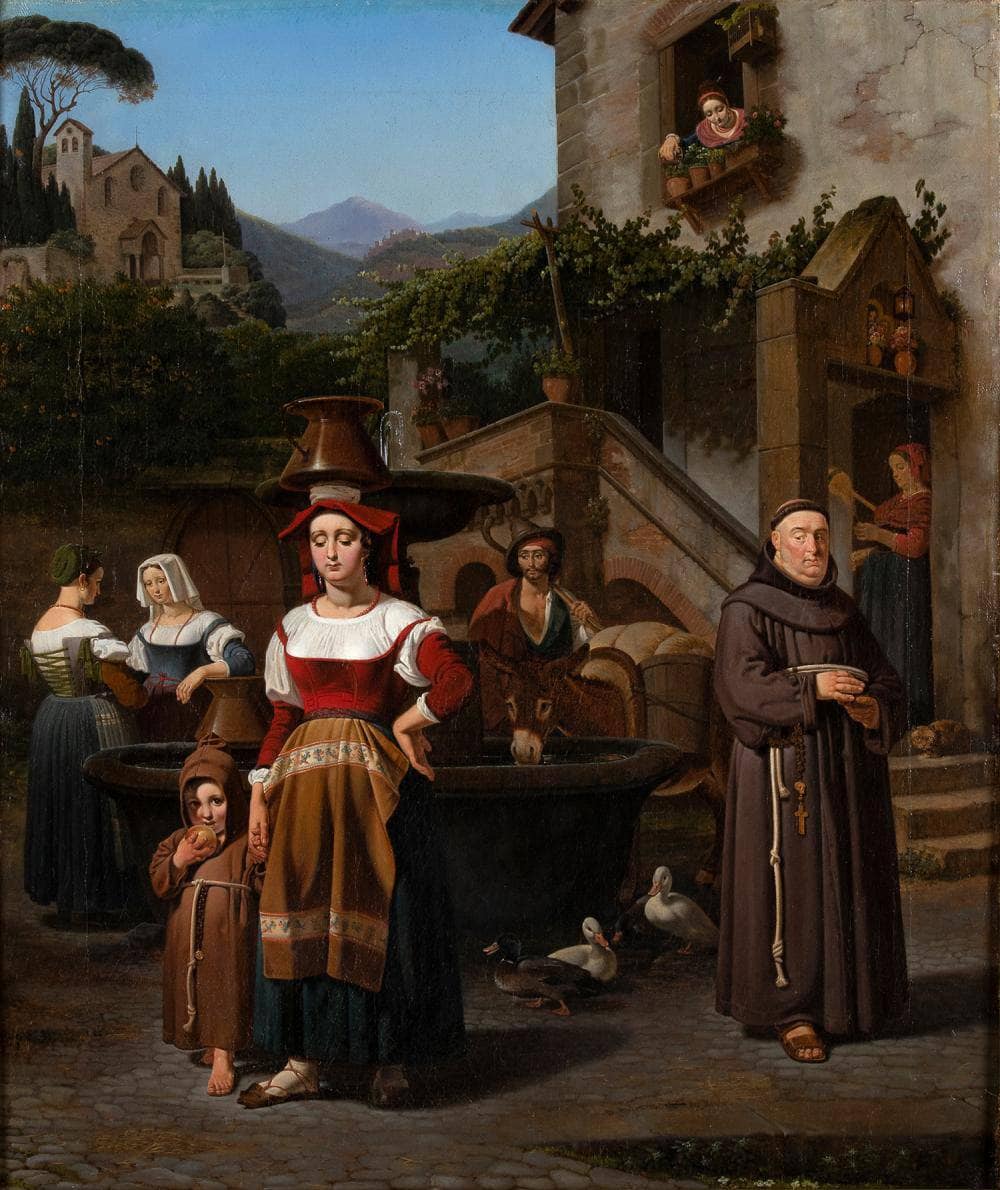
Street in Tivoli
Discover the Enchantment of Street in Tivoli by Ernst Meyer
Historical Context of Street in Tivoli
The Artistic Movement: Romanticism and Its Influence
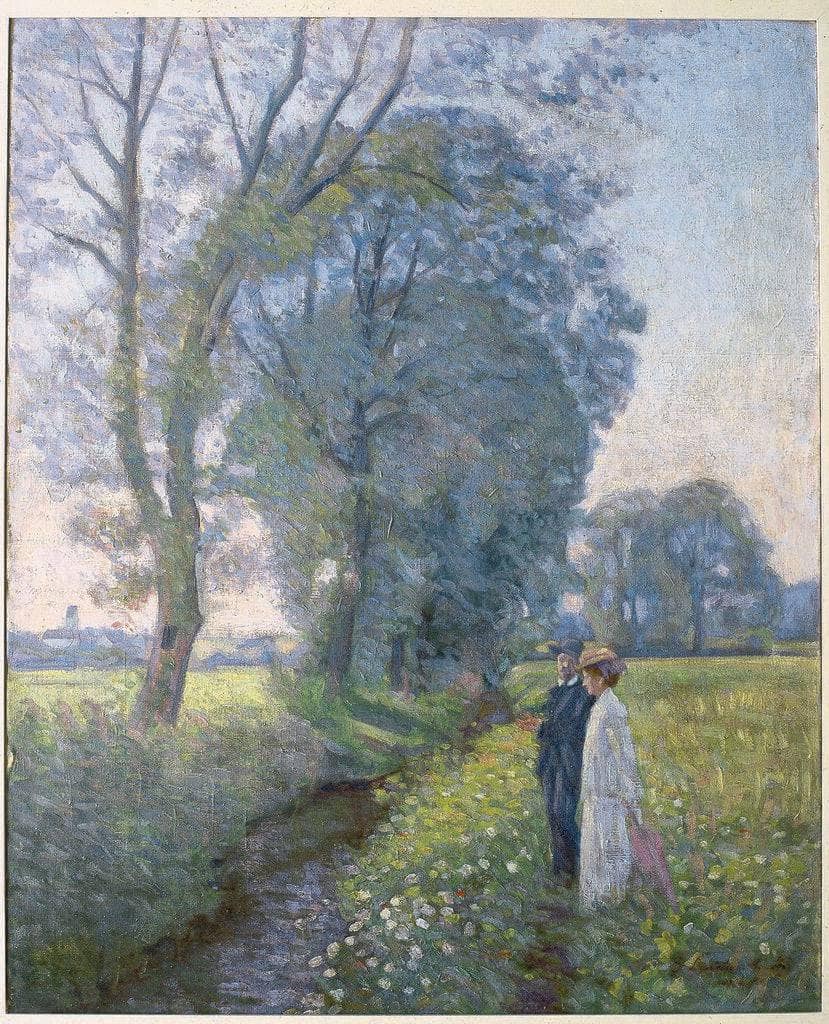
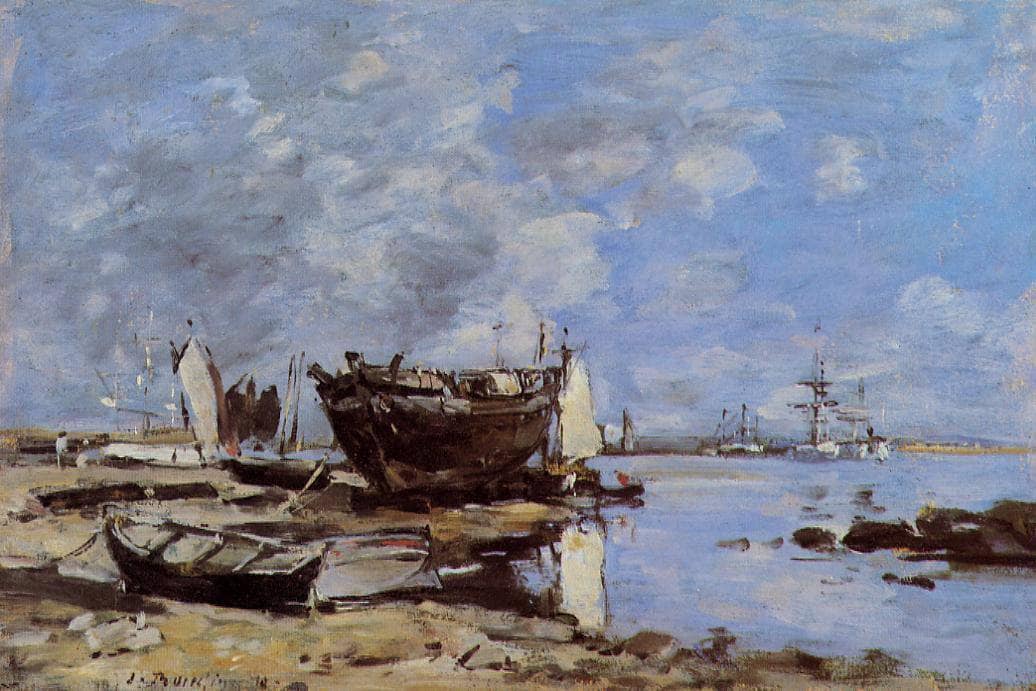
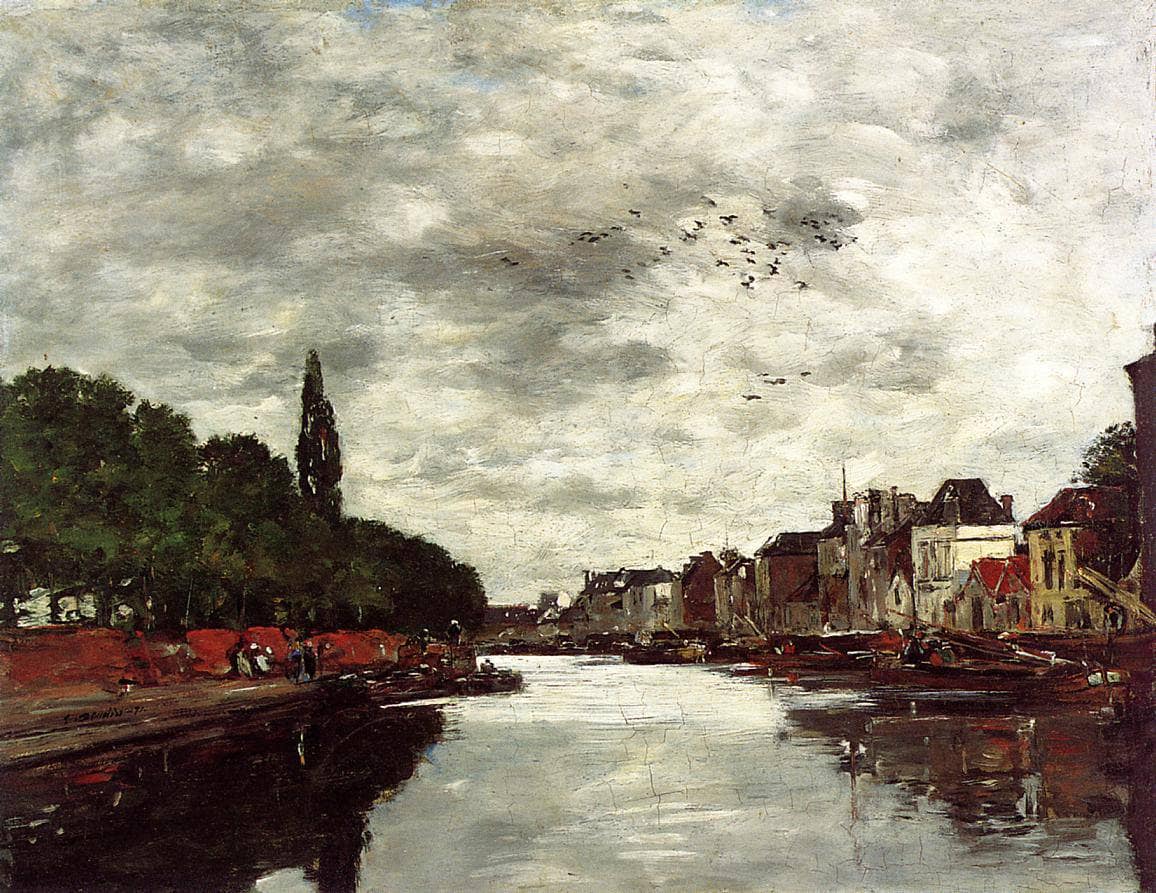
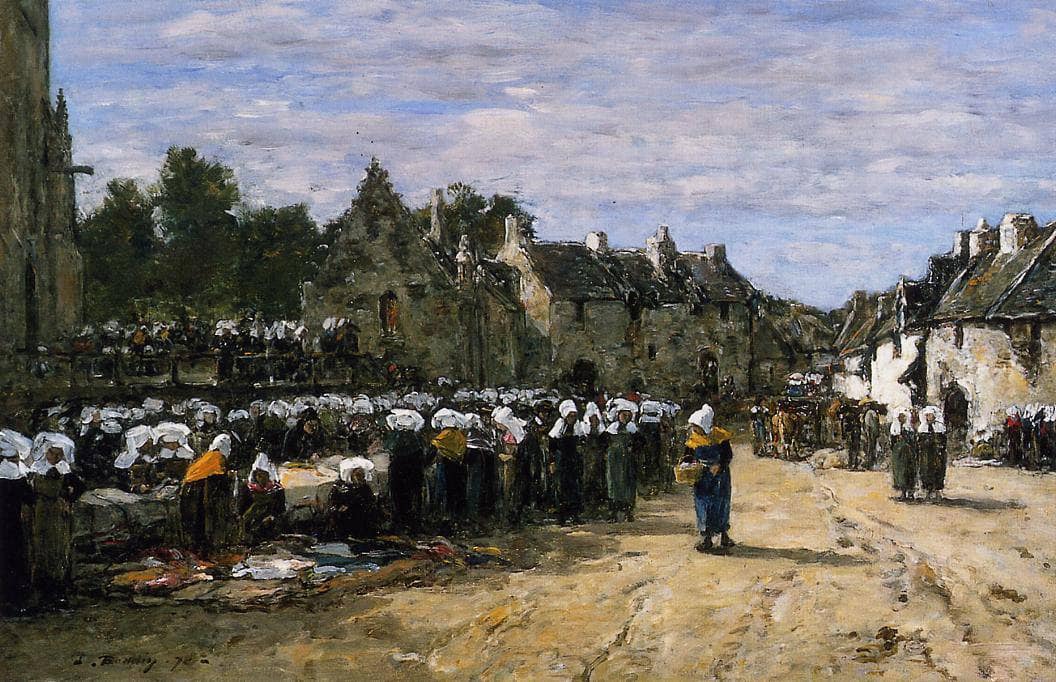
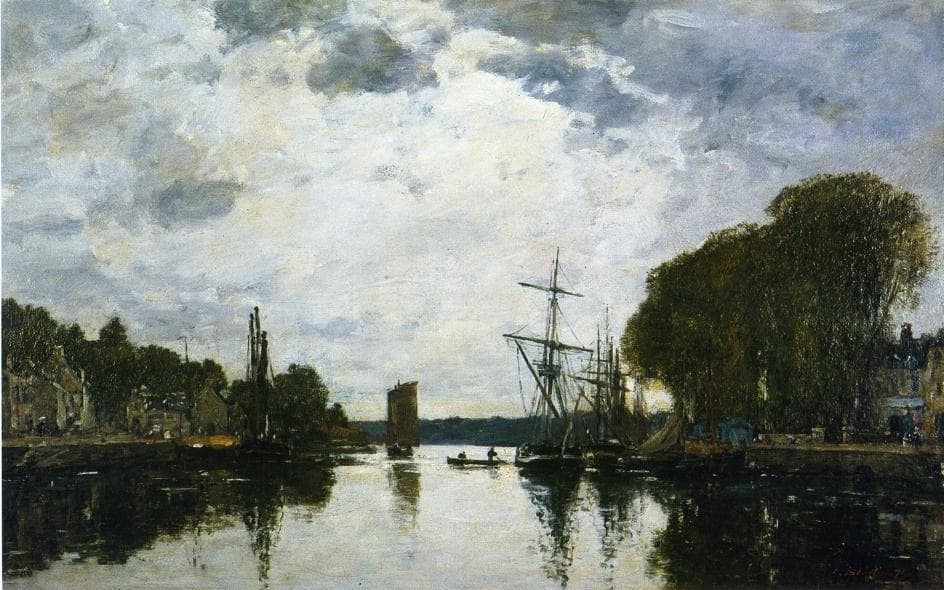
Street in Tivoli, painted by Ernst Meyer, is a stunning example of the Romanticism movement that flourished in the late 18th and early 19th centuries. This artistic style emphasized emotion, nature, and individualism, often portraying idyllic landscapes and historical themes. Romantic artists sought to evoke feelings of awe and wonder, and Meyer's work captures this essence beautifully. The painting reflects the Romantic ideal of finding beauty in the natural world, showcasing the enchanting streets of Tivoli, a town known for its picturesque scenery.
Ernst Meyer: A Glimpse into the Life of the Artist
Ernst Meyer was a German painter born in the early 19th century. He was known for his vibrant landscapes and ability to capture the essence of Italian scenery. Meyer traveled extensively, drawing inspiration from the rich culture and history of Italy. His time in Tivoli, a town celebrated for its stunning gardens and ancient ruins, profoundly influenced his artistic vision. Meyer's dedication to portraying the beauty of nature and architecture set him apart from his contemporaries.
Significance of Tivoli in 19th Century Art
Tivoli has long been a muse for artists, attracting painters and poets alike. In the 19th century, it became a popular destination for the Romantic movement. The town's lush landscapes, cascading waterfalls, and classical ruins provided endless inspiration. Artists like Claude Lorrain and J.M.W. Turner also found beauty in Tivoli, making it a pivotal location in art history. Meyer's Street in Tivoli captures this artistic legacy, showcasing the town's charm and allure.
Visual Elements of Street in Tivoli
Color Palette: The Vibrant Hues of Italian Landscapes
The color palette of Street in Tivoli is a feast for the eyes. Meyer employs rich greens, warm earth tones, and soft blues to create a harmonious scene. The vibrant hues reflect the lush vegetation and the clear skies of Italy, inviting viewers to immerse themselves in the landscape. This careful selection of colors enhances the painting's emotional depth, making it a captivating piece.
Composition: Balancing Nature and Architecture
Meyer skillfully balances natural elements with architectural features in Street in Tivoli. The winding street leads the viewer's eye through the scene, flanked by charming buildings and lush greenery. This composition creates a sense of movement and invites exploration. The interplay between the organic forms of nature and the structured lines of architecture highlights the beauty of coexistence.
Brushwork Techniques: Capturing Light and Shadow
Meyer's brushwork in Street in Tivoli is masterful. He uses a combination of fine strokes and broader swaths of paint to create texture and depth. The way he captures light filtering through the trees and casting shadows on the cobblestone street adds a dynamic quality to the painting. This technique brings the scene to life, allowing viewers to feel the warmth of the sun and the coolness of the shade.
Thematic Exploration in Street in Tivoli
Nature vs. Urban Life: A Harmonious Coexistence
Street in Tivoli explores the theme of nature versus urban life. Meyer presents a scene where the beauty of nature harmonizes with human architecture. The painting suggests that urban life can coexist with the natural world, creating a balanced and serene environment. This theme resonates with viewers, reminding them of the importance of preserving nature amidst urban development.
Emotional Resonance: The Mood of the Scene
The mood of Street in Tivoli is tranquil and inviting. The soft colors and gentle brushwork evoke a sense of peace and nostalgia. Viewers may feel a longing for simpler times, as the painting captures a moment of everyday life in a beautiful setting. This emotional resonance makes the artwork relatable and timeless.
Symbolism in the Landscape: What Lies Beneath
Meyer's painting is rich in symbolism. The winding street can represent the journey of life, while the lush greenery symbolizes growth and renewal. The architecture may signify human achievement and the passage of time. Together, these elements create a narrative that invites viewers to reflect on their own experiences and the world around them.
Comparative Analysis with Other Works
Street in Tivoli vs. Other Tivoli Paintings: A Unique Perspective
When compared to other Tivoli paintings, Street in Tivoli stands out for its unique perspective. While many artists focus on grand landscapes or historical ruins, Meyer captures the intimate charm of a street scene. This approach offers a fresh take on the beauty of Tivoli, emphasizing the everyday life that unfolds in this enchanting town.
Influence of Italian Landscapes on Contemporary Artists
The influence of Italian landscapes, particularly those depicted in Street in Tivoli, continues to inspire contemporary artists. The vibrant colors and emotional depth found in Meyer's work resonate with modern painters seeking to capture the essence of nature. This connection highlights the enduring legacy of Romanticism and its impact on the art world today.
Ernst Meyer's Style Compared to His Peers
Ernst Meyer's style is distinctive among his peers. While many artists of his time focused on dramatic scenes and historical narratives, Meyer embraced a more serene and intimate approach. His attention to detail and ability to convey emotion through landscape set him apart, making Street in Tivoli a remarkable example of his artistic vision.
First-Hand Experience: Viewing Street in Tivoli
Visiting Tivoli: The Real-Life Inspiration Behind the Painting
Visiting Tivoli today allows art lovers to experience the beauty that inspired Meyer. The town's stunning gardens, ancient ruins, and charming streets remain largely unchanged. Walking through Tivoli, one can feel the same enchantment that Meyer captured in his painting, making it a must-visit destination for art enthusiasts.
Art Exhibitions Featuring Street in Tivoli
Street in Tivoli has been featured in various art exhibitions, showcasing Meyer's talent and the beauty of Italian landscapes. These exhibitions often highlight the Romantic movement and its influence on modern art. Attending such events provides a deeper understanding of Meyer's work and the context in which it was created.
Personal Reflections: What the Painting Evokes
Viewing Street in Tivoli evokes a sense of nostalgia and tranquility. The painting invites viewers to pause and reflect on the beauty of everyday life. Many find themselves transported to the serene streets of Tivoli, experiencing the warmth of the sun and the gentle rustle of leaves. This emotional connection makes Meyer's work truly special.
FAQs about Street in Tivoli by Ernst Meyer
What is the story behind Street in Tivoli?
Street in Tivoli tells the story of a peaceful moment in the charming town of Tivoli, capturing the essence of everyday life amidst stunning landscapes.
How does Street in Tivoli reflect the Romanticism movement?
The painting reflects Romanticism through its emphasis on emotion, nature, and the beauty of the Italian landscape, inviting viewers to connect with the scene on a personal level.
What techniques did Ernst Meyer use in this painting?
Meyer used vibrant colors, dynamic brushwork, and a balanced composition to create a captivating scene that captures light and shadow beautifully.
What emotions does Street in Tivoli convey to viewers?
The painting conveys feelings of tranquility, nostalgia, and a deep appreciation for the beauty of nature and urban life coexisting harmoniously.
How does Street in Tivoli compare to other famous landscape paintings?
Street in Tivoli stands out for its intimate portrayal of everyday life, contrasting with grander landscape paintings that focus on dramatic scenes or historical narratives.
What should I know about the reproduction of Street in Tivoli?
Art reproductions of Street in Tivoli are superior to prints, as they capture the texture, color, and detail of the original painting, allowing art lovers to enjoy its beauty in their own homes.
Are there any notable exhibitions featuring Street in Tivoli?
Yes, Street in Tivoli has been featured in several notable exhibitions that celebrate the Romantic movement and the beauty of Italian landscapes, providing insight into Meyer's artistic legacy.
Original: $249.95
-70%$249.95
$74.98Product Information
Product Information
Shipping & Returns
Shipping & Returns
Description
Discover the Enchantment of Street in Tivoli by Ernst Meyer
Historical Context of Street in Tivoli
The Artistic Movement: Romanticism and Its Influence
Street in Tivoli, painted by Ernst Meyer, is a stunning example of the Romanticism movement that flourished in the late 18th and early 19th centuries. This artistic style emphasized emotion, nature, and individualism, often portraying idyllic landscapes and historical themes. Romantic artists sought to evoke feelings of awe and wonder, and Meyer's work captures this essence beautifully. The painting reflects the Romantic ideal of finding beauty in the natural world, showcasing the enchanting streets of Tivoli, a town known for its picturesque scenery.
Ernst Meyer: A Glimpse into the Life of the Artist
Ernst Meyer was a German painter born in the early 19th century. He was known for his vibrant landscapes and ability to capture the essence of Italian scenery. Meyer traveled extensively, drawing inspiration from the rich culture and history of Italy. His time in Tivoli, a town celebrated for its stunning gardens and ancient ruins, profoundly influenced his artistic vision. Meyer's dedication to portraying the beauty of nature and architecture set him apart from his contemporaries.
Significance of Tivoli in 19th Century Art
Tivoli has long been a muse for artists, attracting painters and poets alike. In the 19th century, it became a popular destination for the Romantic movement. The town's lush landscapes, cascading waterfalls, and classical ruins provided endless inspiration. Artists like Claude Lorrain and J.M.W. Turner also found beauty in Tivoli, making it a pivotal location in art history. Meyer's Street in Tivoli captures this artistic legacy, showcasing the town's charm and allure.
Visual Elements of Street in Tivoli
Color Palette: The Vibrant Hues of Italian Landscapes
The color palette of Street in Tivoli is a feast for the eyes. Meyer employs rich greens, warm earth tones, and soft blues to create a harmonious scene. The vibrant hues reflect the lush vegetation and the clear skies of Italy, inviting viewers to immerse themselves in the landscape. This careful selection of colors enhances the painting's emotional depth, making it a captivating piece.
Composition: Balancing Nature and Architecture
Meyer skillfully balances natural elements with architectural features in Street in Tivoli. The winding street leads the viewer's eye through the scene, flanked by charming buildings and lush greenery. This composition creates a sense of movement and invites exploration. The interplay between the organic forms of nature and the structured lines of architecture highlights the beauty of coexistence.
Brushwork Techniques: Capturing Light and Shadow
Meyer's brushwork in Street in Tivoli is masterful. He uses a combination of fine strokes and broader swaths of paint to create texture and depth. The way he captures light filtering through the trees and casting shadows on the cobblestone street adds a dynamic quality to the painting. This technique brings the scene to life, allowing viewers to feel the warmth of the sun and the coolness of the shade.
Thematic Exploration in Street in Tivoli
Nature vs. Urban Life: A Harmonious Coexistence
Street in Tivoli explores the theme of nature versus urban life. Meyer presents a scene where the beauty of nature harmonizes with human architecture. The painting suggests that urban life can coexist with the natural world, creating a balanced and serene environment. This theme resonates with viewers, reminding them of the importance of preserving nature amidst urban development.
Emotional Resonance: The Mood of the Scene
The mood of Street in Tivoli is tranquil and inviting. The soft colors and gentle brushwork evoke a sense of peace and nostalgia. Viewers may feel a longing for simpler times, as the painting captures a moment of everyday life in a beautiful setting. This emotional resonance makes the artwork relatable and timeless.
Symbolism in the Landscape: What Lies Beneath
Meyer's painting is rich in symbolism. The winding street can represent the journey of life, while the lush greenery symbolizes growth and renewal. The architecture may signify human achievement and the passage of time. Together, these elements create a narrative that invites viewers to reflect on their own experiences and the world around them.
Comparative Analysis with Other Works
Street in Tivoli vs. Other Tivoli Paintings: A Unique Perspective
When compared to other Tivoli paintings, Street in Tivoli stands out for its unique perspective. While many artists focus on grand landscapes or historical ruins, Meyer captures the intimate charm of a street scene. This approach offers a fresh take on the beauty of Tivoli, emphasizing the everyday life that unfolds in this enchanting town.
Influence of Italian Landscapes on Contemporary Artists
The influence of Italian landscapes, particularly those depicted in Street in Tivoli, continues to inspire contemporary artists. The vibrant colors and emotional depth found in Meyer's work resonate with modern painters seeking to capture the essence of nature. This connection highlights the enduring legacy of Romanticism and its impact on the art world today.
Ernst Meyer's Style Compared to His Peers
Ernst Meyer's style is distinctive among his peers. While many artists of his time focused on dramatic scenes and historical narratives, Meyer embraced a more serene and intimate approach. His attention to detail and ability to convey emotion through landscape set him apart, making Street in Tivoli a remarkable example of his artistic vision.
First-Hand Experience: Viewing Street in Tivoli
Visiting Tivoli: The Real-Life Inspiration Behind the Painting
Visiting Tivoli today allows art lovers to experience the beauty that inspired Meyer. The town's stunning gardens, ancient ruins, and charming streets remain largely unchanged. Walking through Tivoli, one can feel the same enchantment that Meyer captured in his painting, making it a must-visit destination for art enthusiasts.
Art Exhibitions Featuring Street in Tivoli
Street in Tivoli has been featured in various art exhibitions, showcasing Meyer's talent and the beauty of Italian landscapes. These exhibitions often highlight the Romantic movement and its influence on modern art. Attending such events provides a deeper understanding of Meyer's work and the context in which it was created.
Personal Reflections: What the Painting Evokes
Viewing Street in Tivoli evokes a sense of nostalgia and tranquility. The painting invites viewers to pause and reflect on the beauty of everyday life. Many find themselves transported to the serene streets of Tivoli, experiencing the warmth of the sun and the gentle rustle of leaves. This emotional connection makes Meyer's work truly special.
FAQs about Street in Tivoli by Ernst Meyer
What is the story behind Street in Tivoli?
Street in Tivoli tells the story of a peaceful moment in the charming town of Tivoli, capturing the essence of everyday life amidst stunning landscapes.
How does Street in Tivoli reflect the Romanticism movement?
The painting reflects Romanticism through its emphasis on emotion, nature, and the beauty of the Italian landscape, inviting viewers to connect with the scene on a personal level.
What techniques did Ernst Meyer use in this painting?
Meyer used vibrant colors, dynamic brushwork, and a balanced composition to create a captivating scene that captures light and shadow beautifully.
What emotions does Street in Tivoli convey to viewers?
The painting conveys feelings of tranquility, nostalgia, and a deep appreciation for the beauty of nature and urban life coexisting harmoniously.
How does Street in Tivoli compare to other famous landscape paintings?
Street in Tivoli stands out for its intimate portrayal of everyday life, contrasting with grander landscape paintings that focus on dramatic scenes or historical narratives.
What should I know about the reproduction of Street in Tivoli?
Art reproductions of Street in Tivoli are superior to prints, as they capture the texture, color, and detail of the original painting, allowing art lovers to enjoy its beauty in their own homes.
Are there any notable exhibitions featuring Street in Tivoli?
Yes, Street in Tivoli has been featured in several notable exhibitions that celebrate the Romantic movement and the beauty of Italian landscapes, providing insight into Meyer's artistic legacy.