🚚 Free Worldwide Shipping on All Orders!Shop Now

Three Bathers
Exploring the Vibrant World of Three Bathers by Ernst Ludwig Kirchner
Artistic Context: The Expressionist Movement and Kirchner's Vision
Understanding Expressionism: A Break from Tradition
Expressionism emerged in the early 20th century as a radical departure from traditional artistic norms. Artists sought to express emotional experiences rather than physical reality. This movement emphasized bold colors, exaggerated forms, and a deep connection to the artist's inner feelings. Kirchner, as a leading figure, embraced these principles, creating works that resonate with raw emotion and psychological depth.Ernst Ludwig Kirchner: A Pioneer of Modern Art
Ernst Ludwig Kirchner was a founding member of the Die Brücke (The Bridge) group, which played a crucial role in the development of Expressionism. His innovative approach combined influences from Impressionism and Post-Impressionism, resulting in a unique style that captured the essence of modern life. Kirchner's work often reflected his personal struggles and the tumultuous changes of his time, making him a pivotal figure in modern art history.The Role of Color and Emotion in Kirchner's Work
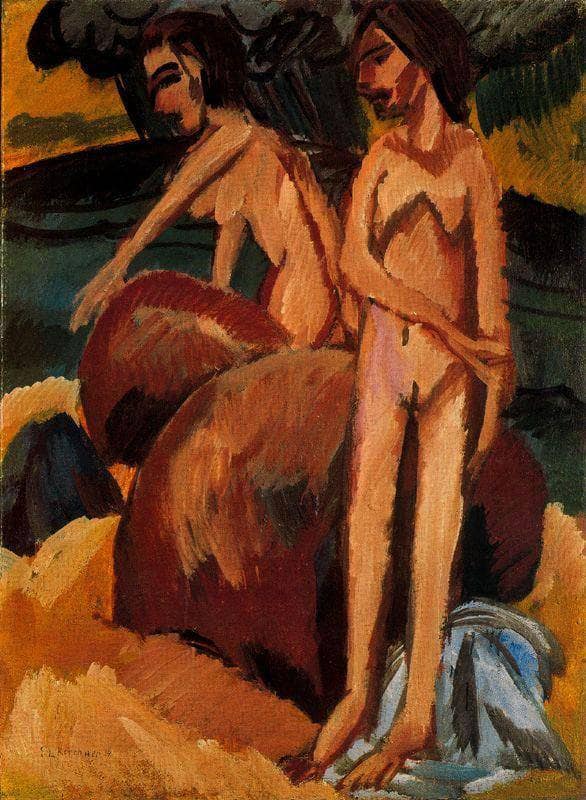
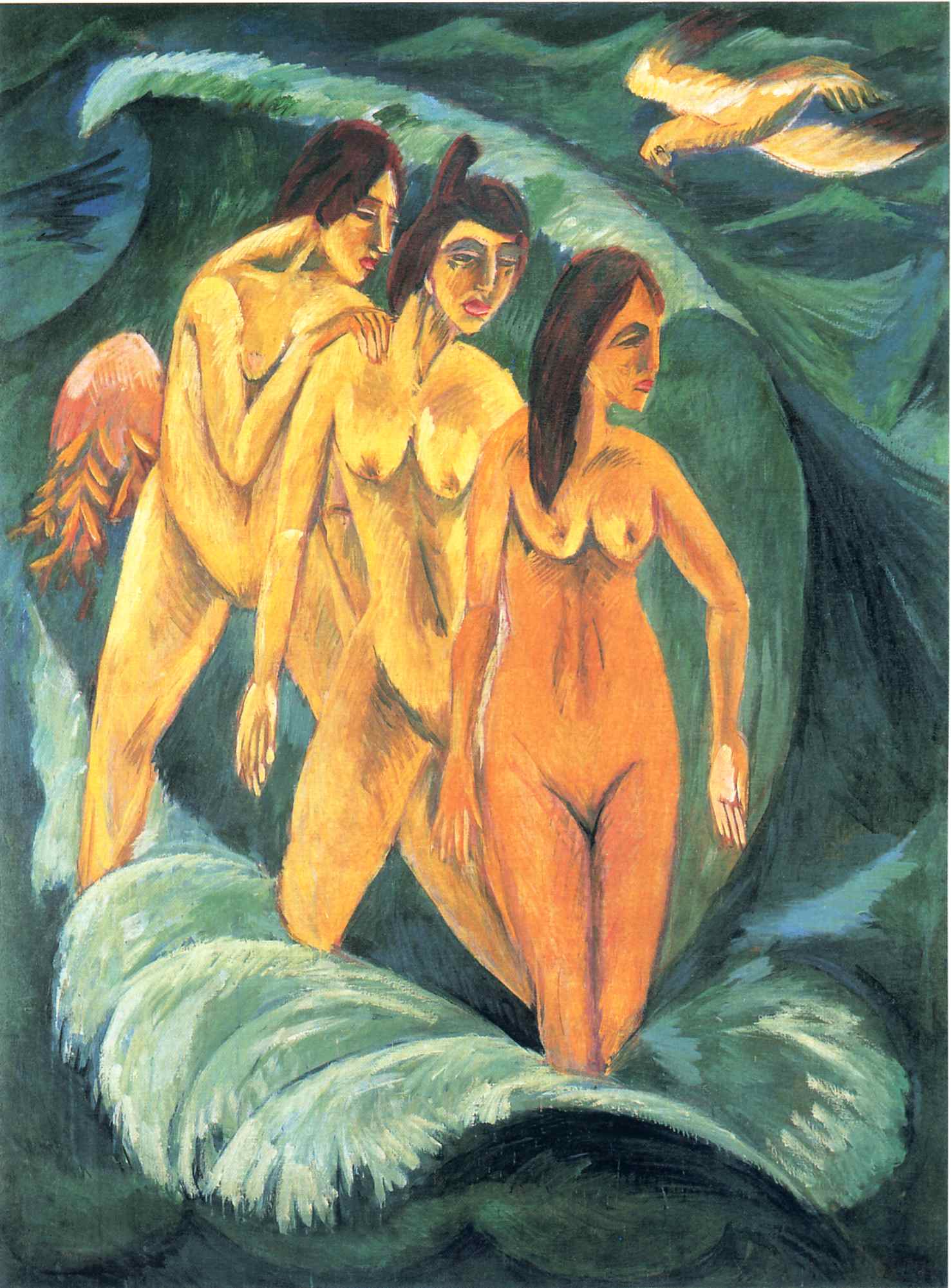
Color in Kirchner's paintings is not merely decorative; it serves as a powerful vehicle for emotion. His use of vibrant hues creates a sense of urgency and intensity. In "Three Bathers," the bold colors evoke feelings of freedom and joy, inviting viewers to experience the bliss of nature and human connection. This emotional resonance is a hallmark of Kirchner's artistic vision.Three Bathers: A Deep Dive into the Composition and Themes
Analyzing the Composition: Figures and Landscape Interaction
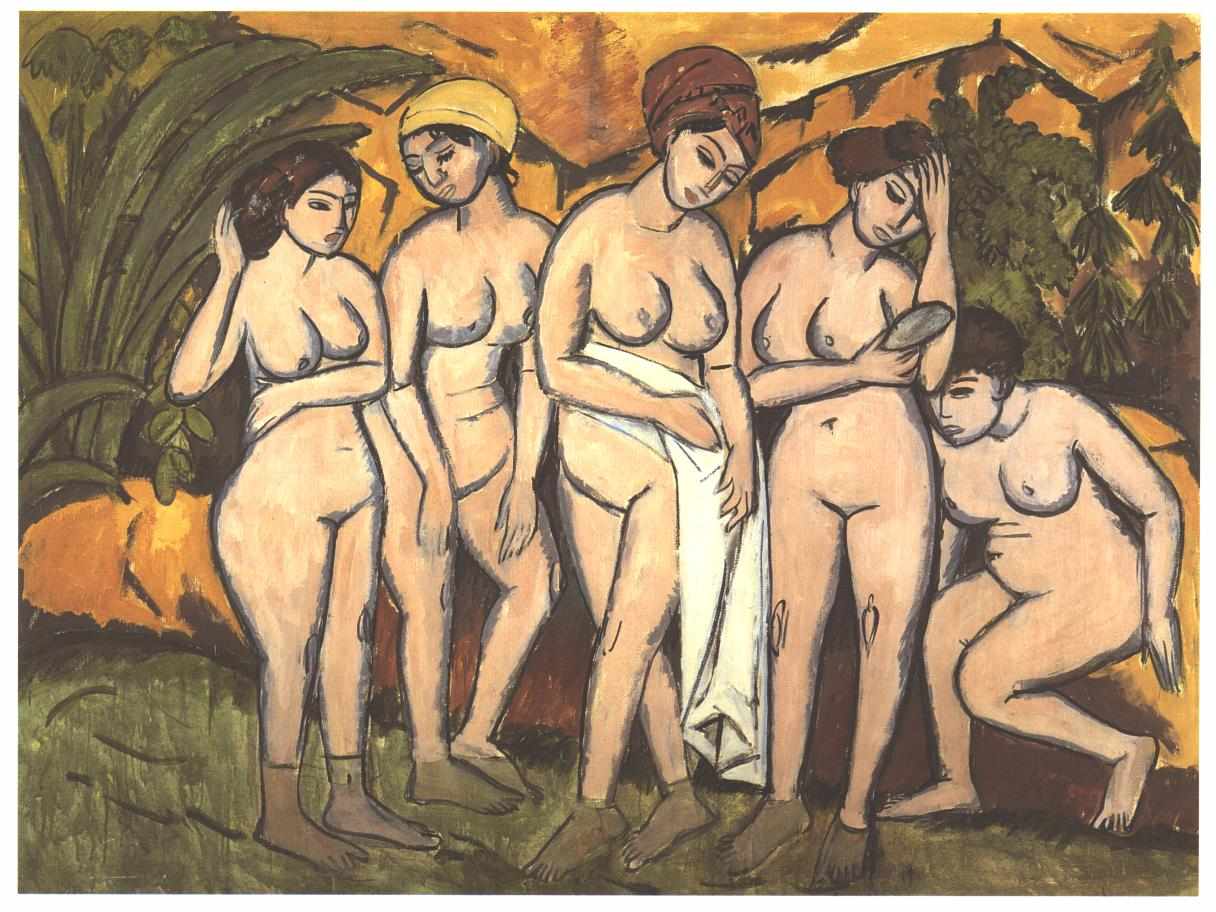
In "Three Bathers," Kirchner masterfully intertwines the figures with the surrounding landscape. The bathers, depicted in dynamic poses, seem to merge with the natural environment. This interaction highlights the theme of unity with nature, a recurring motif in Kirchner's work. The composition draws the eye across the canvas, creating a sense of movement and vitality.Symbolism of the Bathers: Freedom and Nature
The three bathers symbolize liberation and a return to nature. Their nudity represents a rejection of societal constraints and an embrace of authenticity. Kirchner often explored themes of freedom, and in this painting, the bathers embody a carefree spirit, celebrating the joy of existence. This connection to nature reflects the artist's belief in the healing power of the natural world.Color Palette: The Emotional Impact of Vibrant Hues
The color palette in "Three Bathers" is striking and evocative. Kirchner employs vivid greens, blues, and warm skin tones to create a lively atmosphere. These colors not only enhance the visual appeal but also evoke a sense of happiness and tranquility. The emotional impact of the palette invites viewers to immerse themselves in the scene, experiencing the joy and freedom of the bathers.The Cultural Significance of Three Bathers in Early 20th Century Art
Reflection of Societal Changes: Gender and Identity
"Three Bathers" reflects the shifting societal norms of the early 20th century, particularly regarding gender and identity. The portrayal of women in a natural, unguarded state challenges traditional views of femininity. Kirchner's work invites discussions about the evolving roles of women in society, making it a significant piece in the context of feminist art history.Influence of Nature and the Outdoors in Kirchner's Art
Nature plays a vital role in Kirchner's artistic expression. His love for the outdoors is evident in "Three Bathers," where the lush landscape serves as a backdrop for human interaction. This connection to nature not only enhances the aesthetic quality of the painting but also reflects Kirchner's belief in the restorative power of the natural world.Three Bathers as a Representation of Modern Life
"Three Bathers" encapsulates the essence of modern life in the early 20th century. The painting reflects a desire for freedom and a break from the constraints of urban existence. Kirchner's depiction of leisure and connection to nature resonates with the growing interest in outdoor activities during this period, making it a timeless representation of human experience.Ernst Ludwig Kirchner's Techniques: Brushwork and Style
Exploring Kirchner's Unique Brushwork: A Study in Movement
Kirchner's brushwork is characterized by bold, expressive strokes that convey a sense of movement and energy. In "Three Bathers," the dynamic lines create a rhythm that enhances the liveliness of the scene. This technique draws viewers into the painting, allowing them to feel the vitality of the bathers and the surrounding environment.Use of Line and Form: Creating Dynamic Figures
The figures in "Three Bathers" are defined by strong lines and simplified forms. Kirchner's approach to line emphasizes the emotional state of the subjects, capturing their essence rather than focusing on realistic detail. This stylistic choice contributes to the overall impact of the painting, making it a powerful expression of human experience.Texture and Depth: The Physicality of Oil Paint
Kirchner's use of oil paint adds depth and texture to "Three Bathers." The thick application of paint creates a tactile quality that invites viewers to engage with the artwork on a sensory level. This physicality enhances the emotional experience, allowing the audience to connect with the painting in a profound way.Comparative Analysis: Three Bathers and Other Works by Kirchner
Similar Themes in Kirchner's Other Bathing Scenes
"Three Bathers" shares thematic similarities with other bathing scenes by Kirchner, such as "Bathers at Moritzburg." Both works explore themes of freedom, nature, and the human form. These recurring motifs highlight Kirchner's fascination with the relationship between humanity and the natural world.Contrasting Styles: Kirchner vs. His Contemporaries
Kirchner's style stands in contrast to that of his contemporaries, such as Wassily Kandinsky and Paul Klee. While Kandinsky focused on abstraction and spiritual expression, Kirchner maintained a connection to the physical world. This distinction makes "Three Bathers" a unique contribution to the Expressionist movement.Evolution of Kirchner's Artistic Style Over Time
Throughout his career, Kirchner's style evolved significantly. Early works display a more traditional approach, while later pieces, including "Three Bathers," embrace bold colors and dynamic forms. This evolution reflects Kirchner's personal journey and the broader changes in the art world during the early 20th century.Viewing Three Bathers: Where to Experience the Original
Notable Exhibitions: Current Locations of the Painting
"Three Bathers" is part of the permanent collection at the Museum of Modern Art in New York. This iconic institution showcases Kirchner's work alongside other masterpieces of modern art. Visitors can experience the painting firsthand, immersing themselves in its vibrant colors and emotional depth.Art Museums and Galleries: A Guide to Kirchner's Works
In addition to the Museum of Modern Art, several galleries feature Kirchner's works. The National Gallery in Berlin and the Kunstmuseum in Basel are notable locations where art enthusiasts can explore his contributions to Expressionism. Each venue offers a unique perspective on Kirchner's artistic legacy.Virtual Tours: Experiencing Kirchner's Art Online
For those unable to visit in person, many museums offer virtual tours that include Kirchner's works. These online experiences allow viewers to appreciate the details and nuances of "Three Bathers" from the comfort of their homes. Engaging with art in this way broadens access and appreciation for Kirchner's genius.FAQs About Three Bathers by Ernst Ludwig Kirchner
What is the historical significance of Three Bathers?
"Three Bathers" is significant for its exploration of freedom and the human connection to nature, reflecting the societal changes of the early 20th century.How does Three Bathers reflect Kirchner's personal experiences?
The painting mirrors Kirchner's struggles with mental health and his desire for liberation from societal constraints, making it a deeply personal work.What emotions does the color palette evoke in Three Bathers?
The vibrant colors evoke feelings of joy, freedom, and tranquility, inviting viewers to experience the bliss of the bathers' connection to nature.What are the main themes depicted in Three Bathers?
The main themes include freedom, nature, and the celebration of the human form, highlighting the joy of existence in a modern context.How does Three Bathers compare to other Expressionist works?
"Three Bathers" stands out for its dynamic composition and emotional depth, showcasing Kirchner's unique approach within the Expressionist movement.What should I know about the reproduction of Three Bathers?
Reproductions of "Three Bathers" offer a superior alternative to prints, capturing the vibrant colors and textures of the original oil painting, making them ideal for art lovers.How can I appreciate the details in a reproduction of Three Bathers?
To appreciate the details, observe the brushwork, color variations, and texture. A high-quality reproduction allows you to experience the emotional impact of Kirchner's artistry.Select Size
From $89.98
Original: $299.95
-70%Three Bathers—
$299.95
$89.98Product Information
Product Information
Shipping & Returns
Shipping & Returns