Chess Players
Discovering the Masterpiece: Chess Players by Ernest Meissonier
Historical Context of Chess Players: A Glimpse into 19th Century France
The Rise of Chess as a Cultural Phenomenon
In the 19th century, chess emerged as a symbol of intellectual prowess and social status in France. The game captivated the minds of the elite, becoming a popular pastime in salons and cafes. Chess tournaments flourished, and the game was celebrated in literature and art, reflecting the era's fascination with strategy and intellect.
Ernest Meissonier: The Artist Behind the Canvas
Ernest Meissonier, born in 1815, was a prominent French painter known for his meticulous attention to detail and historical themes. He gained fame for his depictions of military scenes and genre paintings. Meissonier's dedication to realism and his ability to capture the essence of his subjects set him apart in the art world. His works often reflect the values and aesthetics of the French bourgeoisie.
Art Movements Influencing Meissonier's Work
Meissonier was influenced by the Realism movement, which sought to portray everyday life with accuracy. He also drew inspiration from the Romantic movement, emphasizing emotion and individualism. His unique blend of these styles allowed him to create compelling narratives within his paintings, making them resonate with viewers on multiple levels.
Visual Analysis of Chess Players: Composition and Color Palette
Intricate Details: The Art of Realism in Meissonier's Technique
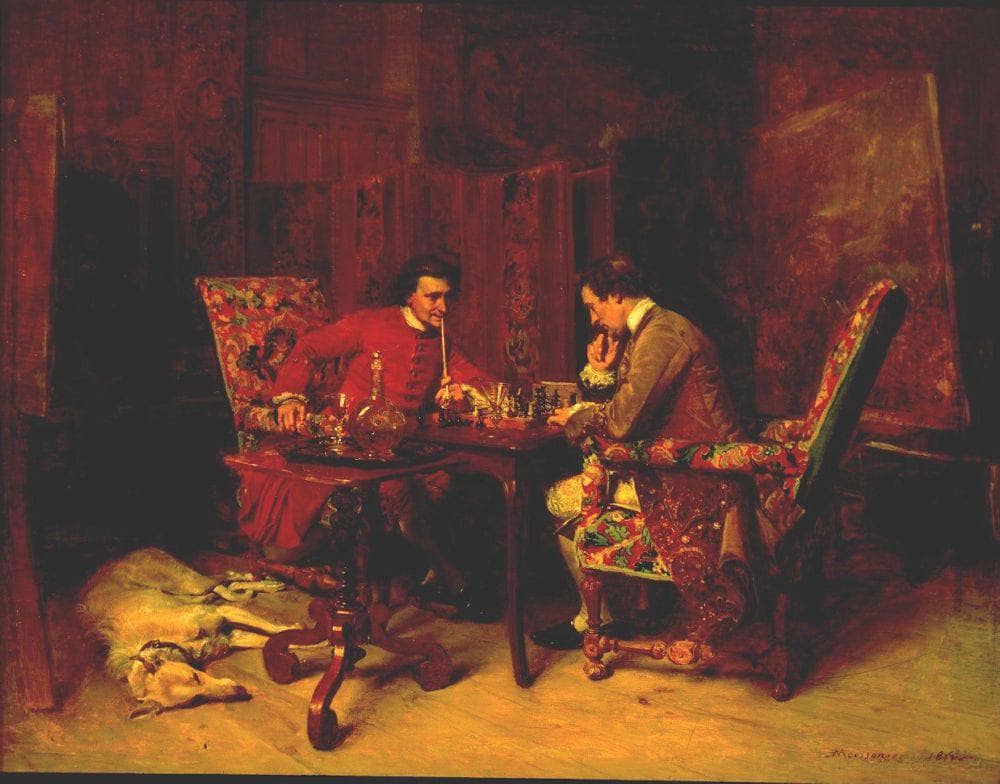
In "Chess Players," Meissonier showcases his exceptional skill in realism. The painting features two men deeply engrossed in a chess match, their expressions revealing intense concentration. The intricate details of their clothing and the chess pieces highlight Meissonier's commitment to authenticity, inviting viewers to immerse themselves in the scene.
Color Symbolism: Understanding the Palette Choices
Meissonier's color palette in "Chess Players" is rich and evocative. He employs warm earth tones to create a sense of intimacy and focus. The subtle contrasts between light and dark enhance the mood, emphasizing the players' mental struggle. Each hue serves a purpose, contributing to the overall narrative of the painting.
Light and Shadow: Creating Depth in the Scene
The interplay of light and shadow in "Chess Players" adds depth and dimension to the composition. Meissonier skillfully uses chiaroscuro techniques to draw attention to the players' faces and the chessboard. This technique not only enhances the realism but also symbolizes the duality of light and darkness in the game of chess itself.
Thematic Exploration: Strategy and Intellect in Chess Players
Symbolism of Chess: A Reflection of Life's Battles
Chess serves as a powerful metaphor for life's challenges and strategic thinking. In "Chess Players," the game symbolizes the intellectual battles individuals face in society. Each move on the board represents choices and consequences, mirroring the complexities of human relationships and societal dynamics.
Character Study: The Players and Their Expressions
The expressions of the players in "Chess Players" are captivating. One player exhibits a look of determination, while the other appears contemplative. These nuanced expressions invite viewers to ponder the psychological aspects of competition and the weight of decision-making in both chess and life.
Social Commentary: Class and Intellect in 19th Century Society
Meissonier's painting also offers a commentary on class and intellect in 19th century France. The players, dressed in fine attire, represent the bourgeois class, highlighting the connection between social status and intellectual pursuits. This dynamic reflects the era's values, where knowledge and strategy were highly esteemed.
Artistic Techniques: Meissonier's Signature Style
Brushwork and Texture: The Craftsmanship Behind the Painting
Meissonier's brushwork in "Chess Players" is meticulous and refined. He employs fine strokes to create texture, particularly in the players' clothing and the chess pieces. This attention to detail enhances the overall realism, making the painting a true testament to Meissonier's craftsmanship.
Use of Perspective: Drawing the Viewer into the Game
The perspective in "Chess Players" is masterfully executed. Meissonier positions the viewer at an angle that draws them into the game, creating an immersive experience. This technique invites viewers to feel as if they are part of the intense match, heightening the emotional impact of the artwork.
Comparative Analysis: Meissonier's Other Works and Their Influence
Meissonier's body of work includes other notable pieces, such as "The Chess Players" and "The Battle of Friedland." Each painting showcases his dedication to realism and historical accuracy. His influence can be seen in the works of later artists who sought to capture the human experience with similar depth and detail.
Legacy of Chess Players: Impact on Art and Culture
Influence on Future Artists: A Lasting Impression
"Chess Players" has left a lasting impression on the art world. Meissonier's approach to realism and his thematic exploration of strategy have inspired countless artists. His ability to convey complex narratives through visual art continues to resonate with contemporary creators.
Chess in Art: How Meissonier Shaped the Genre
Meissonier's portrayal of chess in "Chess Players" helped shape the genre of chess in art. His focus on the psychological aspects of the game paved the way for future artists to explore similar themes. The painting remains a significant reference point for those examining the intersection of art and intellectual pursuits.
Modern Interpretations: Chess Players in Contemporary Art
Today, "Chess Players" continues to inspire modern interpretations. Contemporary artists often revisit the themes of strategy and intellect, drawing from Meissonier's work. This ongoing dialogue between past and present highlights the timeless nature of chess as a subject in art.
FAQs About Chess Players by Ernest Meissonier
What is the significance of the chess game depicted in the painting?
The chess game symbolizes the strategic battles individuals face in life, reflecting the complexities of decision-making and competition.
How does Meissonier's style reflect the themes of strategy and intellect?
Meissonier's realistic portrayal of the players and their intense expressions emphasizes the mental challenges inherent in chess, showcasing the game's intellectual depth.
What are the historical influences on the painting's creation?
The painting reflects the 19th-century fascination with chess as a cultural phenomenon, influenced by the social dynamics and intellectual pursuits of the time.
Can you explain the expressions of the characters in Chess Players?
The players' expressions convey a range of emotions, from determination to contemplation, highlighting the psychological stakes of the chess match.
What techniques did Meissonier use to achieve realism in this artwork?
Meissonier employed meticulous brushwork, chiaroscuro lighting, and detailed textures to create a lifelike representation of the scene.
How does the reproduction of Chess Players compare to the original?
Art reproductions of "Chess Players" capture the intricate details and vibrant colors of the original painting, offering a superior alternative to prints. They provide a more authentic experience, allowing art lovers to appreciate Meissonier's craftsmanship in their own space.
What should I know before purchasing a reproduction of this painting?
When purchasing a reproduction of "Chess Players," consider the quality of materials used, the accuracy of colors, and the level of detail. A high-quality reproduction will enhance your space and provide a lasting appreciation of Meissonier's artistry.
Original: $299.95
-70%$299.95
$89.98Product Information
Product Information
Shipping & Returns
Shipping & Returns
Description
Discovering the Masterpiece: Chess Players by Ernest Meissonier
Historical Context of Chess Players: A Glimpse into 19th Century France
The Rise of Chess as a Cultural Phenomenon
In the 19th century, chess emerged as a symbol of intellectual prowess and social status in France. The game captivated the minds of the elite, becoming a popular pastime in salons and cafes. Chess tournaments flourished, and the game was celebrated in literature and art, reflecting the era's fascination with strategy and intellect.
Ernest Meissonier: The Artist Behind the Canvas
Ernest Meissonier, born in 1815, was a prominent French painter known for his meticulous attention to detail and historical themes. He gained fame for his depictions of military scenes and genre paintings. Meissonier's dedication to realism and his ability to capture the essence of his subjects set him apart in the art world. His works often reflect the values and aesthetics of the French bourgeoisie.
Art Movements Influencing Meissonier's Work
Meissonier was influenced by the Realism movement, which sought to portray everyday life with accuracy. He also drew inspiration from the Romantic movement, emphasizing emotion and individualism. His unique blend of these styles allowed him to create compelling narratives within his paintings, making them resonate with viewers on multiple levels.
Visual Analysis of Chess Players: Composition and Color Palette
Intricate Details: The Art of Realism in Meissonier's Technique
In "Chess Players," Meissonier showcases his exceptional skill in realism. The painting features two men deeply engrossed in a chess match, their expressions revealing intense concentration. The intricate details of their clothing and the chess pieces highlight Meissonier's commitment to authenticity, inviting viewers to immerse themselves in the scene.
Color Symbolism: Understanding the Palette Choices
Meissonier's color palette in "Chess Players" is rich and evocative. He employs warm earth tones to create a sense of intimacy and focus. The subtle contrasts between light and dark enhance the mood, emphasizing the players' mental struggle. Each hue serves a purpose, contributing to the overall narrative of the painting.
Light and Shadow: Creating Depth in the Scene
The interplay of light and shadow in "Chess Players" adds depth and dimension to the composition. Meissonier skillfully uses chiaroscuro techniques to draw attention to the players' faces and the chessboard. This technique not only enhances the realism but also symbolizes the duality of light and darkness in the game of chess itself.
Thematic Exploration: Strategy and Intellect in Chess Players
Symbolism of Chess: A Reflection of Life's Battles
Chess serves as a powerful metaphor for life's challenges and strategic thinking. In "Chess Players," the game symbolizes the intellectual battles individuals face in society. Each move on the board represents choices and consequences, mirroring the complexities of human relationships and societal dynamics.
Character Study: The Players and Their Expressions
The expressions of the players in "Chess Players" are captivating. One player exhibits a look of determination, while the other appears contemplative. These nuanced expressions invite viewers to ponder the psychological aspects of competition and the weight of decision-making in both chess and life.
Social Commentary: Class and Intellect in 19th Century Society
Meissonier's painting also offers a commentary on class and intellect in 19th century France. The players, dressed in fine attire, represent the bourgeois class, highlighting the connection between social status and intellectual pursuits. This dynamic reflects the era's values, where knowledge and strategy were highly esteemed.
Artistic Techniques: Meissonier's Signature Style
Brushwork and Texture: The Craftsmanship Behind the Painting
Meissonier's brushwork in "Chess Players" is meticulous and refined. He employs fine strokes to create texture, particularly in the players' clothing and the chess pieces. This attention to detail enhances the overall realism, making the painting a true testament to Meissonier's craftsmanship.
Use of Perspective: Drawing the Viewer into the Game
The perspective in "Chess Players" is masterfully executed. Meissonier positions the viewer at an angle that draws them into the game, creating an immersive experience. This technique invites viewers to feel as if they are part of the intense match, heightening the emotional impact of the artwork.
Comparative Analysis: Meissonier's Other Works and Their Influence
Meissonier's body of work includes other notable pieces, such as "The Chess Players" and "The Battle of Friedland." Each painting showcases his dedication to realism and historical accuracy. His influence can be seen in the works of later artists who sought to capture the human experience with similar depth and detail.
Legacy of Chess Players: Impact on Art and Culture
Influence on Future Artists: A Lasting Impression
"Chess Players" has left a lasting impression on the art world. Meissonier's approach to realism and his thematic exploration of strategy have inspired countless artists. His ability to convey complex narratives through visual art continues to resonate with contemporary creators.
Chess in Art: How Meissonier Shaped the Genre
Meissonier's portrayal of chess in "Chess Players" helped shape the genre of chess in art. His focus on the psychological aspects of the game paved the way for future artists to explore similar themes. The painting remains a significant reference point for those examining the intersection of art and intellectual pursuits.
Modern Interpretations: Chess Players in Contemporary Art
Today, "Chess Players" continues to inspire modern interpretations. Contemporary artists often revisit the themes of strategy and intellect, drawing from Meissonier's work. This ongoing dialogue between past and present highlights the timeless nature of chess as a subject in art.
FAQs About Chess Players by Ernest Meissonier
What is the significance of the chess game depicted in the painting?
The chess game symbolizes the strategic battles individuals face in life, reflecting the complexities of decision-making and competition.
How does Meissonier's style reflect the themes of strategy and intellect?
Meissonier's realistic portrayal of the players and their intense expressions emphasizes the mental challenges inherent in chess, showcasing the game's intellectual depth.
What are the historical influences on the painting's creation?
The painting reflects the 19th-century fascination with chess as a cultural phenomenon, influenced by the social dynamics and intellectual pursuits of the time.
Can you explain the expressions of the characters in Chess Players?
The players' expressions convey a range of emotions, from determination to contemplation, highlighting the psychological stakes of the chess match.
What techniques did Meissonier use to achieve realism in this artwork?
Meissonier employed meticulous brushwork, chiaroscuro lighting, and detailed textures to create a lifelike representation of the scene.
How does the reproduction of Chess Players compare to the original?
Art reproductions of "Chess Players" capture the intricate details and vibrant colors of the original painting, offering a superior alternative to prints. They provide a more authentic experience, allowing art lovers to appreciate Meissonier's craftsmanship in their own space.
What should I know before purchasing a reproduction of this painting?
When purchasing a reproduction of "Chess Players," consider the quality of materials used, the accuracy of colors, and the level of detail. A high-quality reproduction will enhance your space and provide a lasting appreciation of Meissonier's artistry.