The Legend of Saint Giles
The Enigmatic Narrative of The Legend of Saint Giles
Unveiling the Story Behind the Painting
The Historical Context of Saint Giles
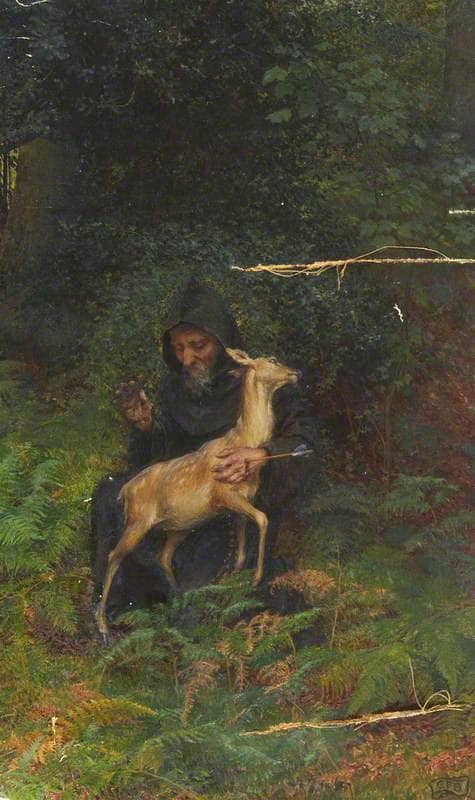
The Legend of Saint Giles, painted by Eleanor Fortescue-Brickdale, draws from the rich tapestry of medieval history. Saint Giles, a revered figure in Christian hagiography, is known as the patron saint of the disabled and outcasts. His story, rooted in the 7th century, tells of a hermit who lived in the wilderness, dedicating his life to God and caring for the needy. This painting captures a pivotal moment in his life, where he selflessly aids a wounded deer, symbolizing his compassion and connection to nature.
Interestingly, Saint Giles is often associated with various legends across Europe, including tales of miraculous healings and divine protection. His veneration spread widely, particularly in France and England, where churches and hospitals were dedicated to him. This historical backdrop enriches the narrative of Fortescue-Brickdale's artwork, inviting viewers to explore the deeper meanings behind the saint's actions.
Symbolism and Themes in Fortescue-Brickdale's Work
Fortescue-Brickdale's painting is steeped in symbolism, reflecting themes of charity, sacrifice, and the sanctity of life. The deer, a central figure in the composition, represents not only the fragility of life but also the idea of divine grace. The gentle interaction between Saint Giles and the deer evokes a sense of peace and harmony, emphasizing the saint's role as a protector of the vulnerable. This theme resonates with contemporary audiences, reminding us of the importance of compassion in our own lives.
Artistic Techniques and Style of Eleanor Fortescue-Brickdale
Exploring the Pre-Raphaelite Influence
Eleanor Fortescue-Brickdale was heavily influenced by the Pre-Raphaelite Brotherhood, a group known for their vivid colors and intricate details. Her style reflects their commitment to realism and emotional depth. In The Legend of Saint Giles, she employs meticulous attention to detail, capturing the textures of the saint's robes and the delicate fur of the deer. This technique invites viewers to immerse themselves in the scene, creating a connection between the artwork and the observer.
Color Palette and Brushwork: A Closer Look
The color palette in The Legend of Saint Giles is both vibrant and harmonious. Fortescue-Brickdale uses rich greens and earthy browns to evoke the natural setting, while soft blues and warm golds highlight the figures. Her brushwork is fluid and expressive, enhancing the emotional resonance of the scene. This combination of color and technique not only showcases her artistic skill but also reinforces the painting's themes of compassion and serenity.
The Figures and Their Significance in the Composition
Saint Giles: The Patron of the Disabled
Saint Giles stands as a powerful figure in the painting, embodying the virtues of kindness and humility. His gentle demeanor and focused expression convey a deep sense of empathy. As the patron saint of the disabled, he represents hope and healing, making him a timeless symbol of support for those in need. Fortescue-Brickdale's portrayal invites viewers to reflect on the importance of caring for the marginalized in society.
The Role of the Deer: A Symbol of Compassion
The deer in the painting is not just a passive element; it plays a crucial role in the narrative. Its presence symbolizes innocence and vulnerability, mirroring the plight of those whom Saint Giles helps. The tender moment shared between the saint and the deer highlights the theme of compassion, reminding us of the interconnectedness of all living beings. This poignant interaction elevates the painting from mere representation to a profound commentary on empathy.
Comparative Analysis with Other Works by Fortescue-Brickdale
Similarities with 'The Legend of Saint George'
In comparing The Legend of Saint Giles with Fortescue-Brickdale's 'The Legend of Saint George,' one can observe thematic parallels. Both paintings celebrate heroic figures who embody virtues of bravery and compassion. However, while Saint George is depicted in a more dynamic, action-oriented scene, Saint Giles is portrayed in a moment of quiet reflection. This contrast highlights Fortescue-Brickdale's versatility in capturing different aspects of heroism.
Contrasts with 'The Lady of Shalott'
Contrastingly, 'The Lady of Shalott' presents a more tragic narrative, focusing on themes of isolation and longing. While both works showcase Fortescue-Brickdale's mastery of color and detail, The Legend of Saint Giles offers a more uplifting message. The serene interaction between the saint and the deer stands in stark contrast to the sorrowful fate of the Lady of Shalott, showcasing the artist's ability to convey a range of human emotions.
Understanding the Cultural Impact of The Legend of Saint Giles
Reception and Critique in the Art Community
Contemporary Reviews and Interpretations
Upon its release, The Legend of Saint Giles received acclaim for its emotional depth and technical prowess. Critics praised Fortescue-Brickdale for her ability to blend narrative and artistry seamlessly. Contemporary interpretations often highlight the painting's relevance in discussions about social justice and compassion, making it a timeless piece that resonates with modern audiences.
Legacy and Influence on Modern Artists
The influence of The Legend of Saint Giles extends beyond its initial reception. Many modern artists draw inspiration from Fortescue-Brickdale's themes of empathy and social responsibility. Her work encourages a dialogue about the role of art in advocating for the marginalized, making her a significant figure in the evolution of socially conscious art.
Exploring the Painting's Place in Art History
Fortescue-Brickdale's Contribution to the Arts and Crafts Movement
Eleanor Fortescue-Brickdale was a prominent figure in the Arts and Crafts Movement, which emphasized craftsmanship and the beauty of handmade objects. Her work, including The Legend of Saint Giles, reflects the movement's ideals by merging artistic beauty with meaningful narratives. This painting stands as a testament to her commitment to creating art that speaks to the human experience.
The Evolution of Religious Themes in Art
The Legend of Saint Giles also represents a significant moment in the evolution of religious themes in art. Fortescue-Brickdale's approach to depicting saints diverges from traditional representations, focusing instead on their humanity and compassion. This shift invites viewers to engage with religious figures on a personal level, fostering a deeper understanding of their significance in contemporary society.
Frequently Asked Questions About The Legend of Saint Giles
What is the story depicted in The Legend of Saint Giles?
The painting illustrates the moment when Saint Giles compassionately aids a wounded deer, symbolizing his role as the patron saint of the disabled and outcasts.
Who was Eleanor Fortescue-Brickdale and what is her significance?
Eleanor Fortescue-Brickdale was a British painter known for her contributions to the Pre-Raphaelite movement and the Arts and Crafts Movement, celebrated for her detailed and emotive works.
What artistic techniques did Fortescue-Brickdale use in this painting?
Fortescue-Brickdale employed meticulous detail, vibrant colors, and fluid brushwork to create an emotionally resonant scene that captures the viewer's attention.
How does The Legend of Saint Giles compare to other Pre-Raphaelite works?
While sharing the Pre-Raphaelite focus on detail and color, The Legend of Saint Giles emphasizes themes of compassion and empathy, distinguishing it from more action-oriented works.
What are the main symbols found in The Legend of Saint Giles?
The deer symbolizes compassion and vulnerability, while Saint Giles represents kindness and the protection of the marginalized, creating a powerful narrative of empathy.
How has The Legend of Saint Giles been received by art critics?
Art critics have praised the painting for its emotional depth and technical skill, recognizing its relevance in contemporary discussions about social justice and compassion.
What should I know about reproductions of The Legend of Saint Giles?
Reproductions of The Legend of Saint Giles offer a superior alternative to prints, capturing the intricate details and vibrant colors of the original painting, making them a valuable addition to any art collection.
Original: $299.95
-70%$299.95
$89.98Product Information
Product Information
Shipping & Returns
Shipping & Returns
Description
The Enigmatic Narrative of The Legend of Saint Giles
Unveiling the Story Behind the Painting
The Historical Context of Saint Giles
The Legend of Saint Giles, painted by Eleanor Fortescue-Brickdale, draws from the rich tapestry of medieval history. Saint Giles, a revered figure in Christian hagiography, is known as the patron saint of the disabled and outcasts. His story, rooted in the 7th century, tells of a hermit who lived in the wilderness, dedicating his life to God and caring for the needy. This painting captures a pivotal moment in his life, where he selflessly aids a wounded deer, symbolizing his compassion and connection to nature.
Interestingly, Saint Giles is often associated with various legends across Europe, including tales of miraculous healings and divine protection. His veneration spread widely, particularly in France and England, where churches and hospitals were dedicated to him. This historical backdrop enriches the narrative of Fortescue-Brickdale's artwork, inviting viewers to explore the deeper meanings behind the saint's actions.
Symbolism and Themes in Fortescue-Brickdale's Work
Fortescue-Brickdale's painting is steeped in symbolism, reflecting themes of charity, sacrifice, and the sanctity of life. The deer, a central figure in the composition, represents not only the fragility of life but also the idea of divine grace. The gentle interaction between Saint Giles and the deer evokes a sense of peace and harmony, emphasizing the saint's role as a protector of the vulnerable. This theme resonates with contemporary audiences, reminding us of the importance of compassion in our own lives.
Artistic Techniques and Style of Eleanor Fortescue-Brickdale
Exploring the Pre-Raphaelite Influence
Eleanor Fortescue-Brickdale was heavily influenced by the Pre-Raphaelite Brotherhood, a group known for their vivid colors and intricate details. Her style reflects their commitment to realism and emotional depth. In The Legend of Saint Giles, she employs meticulous attention to detail, capturing the textures of the saint's robes and the delicate fur of the deer. This technique invites viewers to immerse themselves in the scene, creating a connection between the artwork and the observer.
Color Palette and Brushwork: A Closer Look
The color palette in The Legend of Saint Giles is both vibrant and harmonious. Fortescue-Brickdale uses rich greens and earthy browns to evoke the natural setting, while soft blues and warm golds highlight the figures. Her brushwork is fluid and expressive, enhancing the emotional resonance of the scene. This combination of color and technique not only showcases her artistic skill but also reinforces the painting's themes of compassion and serenity.
The Figures and Their Significance in the Composition
Saint Giles: The Patron of the Disabled
Saint Giles stands as a powerful figure in the painting, embodying the virtues of kindness and humility. His gentle demeanor and focused expression convey a deep sense of empathy. As the patron saint of the disabled, he represents hope and healing, making him a timeless symbol of support for those in need. Fortescue-Brickdale's portrayal invites viewers to reflect on the importance of caring for the marginalized in society.
The Role of the Deer: A Symbol of Compassion
The deer in the painting is not just a passive element; it plays a crucial role in the narrative. Its presence symbolizes innocence and vulnerability, mirroring the plight of those whom Saint Giles helps. The tender moment shared between the saint and the deer highlights the theme of compassion, reminding us of the interconnectedness of all living beings. This poignant interaction elevates the painting from mere representation to a profound commentary on empathy.
Comparative Analysis with Other Works by Fortescue-Brickdale
Similarities with 'The Legend of Saint George'
In comparing The Legend of Saint Giles with Fortescue-Brickdale's 'The Legend of Saint George,' one can observe thematic parallels. Both paintings celebrate heroic figures who embody virtues of bravery and compassion. However, while Saint George is depicted in a more dynamic, action-oriented scene, Saint Giles is portrayed in a moment of quiet reflection. This contrast highlights Fortescue-Brickdale's versatility in capturing different aspects of heroism.
Contrasts with 'The Lady of Shalott'
Contrastingly, 'The Lady of Shalott' presents a more tragic narrative, focusing on themes of isolation and longing. While both works showcase Fortescue-Brickdale's mastery of color and detail, The Legend of Saint Giles offers a more uplifting message. The serene interaction between the saint and the deer stands in stark contrast to the sorrowful fate of the Lady of Shalott, showcasing the artist's ability to convey a range of human emotions.
Understanding the Cultural Impact of The Legend of Saint Giles
Reception and Critique in the Art Community
Contemporary Reviews and Interpretations
Upon its release, The Legend of Saint Giles received acclaim for its emotional depth and technical prowess. Critics praised Fortescue-Brickdale for her ability to blend narrative and artistry seamlessly. Contemporary interpretations often highlight the painting's relevance in discussions about social justice and compassion, making it a timeless piece that resonates with modern audiences.
Legacy and Influence on Modern Artists
The influence of The Legend of Saint Giles extends beyond its initial reception. Many modern artists draw inspiration from Fortescue-Brickdale's themes of empathy and social responsibility. Her work encourages a dialogue about the role of art in advocating for the marginalized, making her a significant figure in the evolution of socially conscious art.
Exploring the Painting's Place in Art History
Fortescue-Brickdale's Contribution to the Arts and Crafts Movement
Eleanor Fortescue-Brickdale was a prominent figure in the Arts and Crafts Movement, which emphasized craftsmanship and the beauty of handmade objects. Her work, including The Legend of Saint Giles, reflects the movement's ideals by merging artistic beauty with meaningful narratives. This painting stands as a testament to her commitment to creating art that speaks to the human experience.
The Evolution of Religious Themes in Art
The Legend of Saint Giles also represents a significant moment in the evolution of religious themes in art. Fortescue-Brickdale's approach to depicting saints diverges from traditional representations, focusing instead on their humanity and compassion. This shift invites viewers to engage with religious figures on a personal level, fostering a deeper understanding of their significance in contemporary society.
Frequently Asked Questions About The Legend of Saint Giles
What is the story depicted in The Legend of Saint Giles?
The painting illustrates the moment when Saint Giles compassionately aids a wounded deer, symbolizing his role as the patron saint of the disabled and outcasts.
Who was Eleanor Fortescue-Brickdale and what is her significance?
Eleanor Fortescue-Brickdale was a British painter known for her contributions to the Pre-Raphaelite movement and the Arts and Crafts Movement, celebrated for her detailed and emotive works.
What artistic techniques did Fortescue-Brickdale use in this painting?
Fortescue-Brickdale employed meticulous detail, vibrant colors, and fluid brushwork to create an emotionally resonant scene that captures the viewer's attention.
How does The Legend of Saint Giles compare to other Pre-Raphaelite works?
While sharing the Pre-Raphaelite focus on detail and color, The Legend of Saint Giles emphasizes themes of compassion and empathy, distinguishing it from more action-oriented works.
What are the main symbols found in The Legend of Saint Giles?
The deer symbolizes compassion and vulnerability, while Saint Giles represents kindness and the protection of the marginalized, creating a powerful narrative of empathy.
How has The Legend of Saint Giles been received by art critics?
Art critics have praised the painting for its emotional depth and technical skill, recognizing its relevance in contemporary discussions about social justice and compassion.
What should I know about reproductions of The Legend of Saint Giles?
Reproductions of The Legend of Saint Giles offer a superior alternative to prints, capturing the intricate details and vibrant colors of the original painting, making them a valuable addition to any art collection.