The Poker Game
The Poker Game: An Insight into Felix Vallotton's Masterpiece
Understanding the Context of The Poker Game
The Artistic Movement: Post-Impressionism and Its Influence
Felix Vallotton's "The Poker Game" emerged during the vibrant Post-Impressionist movement, a time when artists sought to break free from traditional techniques. This movement emphasized bold colors and emotional depth, allowing Vallotton to explore new artistic expressions. His work reflects the transition from Impressionism to a more modern approach, where color and form take center stage.
Felix Vallotton: A Pioneer of Color and Form
Vallotton, a Swiss painter, became known for his unique style that combined elements of Impressionism with a strong influence from Japanese woodblock prints. His mastery of color and composition set him apart from his contemporaries. Vallotton's ability to convey emotion through color is particularly evident in "The Poker Game," where he uses rich hues to evoke tension and intimacy.
The Social Dynamics of Gambling in Early 20th Century France
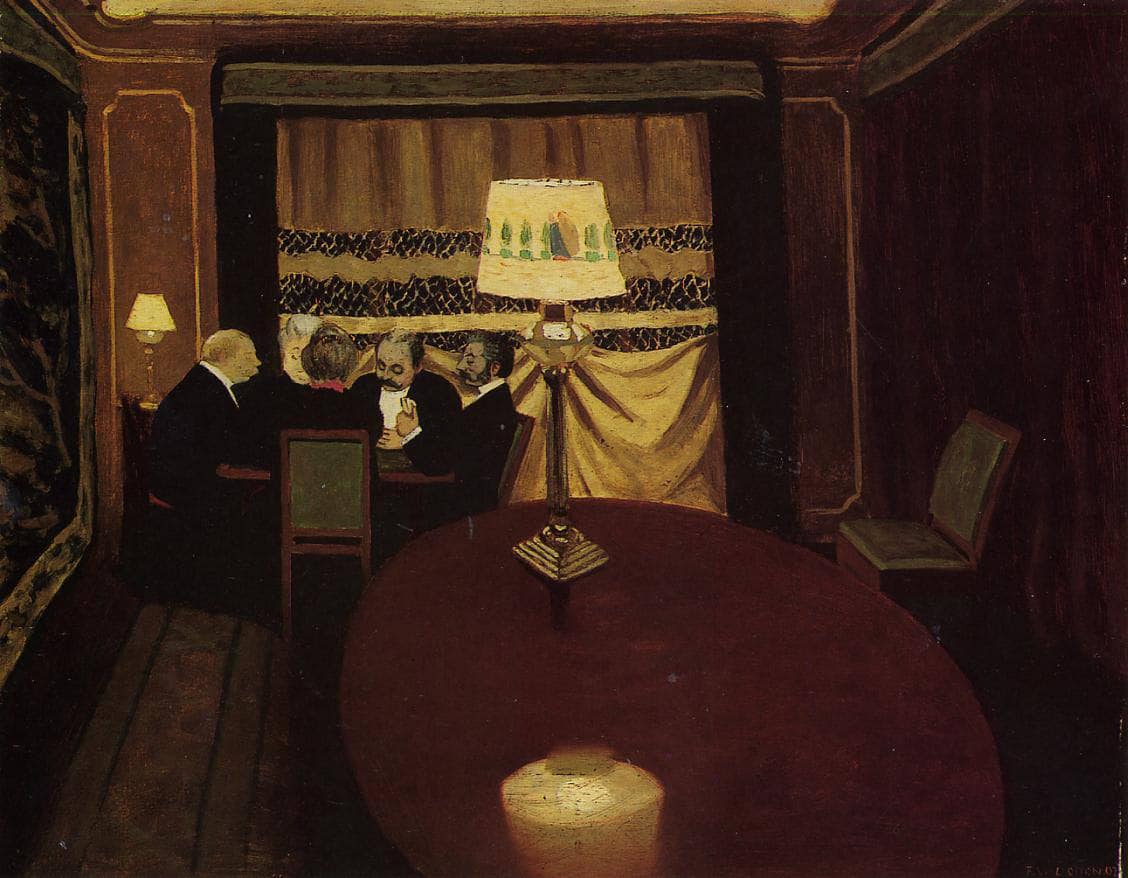
In early 20th century France, gambling was not just a pastime; it was a reflection of social status and power dynamics. "The Poker Game" captures this essence, showcasing the interactions between players in a dimly lit room. The painting invites viewers to consider the societal implications of gambling, including themes of risk, chance, and the pursuit of wealth.
Visual Analysis of The Poker Game
Color Palette: The Bold Use of Reds and Greens
The color palette of "The Poker Game" is striking, dominated by deep reds and vibrant greens. These colors create a sense of drama and intensity, drawing the viewer's eye to the central figures. Vallotton's choice of colors not only enhances the emotional impact but also reflects the tension inherent in the game being played.
Composition: The Arrangement of Figures and Space
Vallotton's composition skillfully arranges the figures around the poker table, creating a sense of intimacy and focus. The placement of each character adds to the narrative, allowing viewers to feel the weight of the moment. The spatial dynamics invite the audience into the scene, making them feel like participants in the game.
Light and Shadow: Creating Depth and Drama
The interplay of light and shadow in "The Poker Game" adds depth and drama to the scene. Vallotton expertly uses chiaroscuro techniques to highlight the players' faces and the cards on the table. This contrast not only enhances the visual appeal but also emphasizes the emotional stakes of the game.
Thematic Exploration: What Lies Beneath the Surface
Intimacy and Isolation: The Duality of Human Experience
"The Poker Game" explores the duality of intimacy and isolation. While the players are physically close, their emotional states are often distant. Vallotton captures this complexity, inviting viewers to reflect on the nature of human relationships and the masks people wear in social situations.
Power Dynamics: The Game as a Metaphor for Life
The poker game serves as a powerful metaphor for life itself. It reflects the strategies, risks, and uncertainties that individuals face daily. Vallotton's portrayal of the players' expressions reveals the underlying tension and competition, mirroring the struggles for power and control in society.
Gender Roles: The Representation of Women in Gambling
In "The Poker Game," Vallotton presents a nuanced view of gender roles. The presence of women at the table challenges traditional stereotypes of gambling as a male-dominated activity. Their expressions and interactions suggest a complex interplay of power and vulnerability, highlighting the evolving roles of women in early 20th century France.
Symbolism in The Poker Game
The Cards: Chance, Fate, and Decision-Making
The playing cards in "The Poker Game" symbolize chance and fate. They represent the unpredictable nature of life and the decisions individuals must make. Vallotton's careful attention to detail in the cards invites viewers to ponder the significance of choice and the consequences that follow.
The Table: A Microcosm of Society
The poker table itself acts as a microcosm of society, where various social classes and personalities converge. Vallotton's depiction of the players reflects the diverse motivations and backgrounds that influence their actions. This setting serves as a commentary on the broader social dynamics of the time.
Facial Expressions: Reading the Unspoken Narratives
The facial expressions of the players in "The Poker Game" tell unspoken stories. Vallotton captures a range of emotions, from tension to excitement, allowing viewers to interpret the underlying narratives. These expressions add depth to the painting, making it a rich subject for analysis.
Comparative Analysis: Vallotton's Style vs. His Contemporaries
Contrasting Techniques: Vallotton and Édouard Vuillard
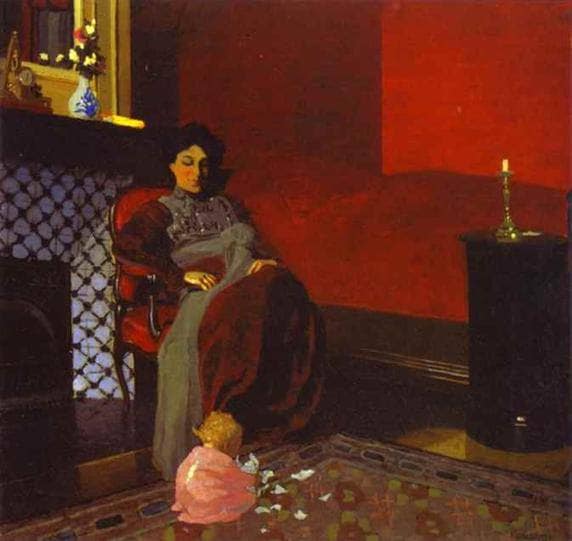
Vallotton's techniques contrast sharply with those of his contemporary, Édouard Vuillard. While Vuillard often focused on domestic scenes and intimate interiors, Vallotton's work delves into the complexities of social interactions. This distinction highlights Vallotton's unique perspective within the Post-Impressionist movement.
Influence of Japanese Woodblock Prints on Vallotton's Work
Japanese woodblock prints significantly influenced Vallotton's artistic style. Their emphasis on flat areas of color and bold outlines can be seen in "The Poker Game." This influence adds a distinctive quality to Vallotton's work, setting it apart from his European contemporaries.
Reception of The Poker Game: Critical Perspectives Over Time
Since its creation, "The Poker Game" has garnered varied critical perspectives. Initially, some critics praised Vallotton's innovative use of color and composition, while others were more reserved. Over time, the painting has gained recognition as a significant work that encapsulates the social dynamics of its era.
Experiencing The Poker Game: A Personal Reflection
Visiting the Museum: The Impact of Viewing the Original
Experiencing "The Poker Game" in person offers a profound connection to Vallotton's artistry. The original painting's scale and detail create an immersive experience that reproductions cannot fully replicate. Observing the brushwork and color nuances up close allows viewers to appreciate the depth of Vallotton's vision.
Emotional Resonance: How the Painting Speaks to Modern Audiences
The themes in "The Poker Game" resonate with modern audiences, reflecting timeless human experiences. The tension, intimacy, and power struggles depicted in the painting continue to be relevant today. Vallotton's ability to capture these emotions makes the artwork a powerful conversation starter.
Artistic Techniques: What Aspiring Artists Can Learn
Aspiring artists can learn valuable lessons from Vallotton's techniques in "The Poker Game." His use of color, composition, and light can inspire new approaches to painting. Vallotton's ability to convey emotion through visual elements serves as a guide for artists seeking to express complex themes in their work.
FAQs About The Poker Game by Felix Vallotton
What is the historical significance of The Poker Game?
"The Poker Game" is significant for its exploration of social dynamics and human relationships in early 20th century France. It reflects the cultural attitudes towards gambling and the complexities of human interaction during that time.
How does The Poker Game reflect the social issues of its time?
The painting highlights issues such as class struggle, gender roles, and the nature of chance. Vallotton's portrayal of the poker game serves as a microcosm of society, inviting viewers to consider the broader implications of these themes.
What techniques did Vallotton use to create depth in this painting?
Vallotton employed chiaroscuro techniques to create depth, using light and shadow to enhance the three-dimensionality of the figures. His bold color choices also contribute to the painting's emotional impact and visual depth.
What are the main themes explored in The Poker Game?
The main themes include intimacy versus isolation, power dynamics, and the representation of gender roles. Vallotton's work invites viewers to reflect on the complexities of human relationships and the societal implications of gambling.
How has The Poker Game been received by art critics over the years?
Over the years, "The Poker Game" has received a range of critical responses. Initially met with mixed reviews, it has since gained recognition as a significant work that encapsulates the social dynamics of its time and Vallotton's unique artistic vision.
FAQs About The Poker Game Reproduction
What should I consider when purchasing a reproduction of The Poker Game?
When purchasing a reproduction, consider the quality of materials used, the accuracy of color, and the level of detail. A high-quality painting reproduction will capture the essence of Vallotton's original work far better than a simple print.
How can I ensure the quality of a reproduction of Vallotton's work?
To ensure quality, look for reproductions created by skilled artists or reputable companies specializing in art reproductions. Check for reviews and examples of their work to confirm that they can faithfully replicate Vallotton's techniques and color palette.
Original: $299.95
-70%$299.95
$89.98Product Information
Product Information
Shipping & Returns
Shipping & Returns
Description
The Poker Game: An Insight into Felix Vallotton's Masterpiece
Understanding the Context of The Poker Game
The Artistic Movement: Post-Impressionism and Its Influence
Felix Vallotton's "The Poker Game" emerged during the vibrant Post-Impressionist movement, a time when artists sought to break free from traditional techniques. This movement emphasized bold colors and emotional depth, allowing Vallotton to explore new artistic expressions. His work reflects the transition from Impressionism to a more modern approach, where color and form take center stage.
Felix Vallotton: A Pioneer of Color and Form
Vallotton, a Swiss painter, became known for his unique style that combined elements of Impressionism with a strong influence from Japanese woodblock prints. His mastery of color and composition set him apart from his contemporaries. Vallotton's ability to convey emotion through color is particularly evident in "The Poker Game," where he uses rich hues to evoke tension and intimacy.
The Social Dynamics of Gambling in Early 20th Century France
In early 20th century France, gambling was not just a pastime; it was a reflection of social status and power dynamics. "The Poker Game" captures this essence, showcasing the interactions between players in a dimly lit room. The painting invites viewers to consider the societal implications of gambling, including themes of risk, chance, and the pursuit of wealth.
Visual Analysis of The Poker Game
Color Palette: The Bold Use of Reds and Greens
The color palette of "The Poker Game" is striking, dominated by deep reds and vibrant greens. These colors create a sense of drama and intensity, drawing the viewer's eye to the central figures. Vallotton's choice of colors not only enhances the emotional impact but also reflects the tension inherent in the game being played.
Composition: The Arrangement of Figures and Space
Vallotton's composition skillfully arranges the figures around the poker table, creating a sense of intimacy and focus. The placement of each character adds to the narrative, allowing viewers to feel the weight of the moment. The spatial dynamics invite the audience into the scene, making them feel like participants in the game.
Light and Shadow: Creating Depth and Drama
The interplay of light and shadow in "The Poker Game" adds depth and drama to the scene. Vallotton expertly uses chiaroscuro techniques to highlight the players' faces and the cards on the table. This contrast not only enhances the visual appeal but also emphasizes the emotional stakes of the game.
Thematic Exploration: What Lies Beneath the Surface
Intimacy and Isolation: The Duality of Human Experience
"The Poker Game" explores the duality of intimacy and isolation. While the players are physically close, their emotional states are often distant. Vallotton captures this complexity, inviting viewers to reflect on the nature of human relationships and the masks people wear in social situations.
Power Dynamics: The Game as a Metaphor for Life
The poker game serves as a powerful metaphor for life itself. It reflects the strategies, risks, and uncertainties that individuals face daily. Vallotton's portrayal of the players' expressions reveals the underlying tension and competition, mirroring the struggles for power and control in society.
Gender Roles: The Representation of Women in Gambling
In "The Poker Game," Vallotton presents a nuanced view of gender roles. The presence of women at the table challenges traditional stereotypes of gambling as a male-dominated activity. Their expressions and interactions suggest a complex interplay of power and vulnerability, highlighting the evolving roles of women in early 20th century France.
Symbolism in The Poker Game
The Cards: Chance, Fate, and Decision-Making
The playing cards in "The Poker Game" symbolize chance and fate. They represent the unpredictable nature of life and the decisions individuals must make. Vallotton's careful attention to detail in the cards invites viewers to ponder the significance of choice and the consequences that follow.
The Table: A Microcosm of Society
The poker table itself acts as a microcosm of society, where various social classes and personalities converge. Vallotton's depiction of the players reflects the diverse motivations and backgrounds that influence their actions. This setting serves as a commentary on the broader social dynamics of the time.
Facial Expressions: Reading the Unspoken Narratives
The facial expressions of the players in "The Poker Game" tell unspoken stories. Vallotton captures a range of emotions, from tension to excitement, allowing viewers to interpret the underlying narratives. These expressions add depth to the painting, making it a rich subject for analysis.
Comparative Analysis: Vallotton's Style vs. His Contemporaries
Contrasting Techniques: Vallotton and Édouard Vuillard
Vallotton's techniques contrast sharply with those of his contemporary, Édouard Vuillard. While Vuillard often focused on domestic scenes and intimate interiors, Vallotton's work delves into the complexities of social interactions. This distinction highlights Vallotton's unique perspective within the Post-Impressionist movement.
Influence of Japanese Woodblock Prints on Vallotton's Work
Japanese woodblock prints significantly influenced Vallotton's artistic style. Their emphasis on flat areas of color and bold outlines can be seen in "The Poker Game." This influence adds a distinctive quality to Vallotton's work, setting it apart from his European contemporaries.
Reception of The Poker Game: Critical Perspectives Over Time
Since its creation, "The Poker Game" has garnered varied critical perspectives. Initially, some critics praised Vallotton's innovative use of color and composition, while others were more reserved. Over time, the painting has gained recognition as a significant work that encapsulates the social dynamics of its era.
Experiencing The Poker Game: A Personal Reflection
Visiting the Museum: The Impact of Viewing the Original
Experiencing "The Poker Game" in person offers a profound connection to Vallotton's artistry. The original painting's scale and detail create an immersive experience that reproductions cannot fully replicate. Observing the brushwork and color nuances up close allows viewers to appreciate the depth of Vallotton's vision.
Emotional Resonance: How the Painting Speaks to Modern Audiences
The themes in "The Poker Game" resonate with modern audiences, reflecting timeless human experiences. The tension, intimacy, and power struggles depicted in the painting continue to be relevant today. Vallotton's ability to capture these emotions makes the artwork a powerful conversation starter.
Artistic Techniques: What Aspiring Artists Can Learn
Aspiring artists can learn valuable lessons from Vallotton's techniques in "The Poker Game." His use of color, composition, and light can inspire new approaches to painting. Vallotton's ability to convey emotion through visual elements serves as a guide for artists seeking to express complex themes in their work.
FAQs About The Poker Game by Felix Vallotton
What is the historical significance of The Poker Game?
"The Poker Game" is significant for its exploration of social dynamics and human relationships in early 20th century France. It reflects the cultural attitudes towards gambling and the complexities of human interaction during that time.
How does The Poker Game reflect the social issues of its time?
The painting highlights issues such as class struggle, gender roles, and the nature of chance. Vallotton's portrayal of the poker game serves as a microcosm of society, inviting viewers to consider the broader implications of these themes.
What techniques did Vallotton use to create depth in this painting?
Vallotton employed chiaroscuro techniques to create depth, using light and shadow to enhance the three-dimensionality of the figures. His bold color choices also contribute to the painting's emotional impact and visual depth.
What are the main themes explored in The Poker Game?
The main themes include intimacy versus isolation, power dynamics, and the representation of gender roles. Vallotton's work invites viewers to reflect on the complexities of human relationships and the societal implications of gambling.
How has The Poker Game been received by art critics over the years?
Over the years, "The Poker Game" has received a range of critical responses. Initially met with mixed reviews, it has since gained recognition as a significant work that encapsulates the social dynamics of its time and Vallotton's unique artistic vision.
FAQs About The Poker Game Reproduction
What should I consider when purchasing a reproduction of The Poker Game?
When purchasing a reproduction, consider the quality of materials used, the accuracy of color, and the level of detail. A high-quality painting reproduction will capture the essence of Vallotton's original work far better than a simple print.
How can I ensure the quality of a reproduction of Vallotton's work?
To ensure quality, look for reproductions created by skilled artists or reputable companies specializing in art reproductions. Check for reviews and examples of their work to confirm that they can faithfully replicate Vallotton's techniques and color palette.