🚚 Free Worldwide Shipping on All Orders!Shop Now

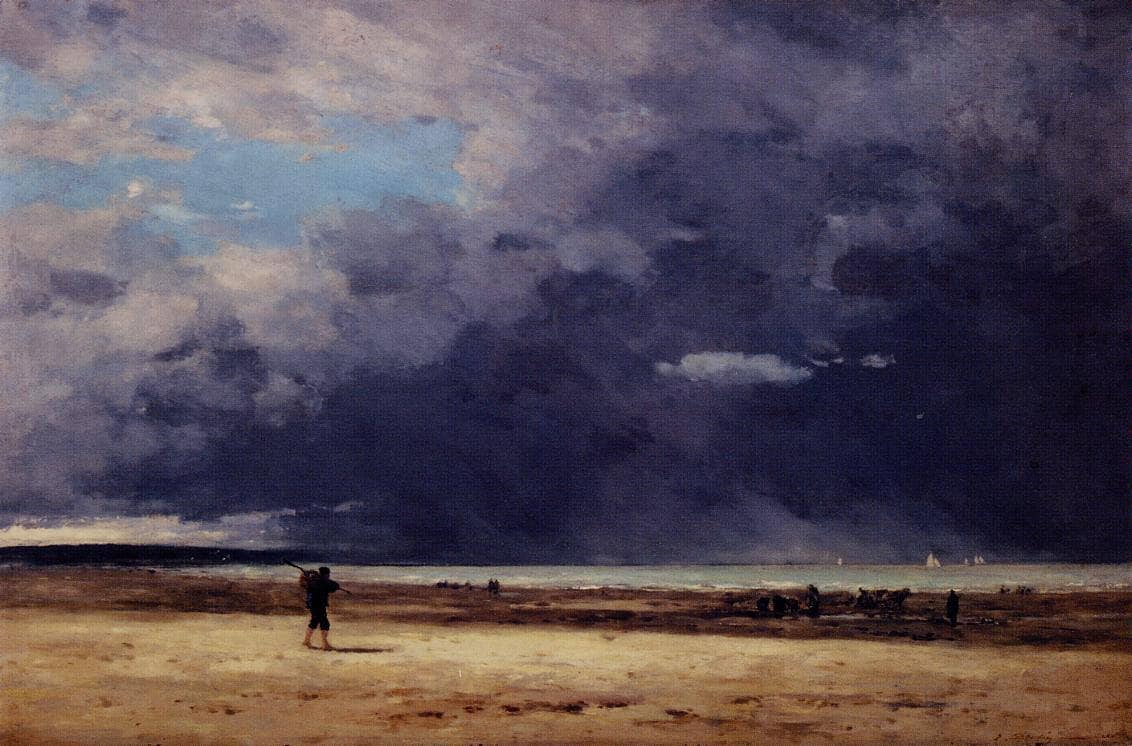
Deauville, Low Tide
Discovering Deauville: Low Tide by Eugene Boudin
A Glimpse into the Impressionist Era
The Artistic Revolution of the 19th Century
The 19th century marked a significant shift in the art world, known as the Impressionist movement. Artists began to break away from traditional techniques, focusing on capturing fleeting moments and the effects of light. This era celebrated spontaneity and the beauty of everyday life, paving the way for modern art.Understanding Boudin's Role in Impressionism
Eugene Boudin, often regarded as a precursor to Impressionism, played a vital role in shaping this artistic revolution. He was one of the first artists to paint en plein air, or outdoors, which allowed him to capture the natural light and atmosphere of coastal scenes. His work inspired many famous Impressionists, including Claude Monet, who admired Boudin's ability to depict the beauty of nature.Visual Elements of Deauville: Low Tide
Color Palette: The Harmony of Blues and Earthy Tones
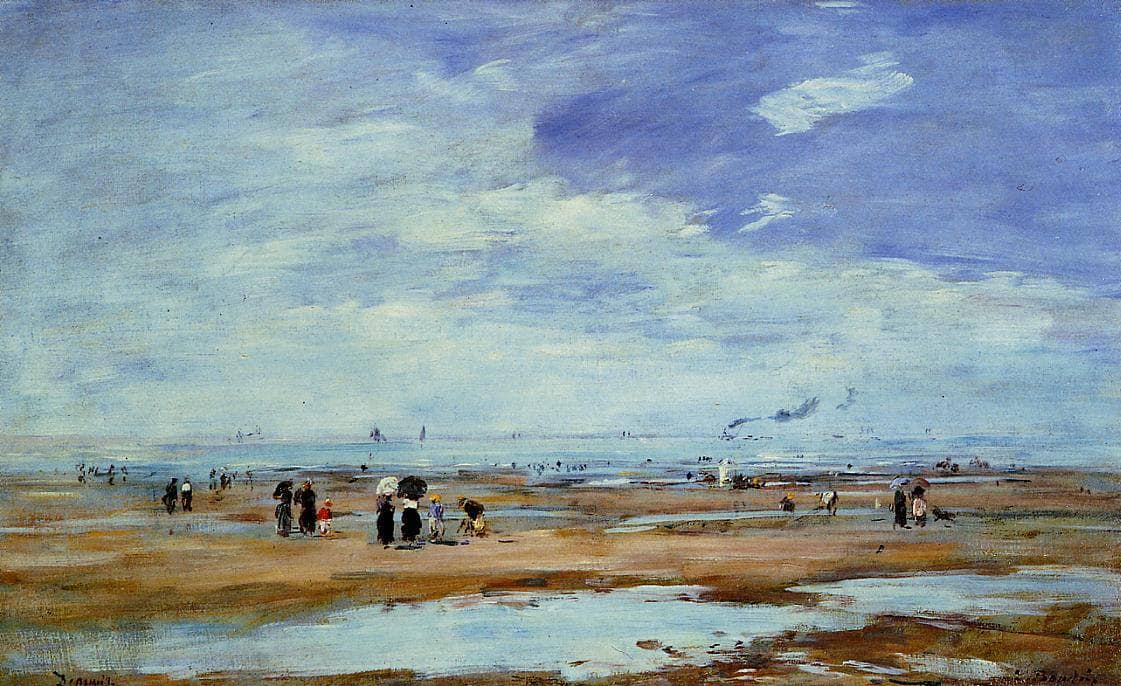
In "Deauville: Low Tide," Boudin employs a stunning color palette dominated by soft blues and warm earthy tones. The gentle blues of the sky and sea contrast beautifully with the sandy browns of the beach. This harmonious blend creates a serene atmosphere, inviting viewers to immerse themselves in the tranquil coastal scene.Brushwork Techniques: Capturing Movement and Light
Boudin's brushwork is both expressive and fluid, effectively capturing the movement of the waves and the play of light on the water. His technique involves quick, short strokes that convey the dynamic nature of the seaside. This approach not only brings the painting to life but also reflects the ever-changing conditions of the coastal environment.Composition: Balancing Land, Sea, and Sky
The composition of "Deauville: Low Tide" masterfully balances the elements of land, sea, and sky. The horizon line divides the canvas, with the expansive sky above and the sandy beach below. This arrangement draws the viewer's eye across the painting, creating a sense of depth and inviting exploration of the scene.Thematic Exploration: Nature and Human Interaction
Beach Life: A Snapshot of 19th Century Coastal Culture
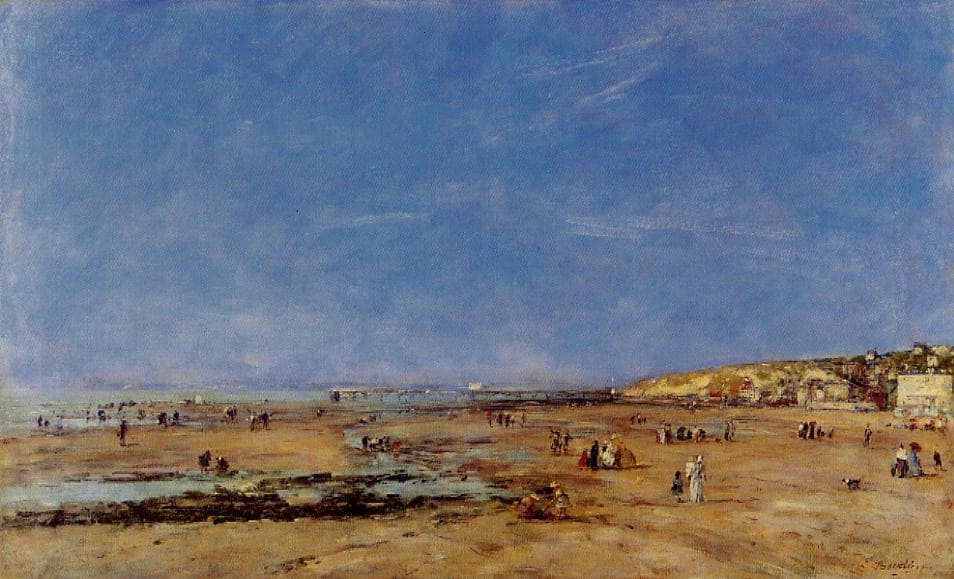
Boudin's painting offers a glimpse into the vibrant beach life of 19th century Deauville. The figures scattered along the shore engage in leisurely activities, reflecting the social culture of the time. This scene captures the essence of summer vacations, where families and friends gathered to enjoy the sun and sea.Low Tide: Symbolism of Change and Transience
The low tide setting in the painting symbolizes change and the passage of time. As the water recedes, it reveals the sandy beach, creating a temporary landscape that shifts with the tides. This theme resonates with the viewer, reminding us of the fleeting nature of moments and experiences.Historical Context: Deauville in the 1800s
The Rise of Deauville as a Coastal Resort
In the 1800s, Deauville emerged as a fashionable coastal resort, attracting the elite and artists alike. Its picturesque beaches and charming architecture made it a popular destination for those seeking leisure and inspiration. Boudin's connection to this vibrant locale is evident in his works, which celebrate its beauty.Influence of Local Life on Boudin's Work
The local life of Deauville greatly influenced Boudin's artistic vision. He often painted the people and activities he observed, capturing the essence of coastal living. This intimate connection to his surroundings allowed him to create authentic representations of the beach culture, making his work resonate with viewers.Artistic Techniques: Boudin's Signature Style
En Plein Air Painting: The Essence of Outdoor Art
Boudin's commitment to en plein air painting set him apart from many of his contemporaries. By painting outdoors, he could directly observe the changing light and atmosphere. This technique allowed him to create vibrant, lifelike scenes that transport viewers to the very moment he captured.Use of Light: How Boudin Captured the Sun's Glow
Light plays a crucial role in Boudin's work. He skillfully captures the sun's glow reflecting off the water and illuminating the beach. His ability to depict light not only enhances the realism of his paintings but also evokes emotions, drawing viewers into the serene beauty of the scene.Comparative Analysis: Boudin and His Contemporaries
Contrasting Styles: Boudin vs. Monet
While both Boudin and Monet are celebrated Impressionists, their styles differ significantly. Boudin's work often features more detailed figures and a focus on coastal life, while Monet's paintings emphasize the effects of light and color. This contrast highlights Boudin's unique contribution to the movement.Influence of Dutch Masters on Boudin's Technique
Boudin's technique was also influenced by the Dutch Masters, particularly in his use of light and shadow. He admired their ability to create depth and atmosphere, which he incorporated into his own work. This blend of influences helped shape Boudin's distinctive style, making him a pivotal figure in the Impressionist movement.Legacy of Deauville: Low Tide in Modern Art
Impact on Future Generations of Artists
"Deauville: Low Tide" continues to inspire artists today. Boudin's innovative techniques and focus on natural beauty have left a lasting legacy. Many contemporary artists look to his work for inspiration, drawing from his ability to capture the essence of a moment in time.Current Exhibitions and Collections Featuring Boudin
Today, Boudin's works, including "Deauville: Low Tide," are featured in prestigious museums and galleries worldwide. Art enthusiasts can find his paintings in collections such as the Musée d'Orsay in Paris and the Metropolitan Museum of Art in New York. These exhibitions celebrate his contributions to Impressionism and highlight his enduring influence.FAQs about Deauville: Low Tide by Eugene Boudin
What inspired Eugene Boudin to paint Deauville: Low Tide?
Boudin was inspired by the beauty of the Deauville coastline and the vibrant beach life he observed. His love for nature and the outdoors drove him to capture these moments on canvas.What are the main themes depicted in Deauville: Low Tide?
The main themes include the interaction between humans and nature, the beauty of coastal life, and the symbolism of change represented by the low tide.How does Deauville: Low Tide reflect the Impressionist movement?
The painting reflects the Impressionist movement through its focus on light, color, and the depiction of everyday life. Boudin's en plein air technique captures the essence of the moment, a hallmark of Impressionism.What techniques did Boudin use to create the effects in this painting?
Boudin used quick brush strokes and a vibrant color palette to create movement and light effects. His en plein air approach allowed him to observe and replicate the natural environment accurately.Where can I see the original Deauville: Low Tide painting?
The original painting is housed in the Musée des Beaux-Arts in Le Havre, France, where visitors can appreciate Boudin's masterful work up close.What is the significance of the low tide setting in the painting?
The low tide setting symbolizes change and the transient nature of life. It reveals the sandy beach, creating a temporary landscape that reflects the passage of time.How can I choose a high-quality reproduction of Deauville: Low Tide?
When selecting a reproduction, look for high-quality oil painting reproductions rather than prints. Ensure the reproduction captures the vibrant colors and brushwork of the original, providing a true representation of Boudin's artistry.Select Size
From $89.98
Original: $299.95
-70%Deauville, Low Tide—
$299.95
$89.98Product Information
Product Information
Shipping & Returns
Shipping & Returns