🚚 Free Worldwide Shipping on All Orders!Shop Now

Pianospelare
Discover the Enchantment of Pianospelare by Elin Danielson-Gambogi
Unveiling the Artist: Elin Danielson-Gambogi's Unique Style
Exploring the Life and Influences of Elin Danielson-Gambogi
Elin Danielson-Gambogi, a prominent figure in the Nordic art scene, was born in 1860 in Finland. She studied at the prestigious Académie Julian in Paris, where she absorbed the influences of Impressionism and Post-Impressionism. Her unique perspective as a female artist in a male-dominated field allowed her to explore themes of intimacy and emotion in her work. Danielson-Gambogi often drew inspiration from her surroundings, capturing the essence of everyday life with a delicate touch.Signature Techniques: The Brushwork and Color Palette
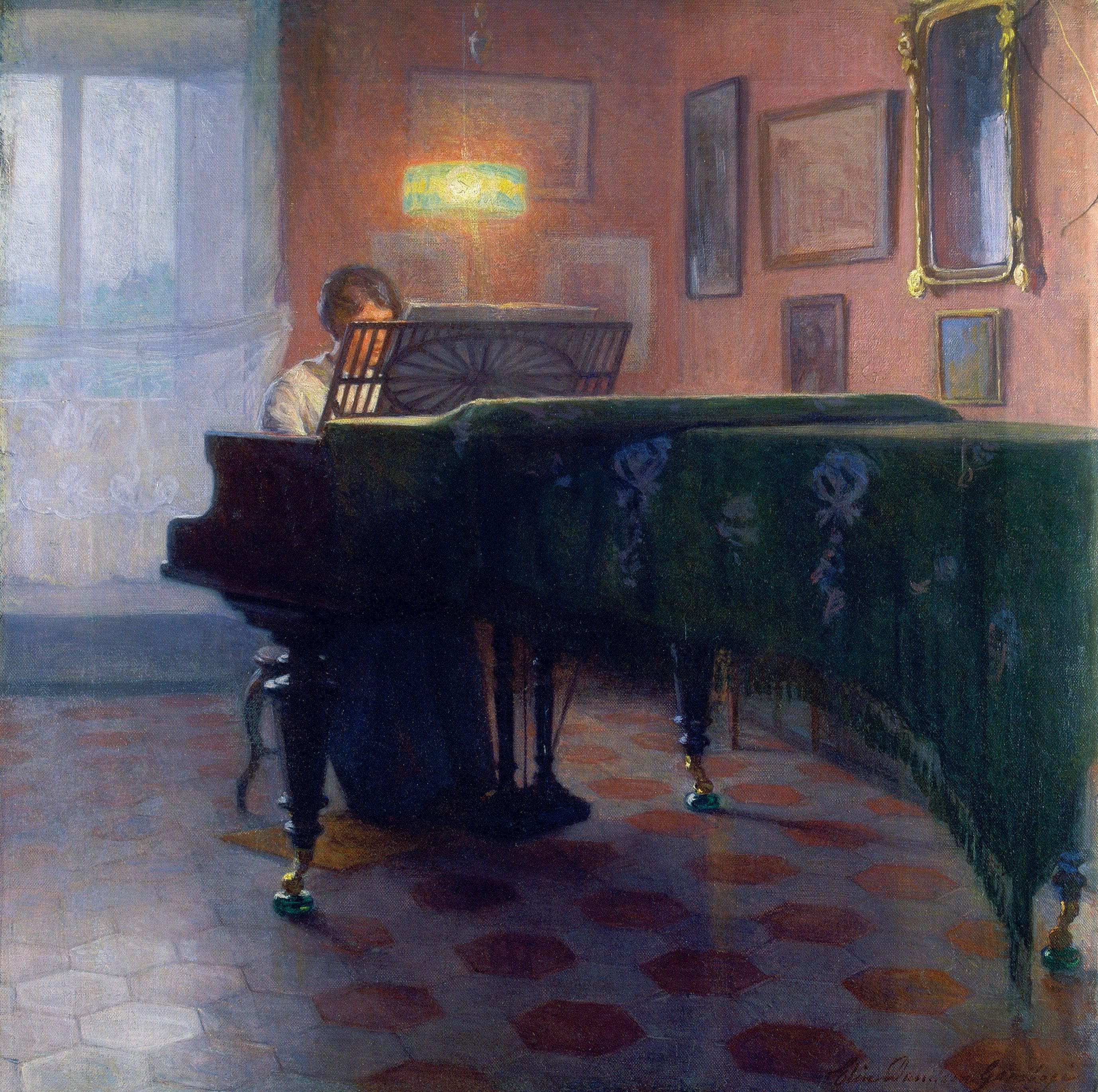
Danielson-Gambogi's brushwork is characterized by its fluidity and spontaneity. She employed a vibrant color palette, often using soft pastels and rich earth tones to evoke warmth and depth. Her technique of layering paint creates a sense of movement and life within her compositions. In "Pianospelare," the interplay of light and shadow enhances the emotional resonance of the scene, inviting viewers to immerse themselves in the moment.The Captivating Scene: A Deep Dive into Pianospelare
Setting the Stage: The Intimate Atmosphere of the Painting
"Pianospelare," which translates to "Pianist," captures a serene moment in a cozy interior. The setting is rich with detail, from the elegant piano to the soft furnishings that envelop the scene. The warm glow of the light creates an inviting atmosphere, making the viewer feel as if they are part of this intimate gathering. The composition draws the eye to the pianist, emphasizing the connection between the musician and the music.Character Analysis: The Emotion and Expression of the Pianist
The central figure in "Pianospelare" is a young woman deeply engrossed in her music. Her expression conveys a mix of concentration and passion, reflecting the emotional depth of the piece she plays. Danielson-Gambogi masterfully captures the nuances of her posture and facial expression, allowing viewers to feel the intensity of the moment. This portrayal invites personal connections, as many can relate to the joy and solace that music brings.Symbolism in Pianospelare: What Lies Beneath the Surface?
Beyond its surface beauty, "Pianospelare" is rich with symbolism. The piano represents creativity and expression, while the surrounding elements suggest a nurturing environment. The act of playing music becomes a metaphor for emotional release and connection. Danielson-Gambogi's choice to depict a solitary musician highlights the introspective nature of art, inviting viewers to reflect on their own experiences with music and solitude.Artistic Context: The Historical Significance of Pianospelare
Art Movements: How Impressionism Influenced Danielson-Gambogi
Danielson-Gambogi's work is deeply rooted in the Impressionist movement, which emphasized capturing fleeting moments and the effects of light. This influence is evident in "Pianospelare," where the soft brushstrokes and vibrant colors create a sense of immediacy. The painting reflects the broader cultural shifts of the late 19th century, as artists began to explore more personal and emotional themes in their work.Comparative Analysis: Pianospelare and Contemporary Works
When compared to contemporary works, "Pianospelare" stands out for its emotional depth and intimate portrayal of the human experience. While many modern artists focus on abstraction and conceptual themes, Danielson-Gambogi's commitment to realism and emotional expression resonates with viewers. Her ability to convey complex feelings through simple scenes sets her apart in the art world.Visual Elements: Composition and Color in Pianospelare
Understanding the Composition: Balance and Harmony in the Artwork
The composition of "Pianospelare" is masterfully balanced, with the pianist positioned centrally, drawing the viewer's attention. The surrounding elements, such as the piano and the soft furnishings, create a harmonious environment that enhances the overall impact of the piece. This careful arrangement invites viewers to explore the details, making each viewing a new experience.Color Theory: The Emotional Impact of the Color Choices
Danielson-Gambogi's color choices in "Pianospelare" evoke a sense of warmth and nostalgia. The soft hues of the interior contrast beautifully with the darker tones of the piano, creating a visual dialogue. This use of color not only enhances the aesthetic appeal but also deepens the emotional connection, allowing viewers to feel the warmth of the scene.Emotional Resonance: The Viewer's Experience with Pianospelare
Connecting with the Artwork: Personal Reflections and Interpretations
"Pianospelare" invites viewers to reflect on their own experiences with music and art. The intimate setting and the focused expression of the pianist resonate with anyone who has found solace in playing or listening to music. This personal connection makes the painting a timeless piece that continues to inspire and evoke emotions.Art as a Conversation: Engaging with the Themes of Music and Emotion
The themes of music and emotion in "Pianospelare" create a rich tapestry for discussion. Viewers are encouraged to engage with the artwork, exploring their interpretations and feelings. This dialogue between the painting and the observer highlights the power of art to connect people across time and space.Preserving the Legacy: The Importance of Art Reproductions
Why Reproductions Matter: Accessibility and Appreciation of Art
Art reproductions play a crucial role in making masterpieces like "Pianospelare" accessible to a wider audience. Unlike prints, which can lack depth and texture, high-quality reproductions capture the essence of the original painting. They allow art lovers to appreciate the intricate details and emotional nuances that define Danielson-Gambogi's work.Quality Matters: What to Look for in Art Reproductions
When purchasing a reproduction of "Pianospelare," it's essential to consider the quality of the materials and the craftsmanship. Look for reproductions that use archival-quality canvas and paints to ensure longevity. A well-crafted reproduction will not only honor the original artwork but also enhance your space with its beauty.FAQs About Pianospelare and Its Reproduction
Common Questions About the Painting
What inspired Elin Danielson-Gambogi to create Pianospelare?
Danielson-Gambogi was inspired by her love for music and the intimate moments it creates. She sought to capture the emotional connection between the musician and her art.What emotions does Pianospelare evoke in viewers?
Viewers often feel a sense of nostalgia, warmth, and introspection when experiencing "Pianospelare." The painting invites reflection on personal memories associated with music.How does Pianospelare reflect the artist's personal experiences?
The painting reflects Danielson-Gambogi's own experiences as a musician and artist, showcasing her understanding of the emotional power of music.What are the key themes explored in Pianospelare?
Key themes include the intimacy of music, emotional expression, and the connection between the artist and her art. The painting serves as a celebration of creativity and solitude.How does Pianospelare compare to other works by Danielson-Gambogi?
"Pianospelare" stands out for its emotional depth and intimate portrayal of a musician, showcasing Danielson-Gambogi's unique ability to capture the essence of human experience.Questions About the Painting Reproduction
What should I consider when purchasing a reproduction of Pianospelare?
Consider the quality of materials, the reputation of the artist or company producing the reproduction, and the attention to detail in capturing the original's essence.How can I ensure the reproduction captures the essence of the original painting?
Look for reproductions that use high-quality canvas and paints, and choose those that are created by skilled artisans who understand the nuances of the original artwork.Select Size
From $249.95
Pianospelare—
$249.95
Product Information
Product Information
Shipping & Returns
Shipping & Returns